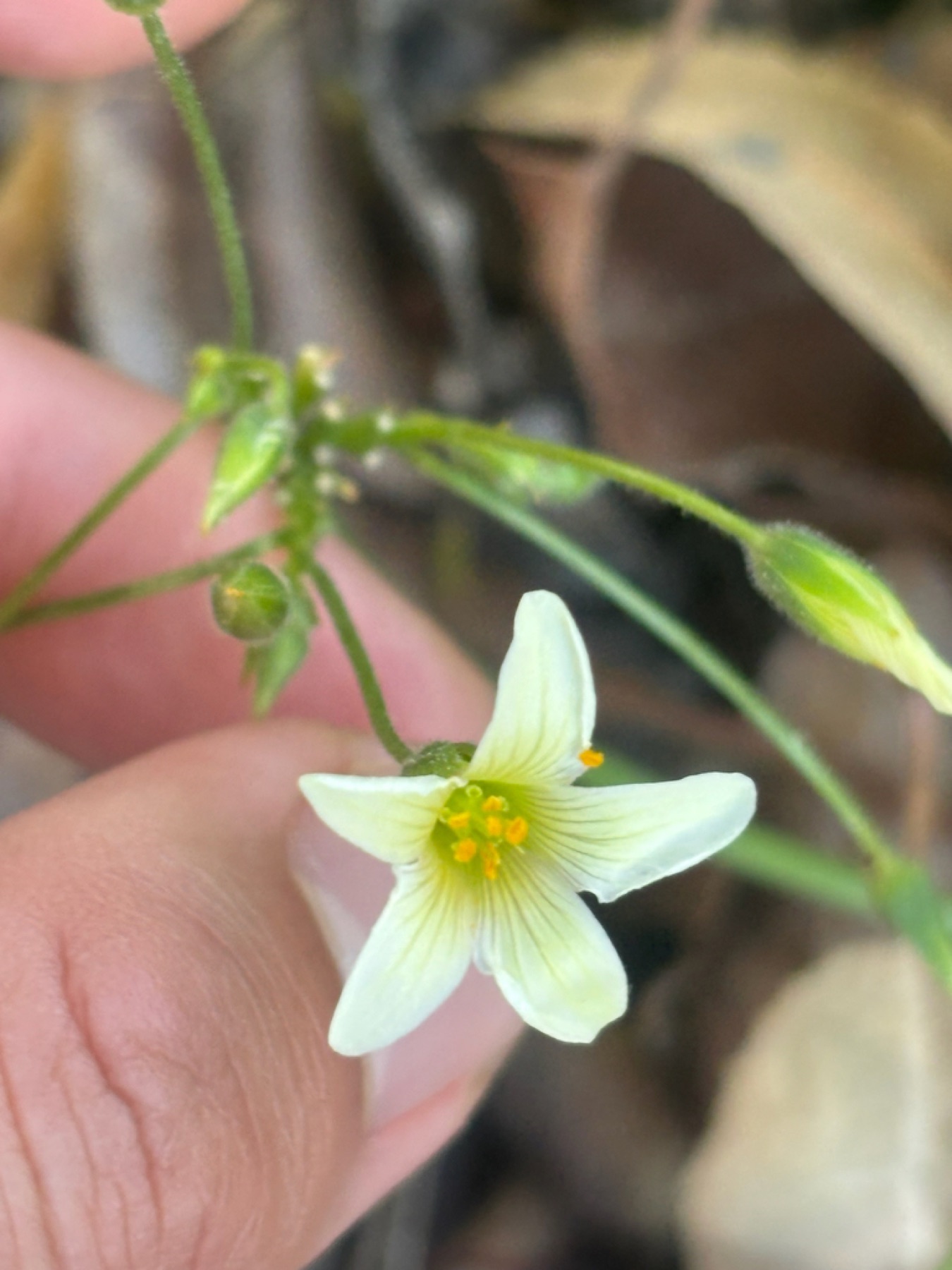
Redstem Stork's-bill
Erodium cicutarium · Geraniaceae
- Height
- 4-12 in
- Habitat
- Grassland · Coastal Sage Scrub · Disturbed
🌍 Non-native — naturalized; not a control priority
Quick facts
- Habitat: Lawns, roadsides, grasslands, disturbed scrub
- Form / size: Low annual, usually under 1 ft
- Status: Non-native naturalized weed · not usually a priority removal target
- Blooms: Winter–spring, small pink-purple flowers
Description
A low, ferny-leaved annual with small pink flowers and long pointed fruits shaped like a stork’s bill. When dry, the seed awns twist like little corkscrews, drilling seeds into soil, socks, and fur.
Wildlife & pollinators
Small flowers are used by small insects, and seeds are eaten by some wildlife. Its ecological role is minor compared with native wildflowers.
Habitat & range
Extremely common in disturbed ground, lawns, roadsides, annual grassland, and open scrub throughout Southern California.
In the garden
Usually arrives on its own. It is not a major landscape crisis, but in restoration sites it competes with native annuals and indicates disturbed, weedy ground.
Propagation
By seed only — and it handles that job very well.