Bermuda Buttercup
Oxalis pes-caprae · Oxalidaceae
- Height
- 6-18 in
- Habitat
- Coastal Sage Scrub · Grassland · Disturbed · Coastal
🚫 Invasive / non-native weed
At a glance
- Tell-tale sign: Bright yellow flowers and clover-like leaves in winter–spring
- Where: Lawns, gardens, orchards, coastal bluffs, disturbed ground
- Why it matters: Bulblets make it hard to remove once established
How to identify
A low winter-growing plant with clover-like leaves and bright yellow funnel-shaped flowers. It often carpets yards, orchards, coastal bluffs, and disturbed places after rain.
Why it’s a problem
Bermuda buttercup spreads by underground bulbs and bulblets, forming dense seasonal carpets that crowd out native annuals and are very difficult to eradicate once established.
How it spreads
Mostly by bulbs/bulblets moved in soil, green waste, pots, and garden work. Seed is less important locally.
How to remove it
Repeatedly remove top growth before it can recharge bulbs, and dig carefully where feasible. Avoid moving contaminated soil. Expect multi-year follow-up.
Plant this instead
For winter-spring native color: California Poppy, Blue Dicks, Chia, Arroyo Lupine, and Distant Phacelia.
Where it’s spread near you
Sources
Commonly confused with
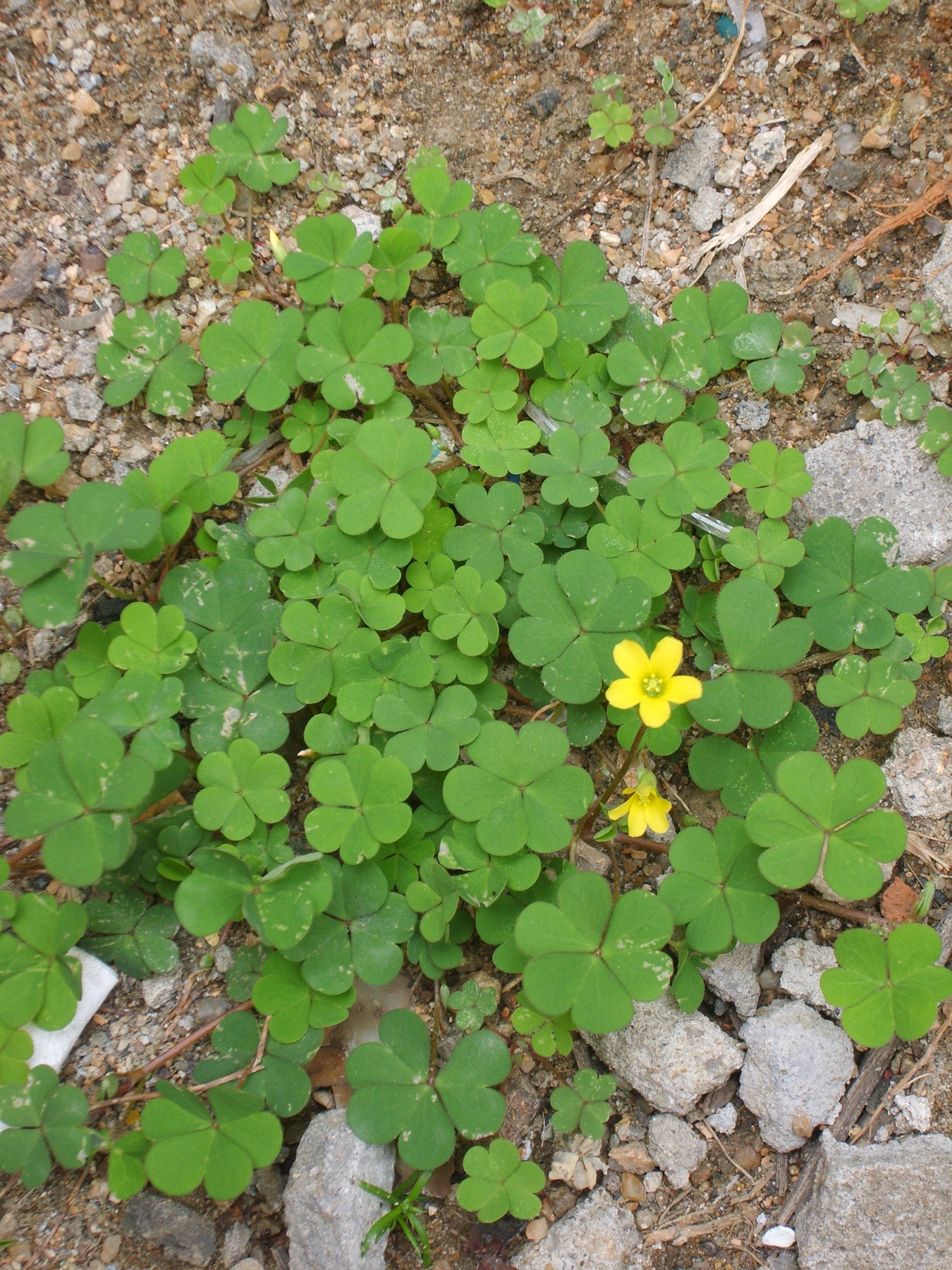 Creeping Woodsorrel 🌍 Oxalis corniculata smaller yellow flowers, often a modest garden weed; Bermuda buttercup is larger and bulb-forming.