Clustered Tarweed
Deinandra fasciculata · Asteraceae
- Form
- Annual
- Height
- 1–3 ft
- Sun
- Full Sun
- Water
- Very Low
- Blooms
- Jun, Jul, Aug, Sep, Oct
- Habitat
- Grassland · Coastal Sage Scrub · Disturbed
🌿 California native
Quick facts
- Habitat: Grassland, open scrub, roadsides, disturbed native ground
- Form / size: Sticky annual, 1–3 ft
- Sun: Full sun · Water: Winter rain
- Blooms: Summer–fall · Pollinator value: High
Description
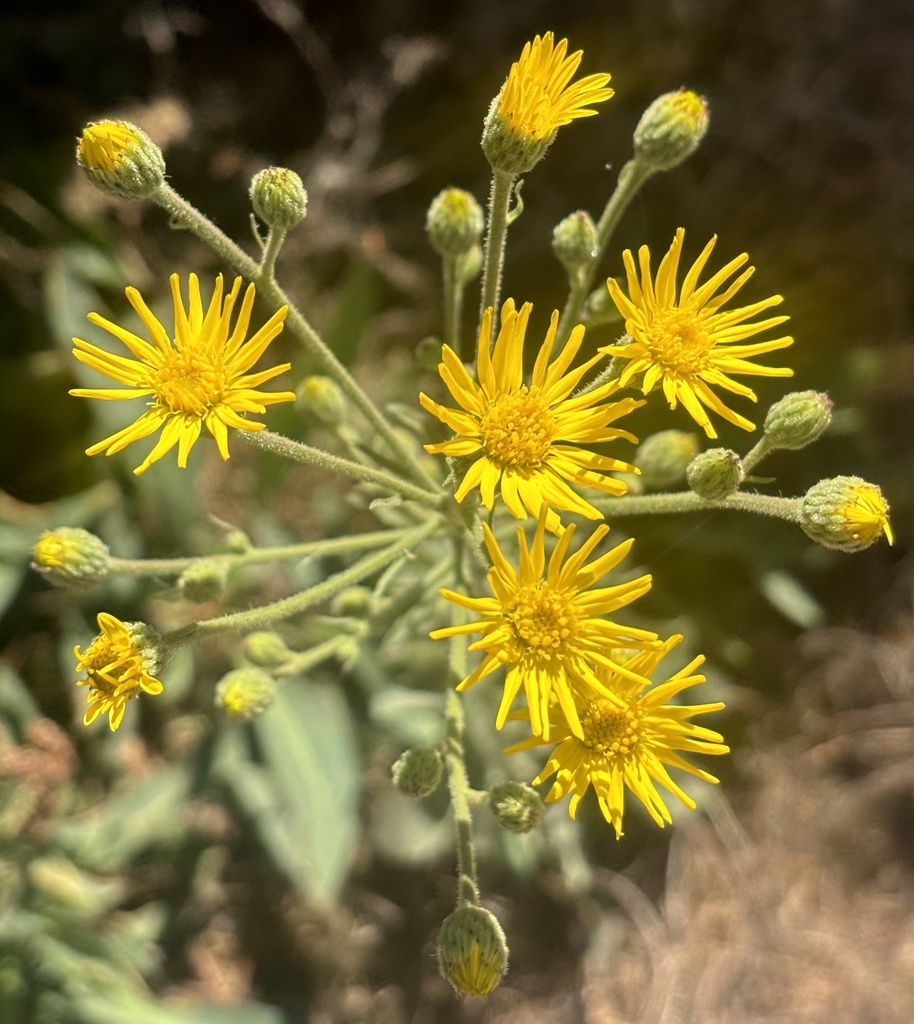
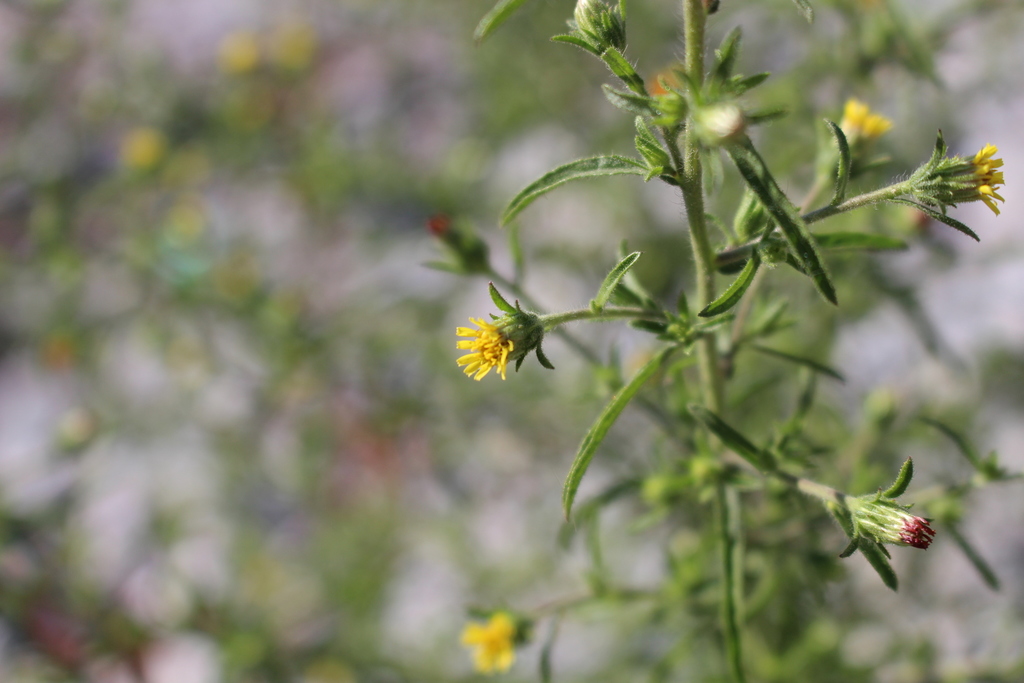
A sticky, aromatic native annual with narrow leaves and small yellow daisy-family flower heads. Tarweeds often look rough to human eyes but are valuable late-season insect plants.
Wildlife & pollinators
Excellent late-season support for native bees, flies, wasps, and other beneficial insects. Seeds feed birds.
Habitat & range
Grasslands, open coastal sage scrub, roadsides, and disturbed native ground in coastal and inland Southern California.
In the garden
Best for meadow edges, restoration, and wild pollinator patches rather than formal beds. Let it self-sow where late-season insect value matters.
Propagation
From seed sown in fall. It needs open soil and seasonal rains.
Where to see it near you
- iNaturalist — observed in Southern California
- Grassland openings, roadsides, and dry disturbed native ground.
Problems
Sticky and informal. A feature for habitat, a flaw for tidy borders.