Black Sage
Salvia mellifera · Lamiaceae
- Form
- Shrub
- Height
- 3–6 ft
- Sun
- Full Sun
- Water
- Very Low
- Blooms
- Apr, May, Jun
- Habitat
- Coastal Sage Scrub · Chaparral
🌿 California native
Quick facts
- Habitat: Coastal Sage Scrub, Chaparral
- Form / size: Aromatic shrub, 3–6 ft
- Sun: Full sun · Water (established): Very low
- Blooms: Spring · Pollinator value: High (a top honey plant)
Description
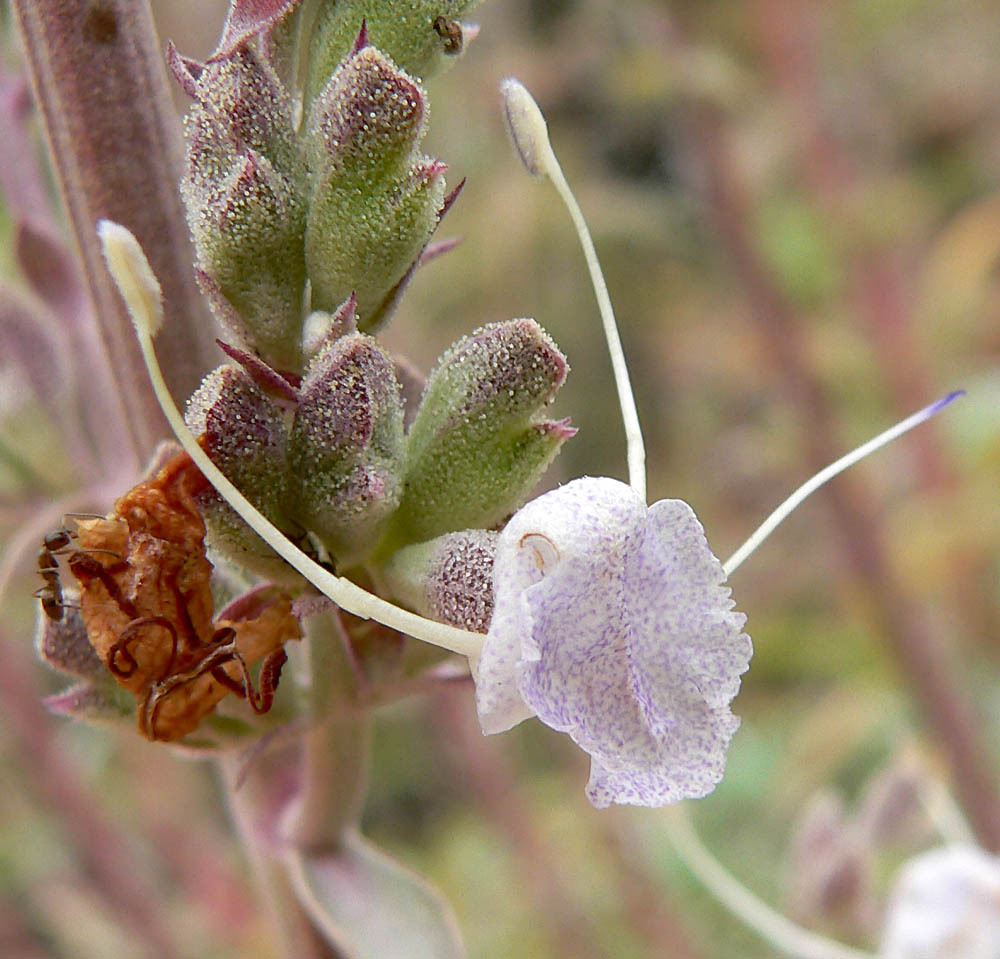
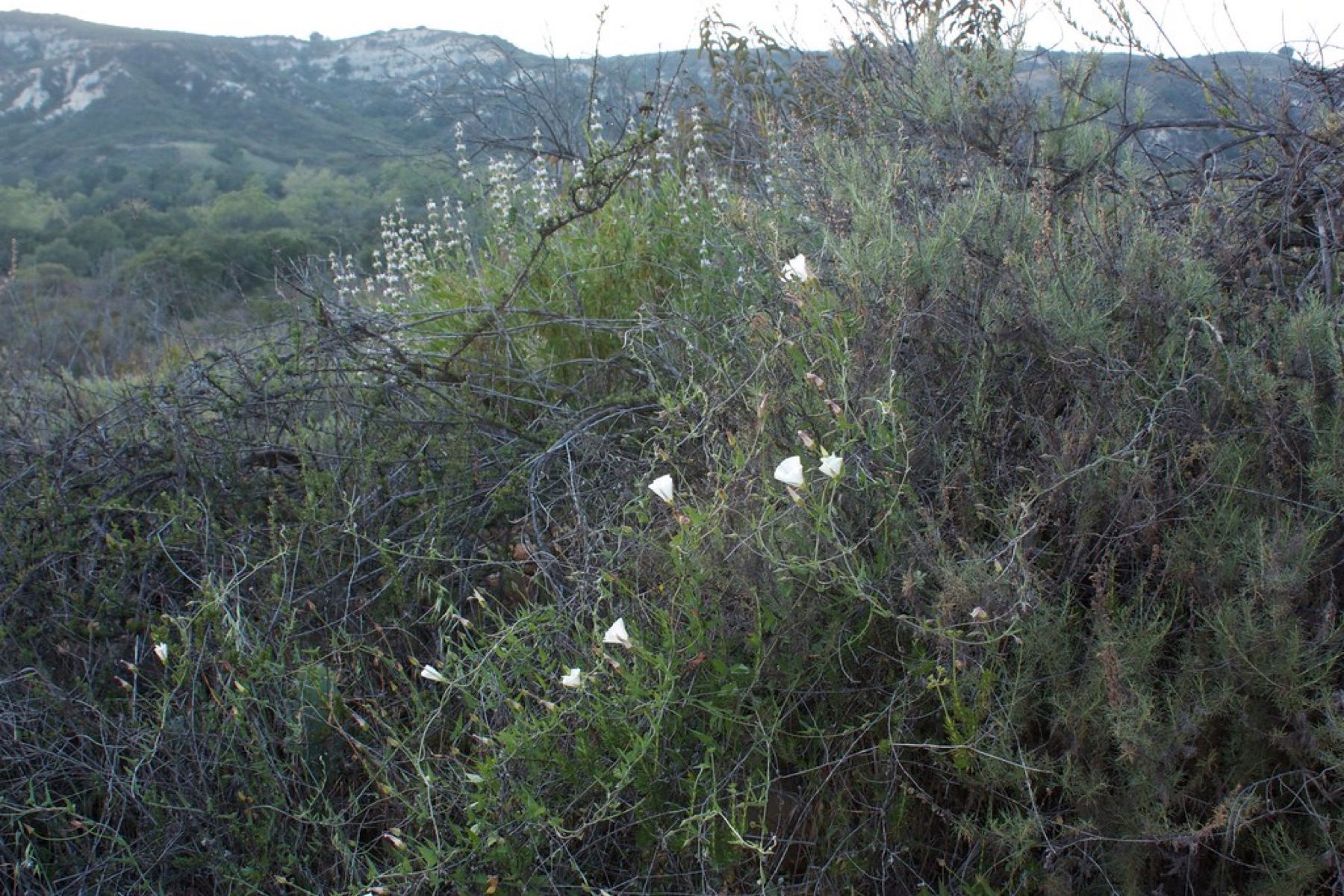
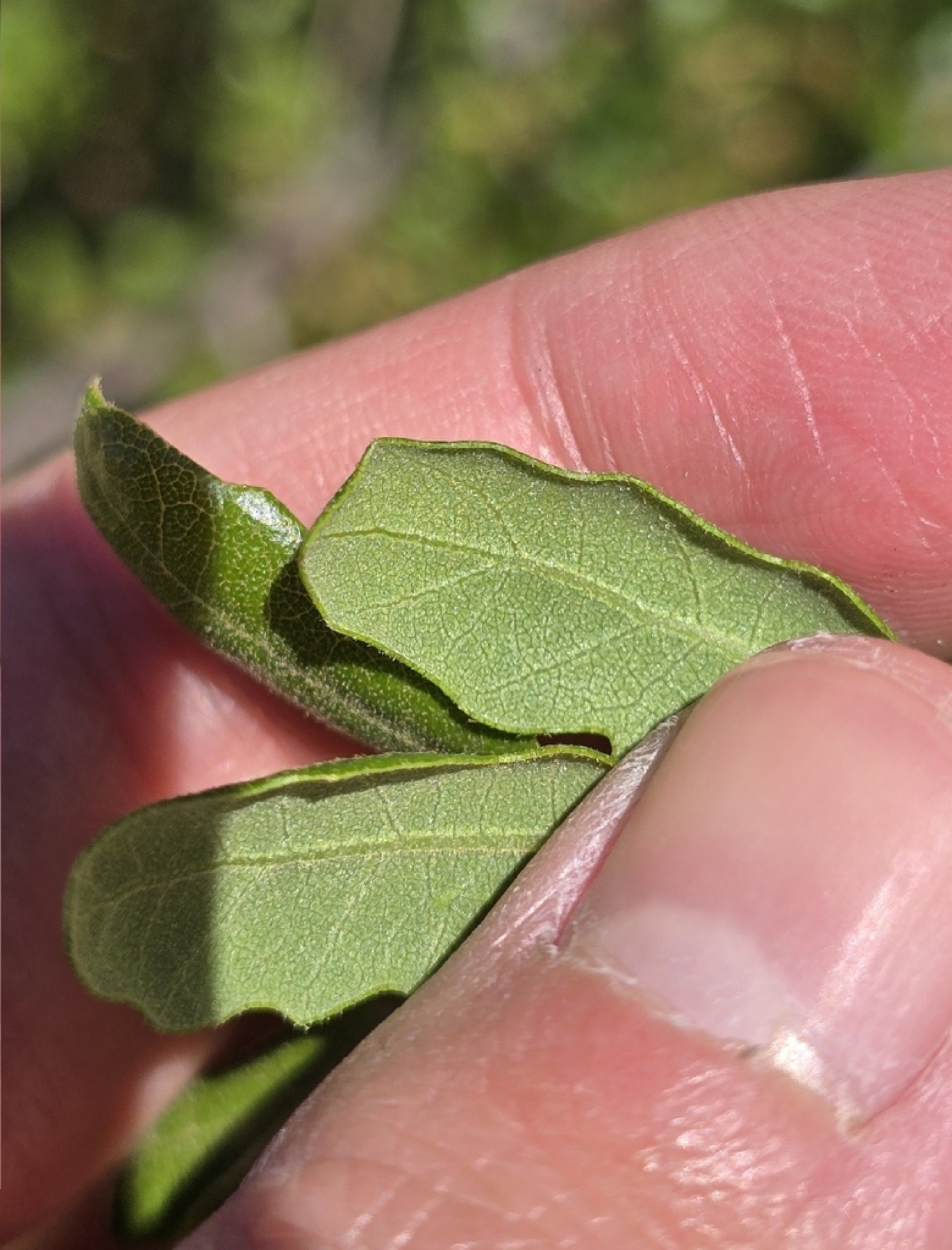
A defining shrub of Coastal Sage Scrub and a true sage. Square stems (it’s in the mint family), dark green, wrinkled, aromatic leaves with rolled-under margins, and pale lavender-to-white flowers stacked in whorled clusters at intervals up the stems. Drought-deciduous — it sheds leaves and looks twiggy by late summer. The species name mellifera (“honey-bearing”) says it all.
Ecological role
Black Sage is exceptional for native bees, honey bees, and hummingbirds; the species name mellifera means ‘honey-bearing.’ Seeds feed birds, and the dried flower whorls hold interest into winter.
Habitat & range
Dry slopes and flats of cismontane Southern California, often mingling with California Sagebrush and California Buckwheat.
In the garden
Tough, fragrant, and one of the best bee plants you can grow. Full sun, sharp drainage, no summer water once established. Shear lightly after bloom to keep it dense.
Propagation
Easy from seed (sow in fall) or semi-hardwood cuttings. A reliable restoration and habitat-garden plant.
Where to see it near you
- iNaturalist — observed in Orange County
- Dry coastal and inland slopes throughout OC.
Problems
Trouble-free in lean, dry conditions; dislikes summer water and rich soil.