California Sagebrush
Artemisia californica · Asteraceae
- Form
- Subshrub
- Height
- 2–5 ft
- Sun
- Full Sun
- Water
- Very Low
- Blooms
- Aug, Sep, Oct, Nov
- Habitat
- Coastal Sage Scrub · Chaparral
🌿 California native
Quick facts · Habitat: Coastal Sage Scrub (the plant it’s named for), Chaparral edges · Form / size: Soft, mounding subshrub, 2–5 ft · Sun: Full sun · Water (established): Very low · Blooms: Late summer–fall (inconspicuous) · Scent: Strong, sweet-pungent
Description
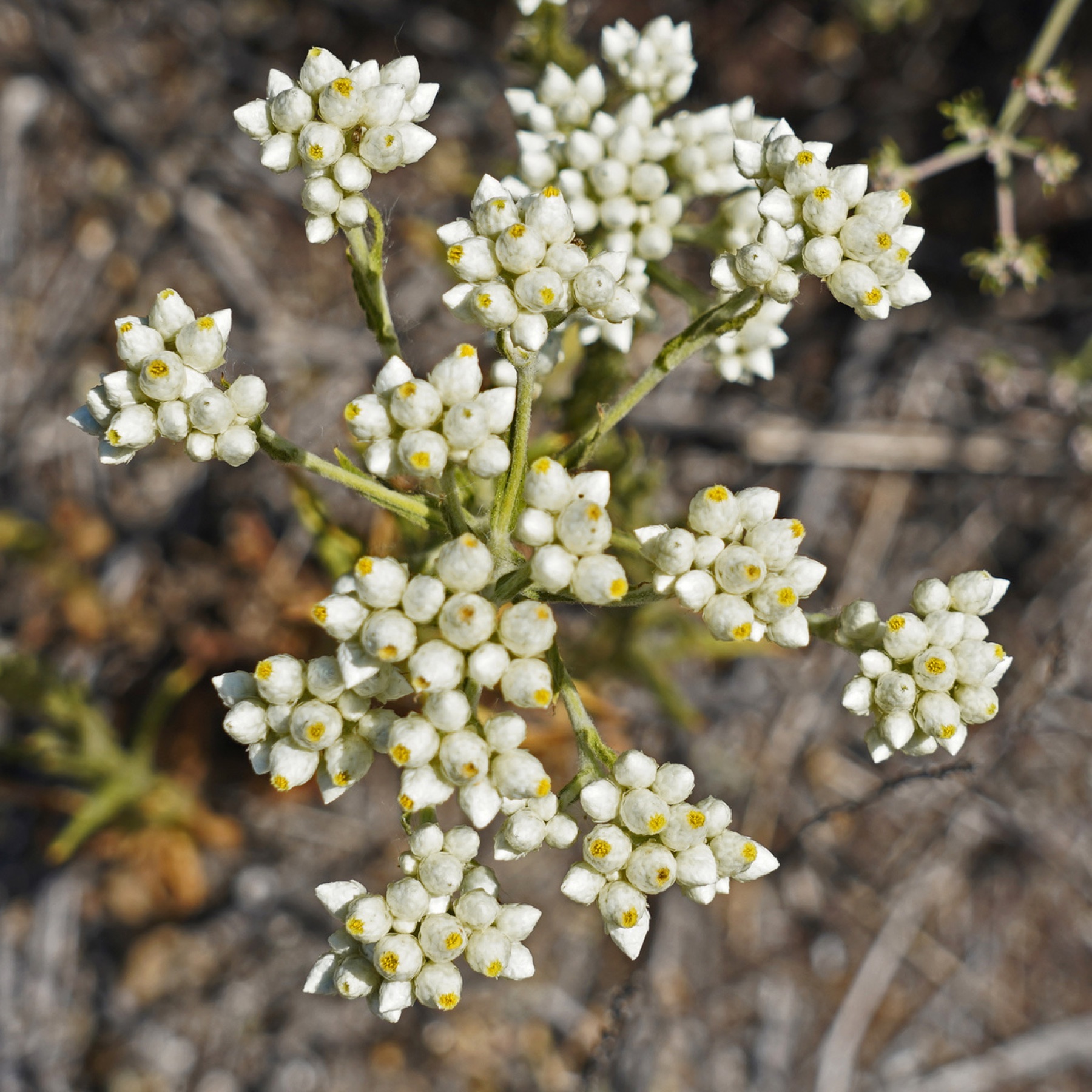
The defining plant of Coastal Sage Scrub and the source of its smell. Soft, finely divided, thread-like grey-green leaves release an intense, sweet-sage aroma when brushed — sometimes called “cowboy cologne.” It’s drought-deciduous: in the dry season it sheds leaves and looks half-dead, then flushes green with the first rains. Despite the name it’s not a true sage (that’s Salvia) — it’s in the sunflower family, and its tiny fall flowers are wind-pollinated and easy to miss.
Ecological role
California Sagebrush is the defining plant of coastal sage scrub. The California Gnatcatcher, a federally threatened bird, depends on the dense cover of this shrub and its habitat community; the bird is entirely restricted to coastal sage scrub. The resinous, drought-deciduous foliage creates the habitat’s characteristic structure and smell—it leafs out with winter rains and sheds by summer, which shapes both how the landscape looks in different seasons and which animals can shelter there. It’s also a host plant for native butterflies and moths, including species that feed their caterpillars specifically on Artemisia leaves. Development and non-native invasion typically convert coastal sage scrub to annual grassland, not another shrub community. Removal of the sagebrush framework eliminates nesting sites for the California Gnatcatcher and leaves hundreds of associated insects without host plants.
Habitat & range
Coastal hills, bluffs, and canyons from the Bay Area into Baja, blanketing the soft-scrub slopes of coastal Orange County.
In the garden
A fast, forgiving, fragrant filler for dry gardens and habitat restoration. Cut back lightly after the rainy season to keep it dense. Full sun, no summer water. Pairs beautifully with California Buckwheat and black sage.
Propagation
Easy — one of the simplest natives to propagate, which is why it’s a restoration staple. Take semi-hardwood cuttings (fall/winter; they root readily) or sow seed in fall. See Propagation Basics.
Where to see it near you
- iNaturalist — observed in Orange County
- Crystal Cove, Laguna Coast Wilderness, Upper Newport Bay.
Problems
Trouble-free outdoors. Aphids may cluster on tender new growth in spring but rarely need action.