Hollyleaf Cherry
Prunus ilicifolia · Rosaceae
- Form
- Shrub-tree
- Height
- 8-25 ft
- Sun
- Full Sun
- Water
- Low
- Blooms
- Mar, Apr, May
- Pet toxicity
- Toxic
- Habitat
- Chaparral · Coastal Sage Scrub · Oak Woodland
🌿 California native
Quick facts
- Habitat: Chaparral, Coastal Sage Scrub, Oak Woodland
- Form / size: Evergreen shrub or small tree, 8-25 ft
- Sun: Full sun to part shade · Water: Low once established
- Blooms: Spring · Pollinator value: High
Description
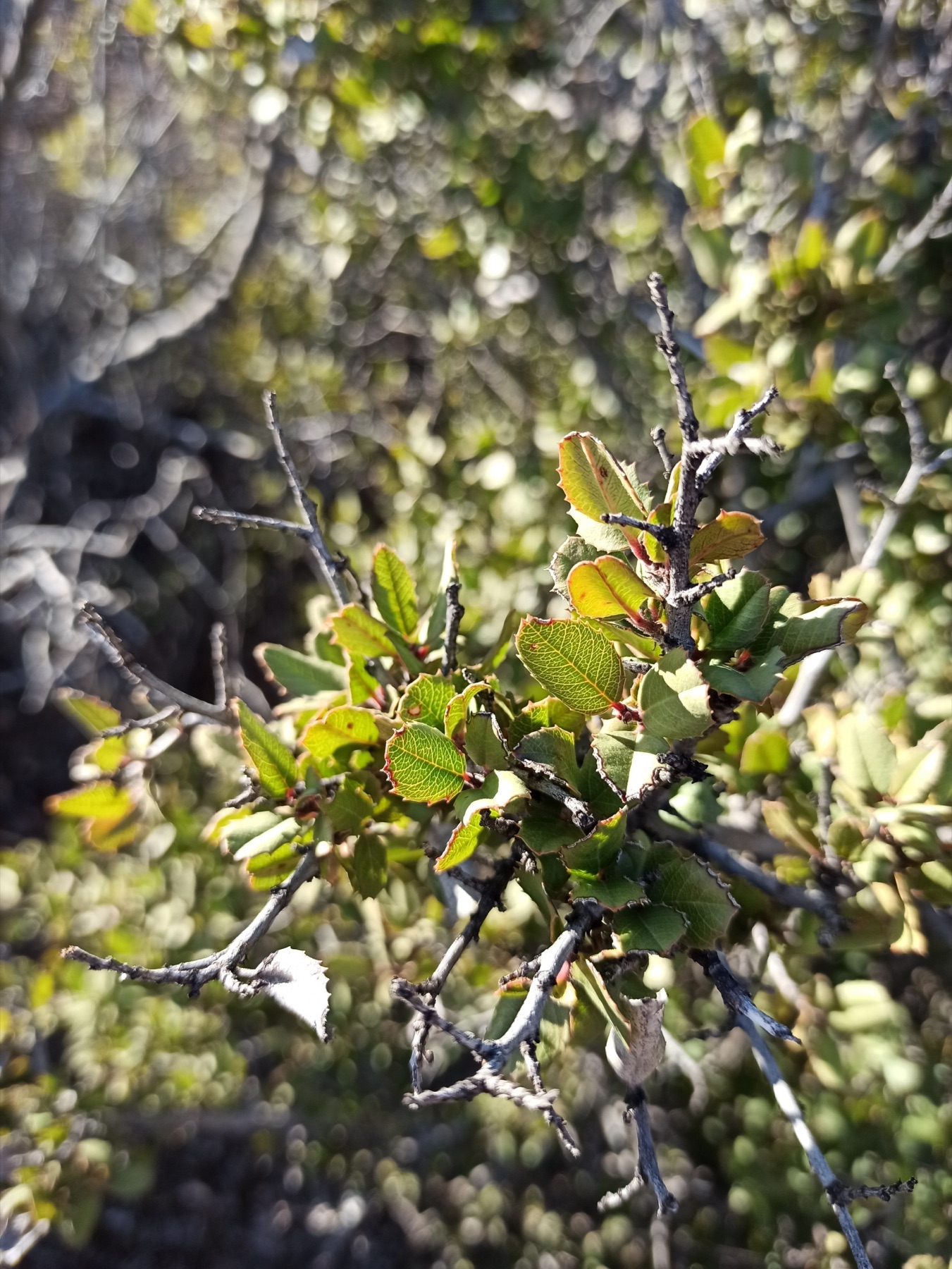
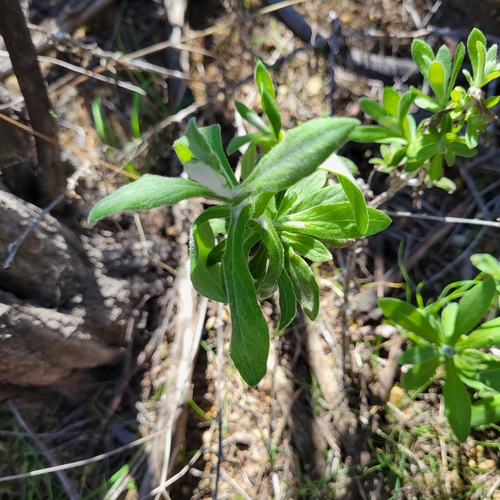
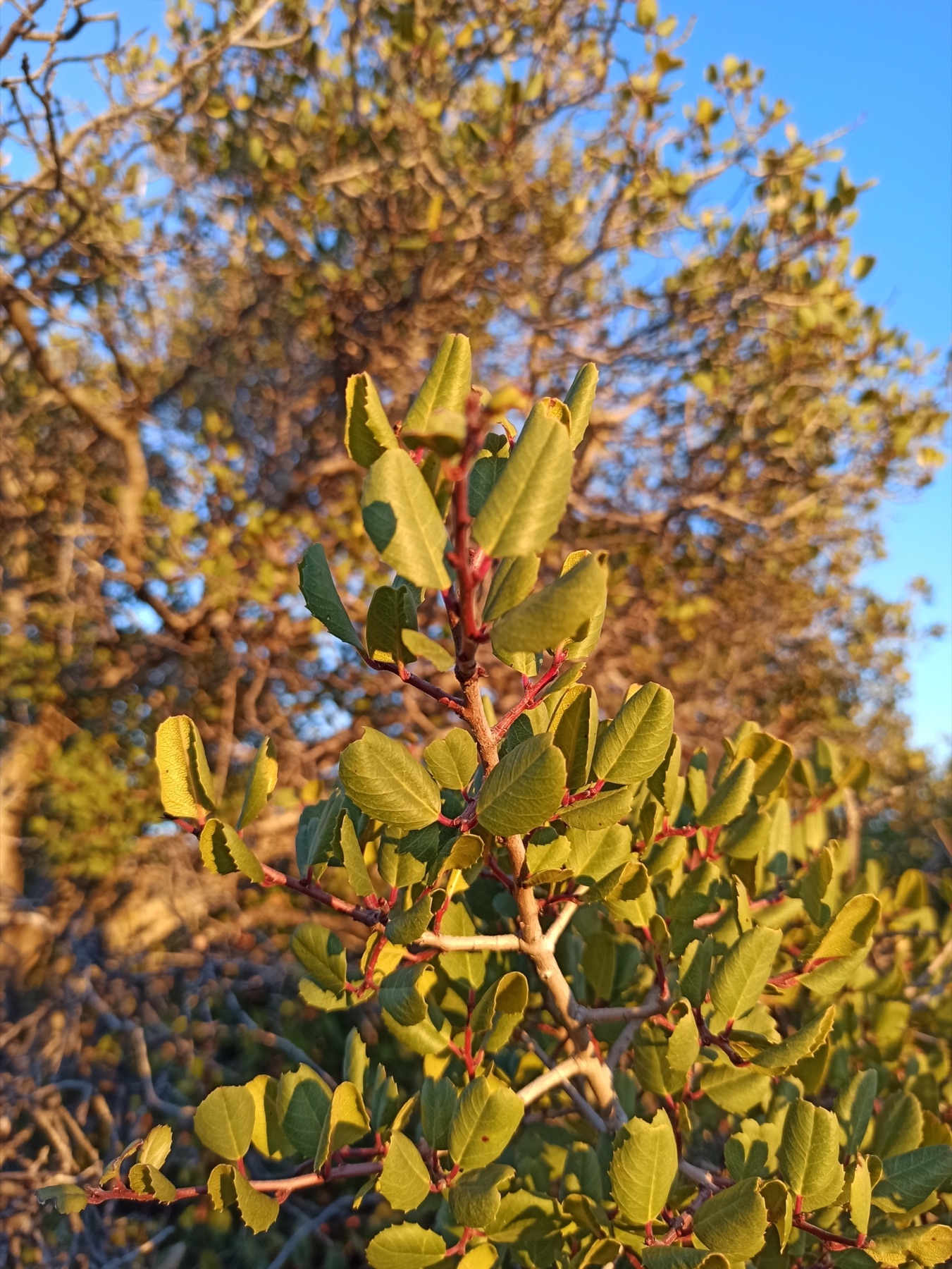
A tough evergreen shrub or small tree with glossy, stiff, holly-like leaves and clusters of creamy white flowers. Dark cherry-like fruits follow, ripening to deep red or black.
Wildlife & pollinators
Flowers feed native bees and other insects. Fruits are valuable for birds and mammals.
Ecological role
Hollyleaf cherry is built to survive fire and then feed everything afterward. It sprouts back hard from the root crown after burning, so a stand that looks destroyed is usually intact underground and returns as a thicket rather than starting over from seed. That persistence makes it one of the structural evergreens of mature chaparral, holding dense year-round cover on slopes where most of the other cover is seasonal.
The fruit is where it pays the rest of the system. Each cherry is a thin layer of sweet flesh over a large pit, which is a poor meal for a seed-eater and an excellent one for an animal that swallows fruit whole and moves on. Coyotes, foxes, and birds do exactly that and drop the pits at distance, so the plant gets dispersal in return for very little sugar. The leaves and twigs run the opposite direction, loaded with cyanogenic compounds that keep browsing in check, which is why a hollyleaf cherry thicket stays thick.
Habitat & range
Chaparral, coastal sage scrub edges, oak woodland margins, canyons, and dry slopes across coastal Southern California and Baja California. It is a lower-elevation plant, most at home under about 5,000 ft, and it climbs the warm desert-facing slopes of the San Bernardino Mountains without being a plant of the cold conifer forest at the top. An established hollyleaf cherry in a Big Bear neighborhood at 6,700 ft is far more likely to have been planted than to have arrived on its own — it is a popular native hedge and screen, and it takes the cold better than its natural range suggests.
In the garden
Excellent as a large native screen, wildlife hedge, or small evergreen tree. Give it space; it is slow to moderate but eventually substantial.
Propagation
From seed. Fresh seed is best and usually needs seasonal stratification. Plant nursery-grown stock if you want predictable establishment.
Where to see it near you
- iNaturalist — observed in Southern California
- Chaparral slopes, canyon edges, and oak woodland margins.
Problems
Leaves, pits, and wilted plant parts can be toxic if eaten. Keep pets and livestock from browsing it.
Sources
Commonly confused with
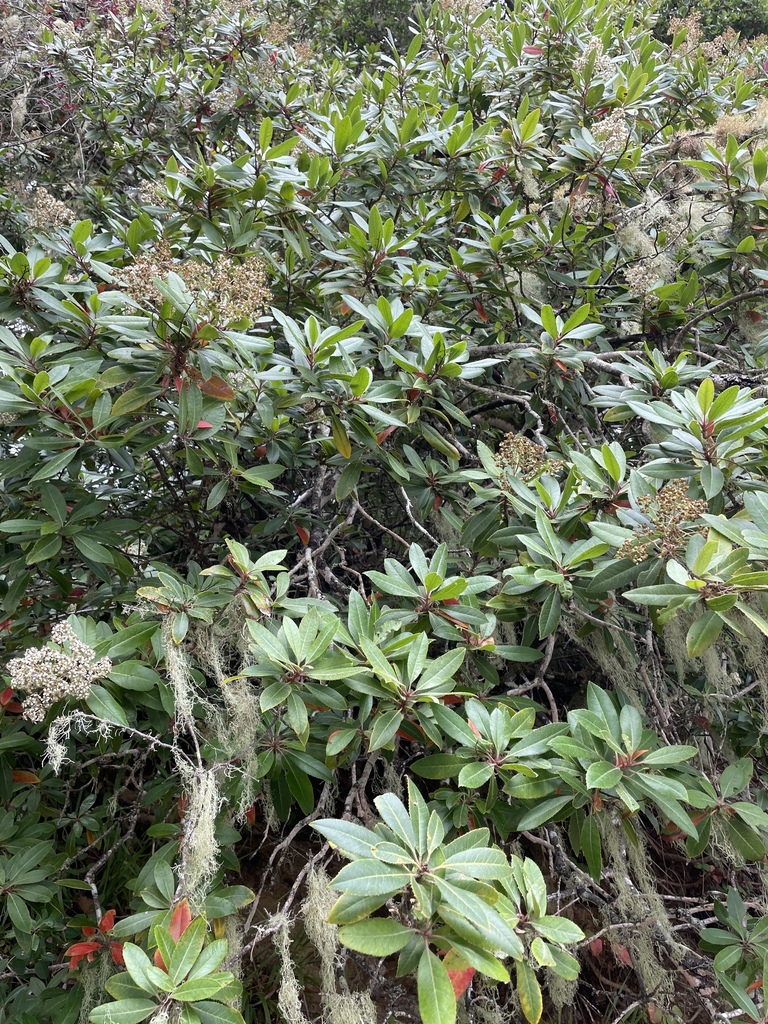 Toyon 🌿 Heteromeles arbutifolia the classic mix-up, since both are stiff evergreen shrubs with toothed leaves and red-to-dark fruit. Toyon leaves lie flat and are evenly saw-toothed, never wavy or spine-tipped; hollyleaf cherry leaves are stiffly wavy with spine-tipped teeth and often curl like a potato chip. Toyon carries big flat-topped clusters of small red berries into winter, hollyleaf cherry hangs single dark purple-black cherries on short stalks.
 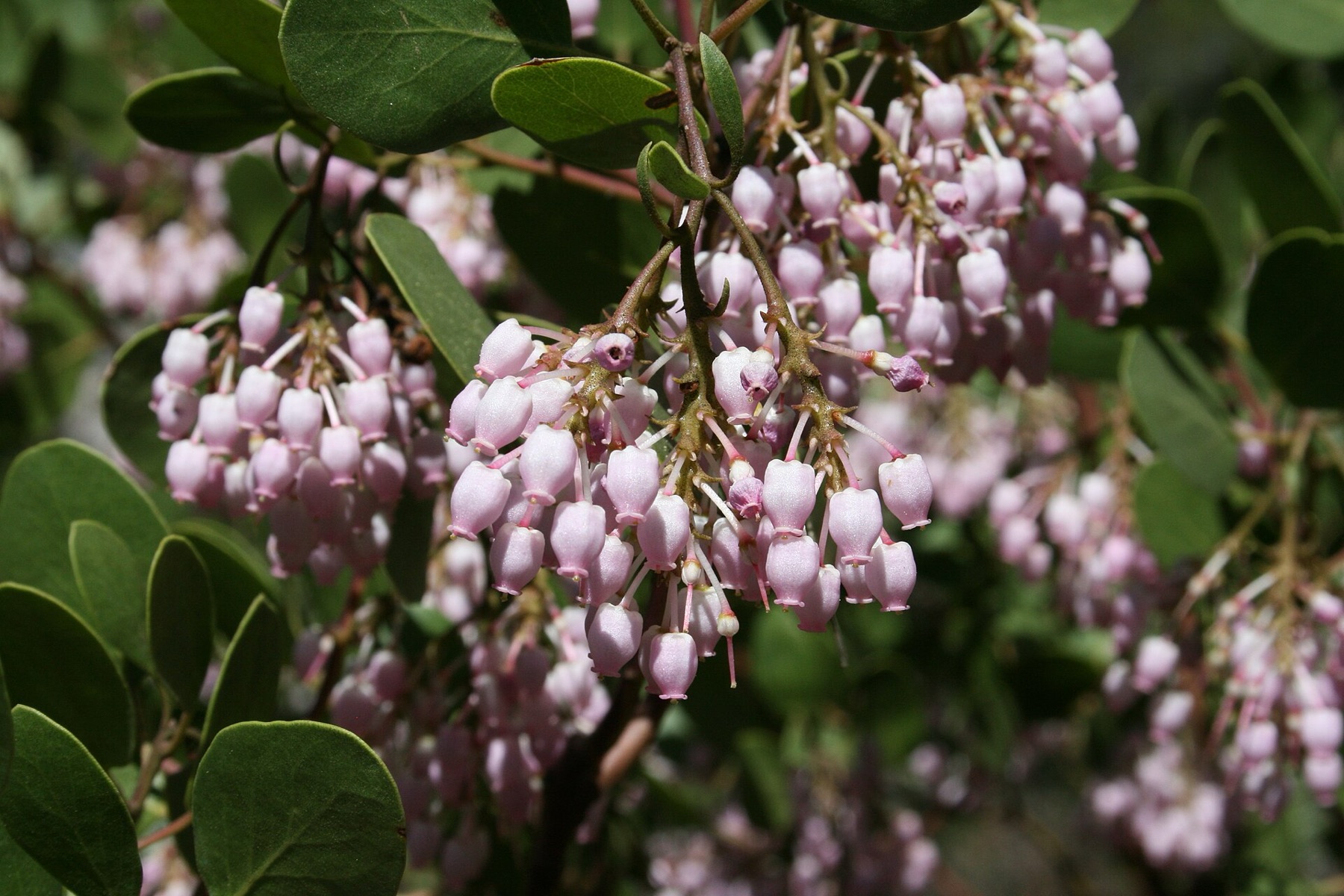 Greenleaf Manzanita 🌿 Arctostaphylos patula the evergreen leathery shrub you'll actually see beside it up at Big Bear. Manzanita bark is smooth, peeling, deep mahogany-red and its leaves are dull blue-green, untoothed, and often held edge-on to the sun. Hollyleaf cherry has plain gray bark and glossy dark green toothed leaves held flat.
 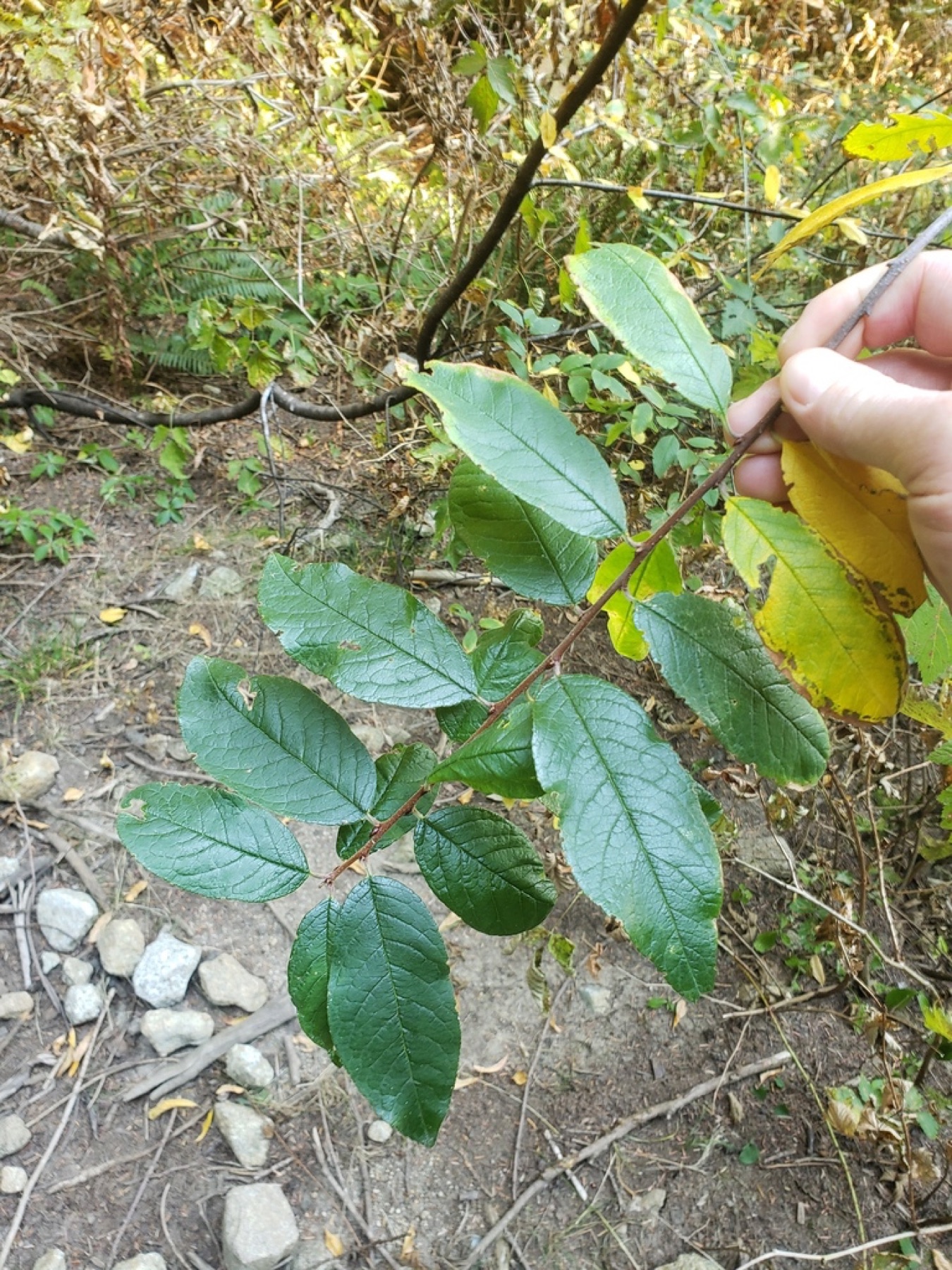 Bitter Cherry 🌿 Prunus emarginata the cherry that genuinely belongs at Big Bear elevations. It is deciduous, with thin soft leaves that have blunt or notched tips and drop every fall, and its bark carries conspicuous horizontal lenticel bands. Hollyleaf cherry is evergreen and stiff-leaved year-round.
 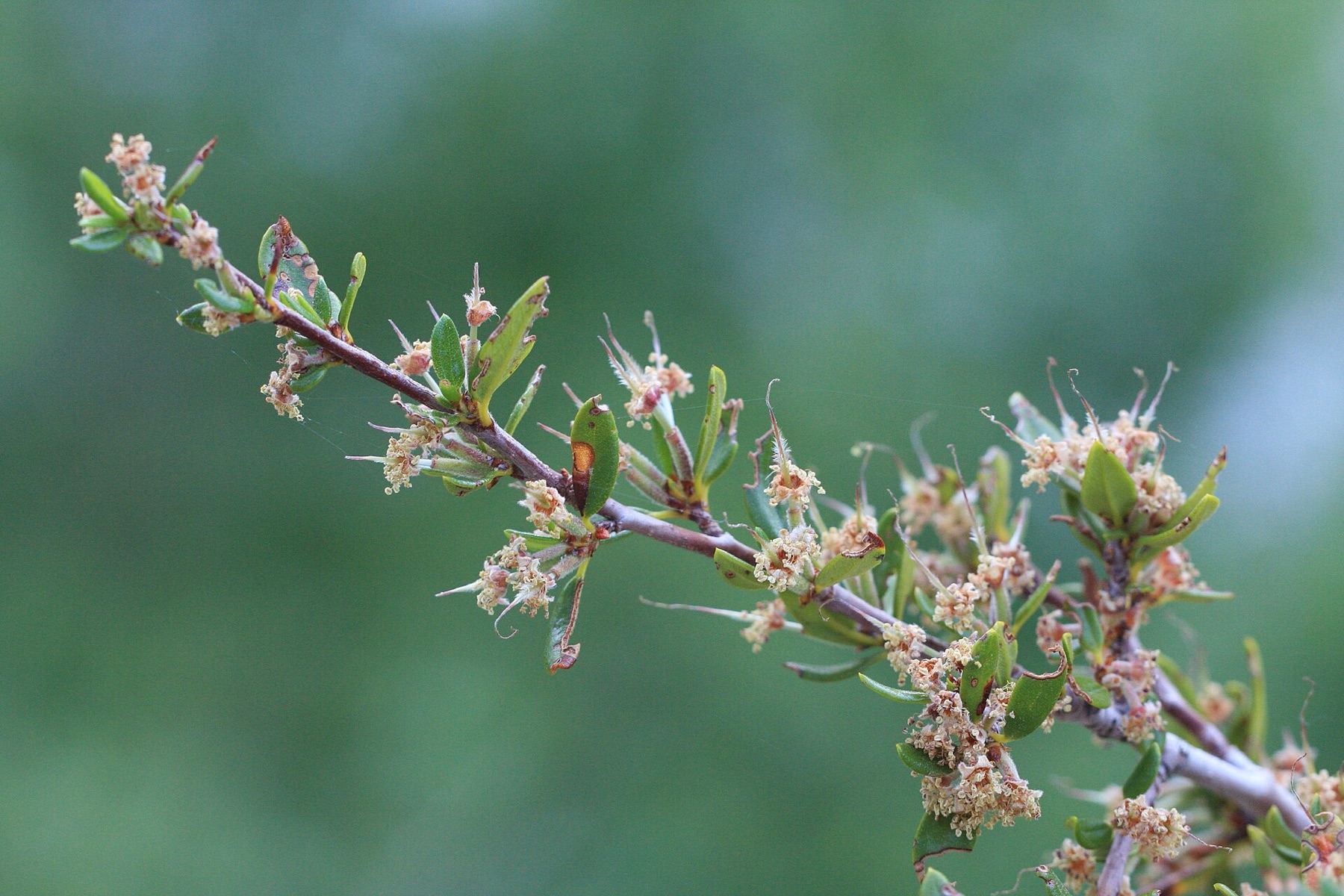 Curl-leaf Mountain Mahogany 🌿 Cercocarpus ledifolius also evergreen and leathery on the dry side, but its leaves are narrow with edges rolled under, untoothed, and its fruit is a dry seed with a long feathery corkscrew tail rather than a cherry.