Redberry Buckthorn
Rhamnus crocea · Rhamnaceae
- Form
- Shrub
- Height
- 2-6 ft
- Sun
- Part Shade
- Water
- Low
- Blooms
- Feb, Mar, Apr
- Pet toxicity
- Unknown
- Habitat
- Chaparral · Coastal Sage Scrub · Oak Woodland
🌿 California native
Quick facts · Habitat: Chaparral, coastal sage scrub, oak woodland understory · Form / size: Evergreen shrub, 2-6 ft · Sun: Part shade to sun · Water: Low once established · Blooms: Late winter-spring · Wildlife value: High for berries
Description
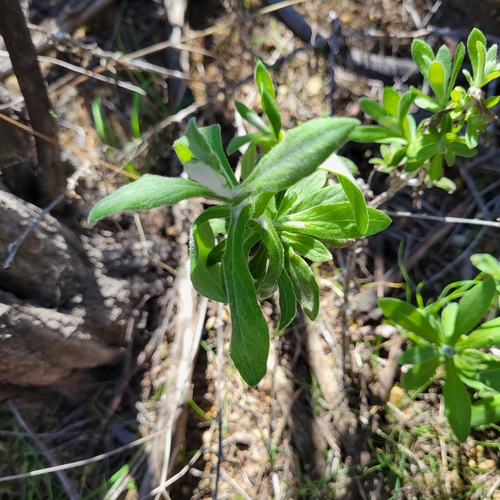
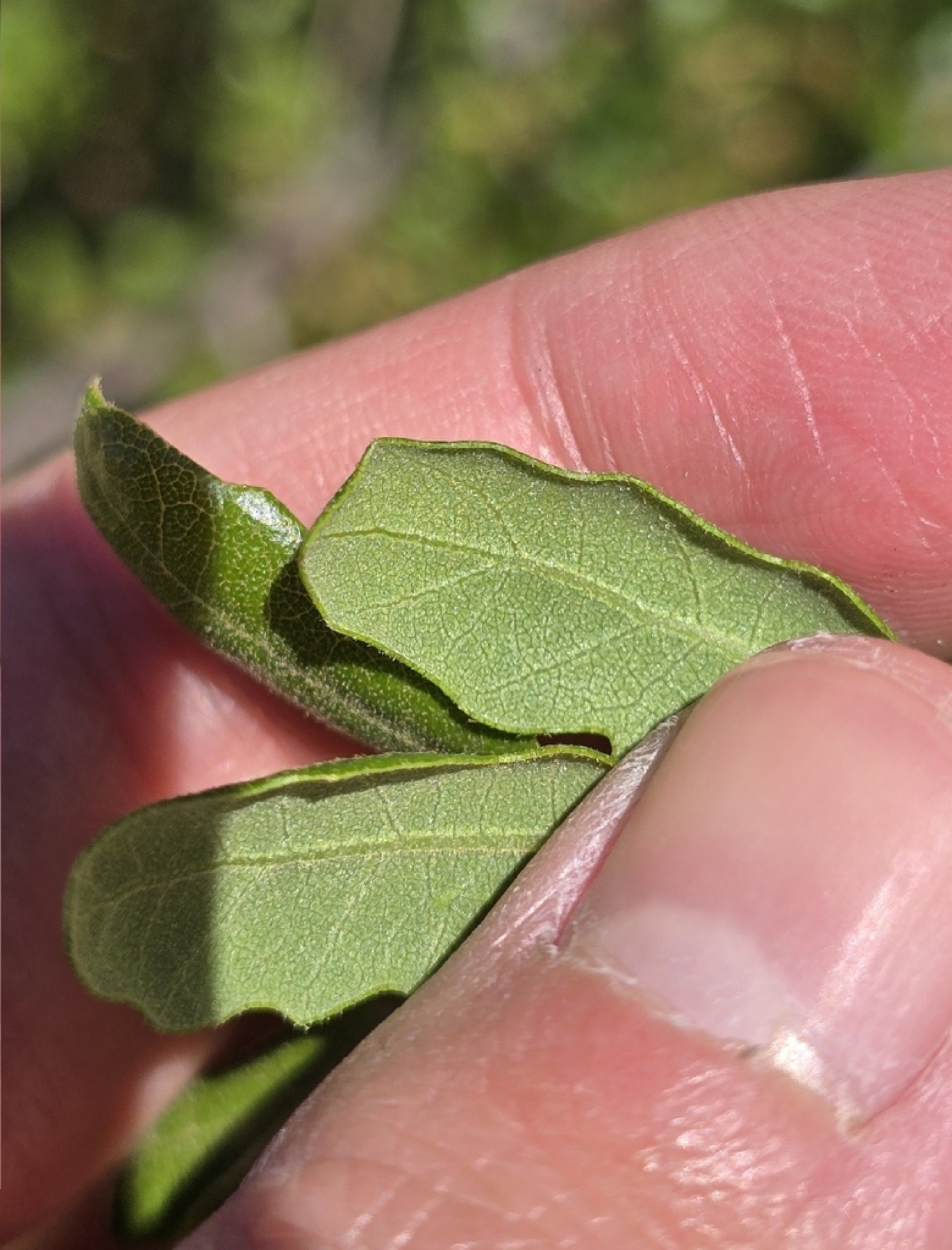
A compact evergreen shrub with small, stiff, often spiny-edged leaves and bright red berries. It usually feels tucked into the understory rather than standing out in the open.
Wildlife & pollinators
Birds eat the berries, and small insects visit the inconspicuous flowers. Dense twigs provide cover.
Habitat & range
Chaparral, oak woodland understory, coastal sage scrub edges, and dry canyon slopes across Southern California.
In the garden
Good for dry shade, wildlife plantings, and subtle understory structure. It is not flashy, but the red berries and evergreen texture are useful.
Propagation
From seed. Clean seed from ripe berries and expect slow, uneven germination.
Where to see it near you
- iNaturalist — observed in Southern California
- Oak understory, chaparral shade, and dry canyon edges.
Problems
Slow-growing and easily overlooked. Protect young plants from browsing.
Sources
Commonly confused with
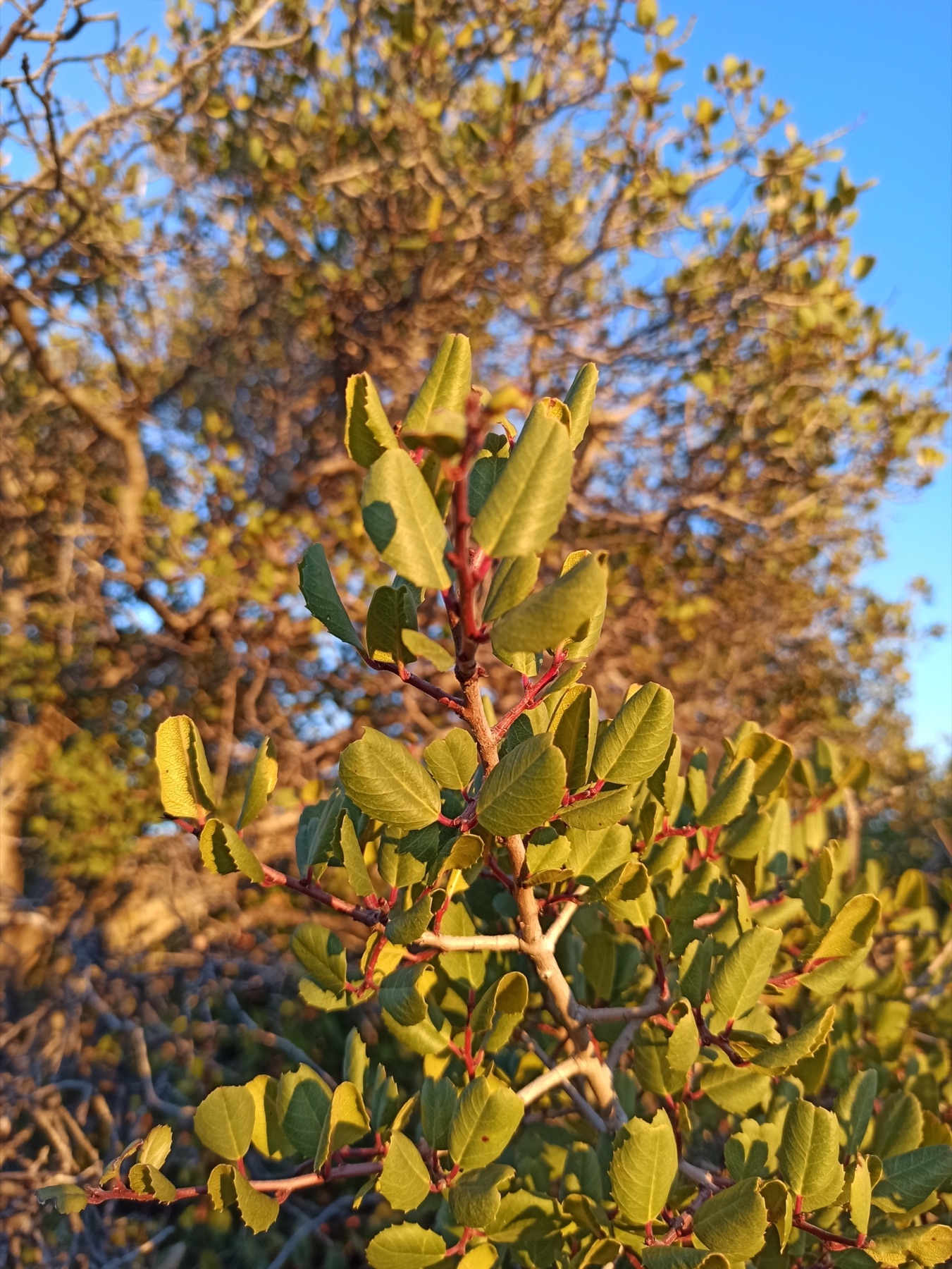 Hollyleaf Redberry 🌿 Rhamnus ilicifolia larger, holly-like leaves and usually taller; redberry buckthorn has smaller leaves and brighter red berries.
 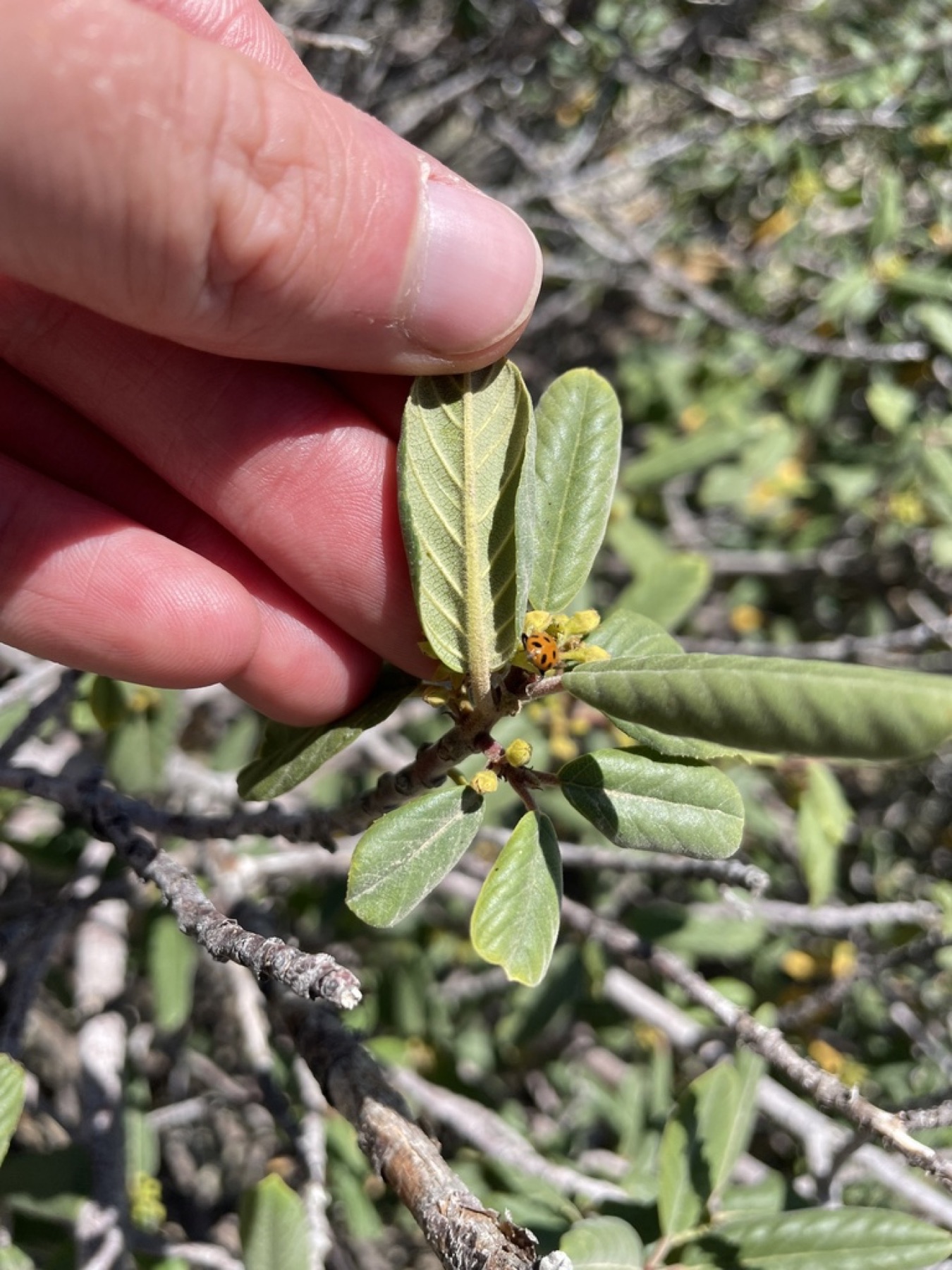 California Coffeeberry 🌿 Frangula californica larger leaves and berries that darken through red to black; redberry buckthorn is smaller and more spiny-edged.