California Coffeeberry
Frangula californica · Rhamnaceae
- Form
- Shrub
- Height
- 4–12 ft
- Sun
- Part Shade
- Water
- Low
- Blooms
- May, Jun, Jul
- Habitat
- Chaparral · Oak Woodland
🌿 California native
Quick facts
- Habitat: Chaparral, Oak Woodland, shaded slopes
- Form / size: Evergreen shrub, 4–12 ft
- Sun: Full sun to part shade · Water: Low
- Blooms: Late spring (inconspicuous) · Fruit: green → red → black
Description
A tidy, adaptable evergreen with glossy green leaves and small greenish flowers that are easy to miss — but the berries are the show, ripening through green to red to black, two-toned on the bush at once, like little coffee beans (the seeds resemble coffee, though it’s unrelated). Excellent bird plant and one of the most garden-friendly natives.
Wildlife & pollinators
Flowers draw native bees and butterflies; the abundant berries are a major bird food; foliage hosts butterfly larvae.
Habitat & range
Chaparral, oak woodland, and shaded canyon slopes across much of California; very adaptable to sun or shade.
In the garden
A reliable, handsome evergreen for sun or dry shade — hedge, screen, or specimen. Low water, tolerant of clay and a range of conditions. Cultivars like ‘Eve Case’ and ‘Mound San Bruno’ are tidy garden forms.
Propagation
From seed (clean and cold-stratify) and semi-hardwood cuttings.
Where to see it near you
- iNaturalist — observed in Orange County
- Shaded chaparral and oak canyons.
Problems
Very adaptable and trouble-free; tolerates more garden water than most natives.
Sources
Commonly confused with
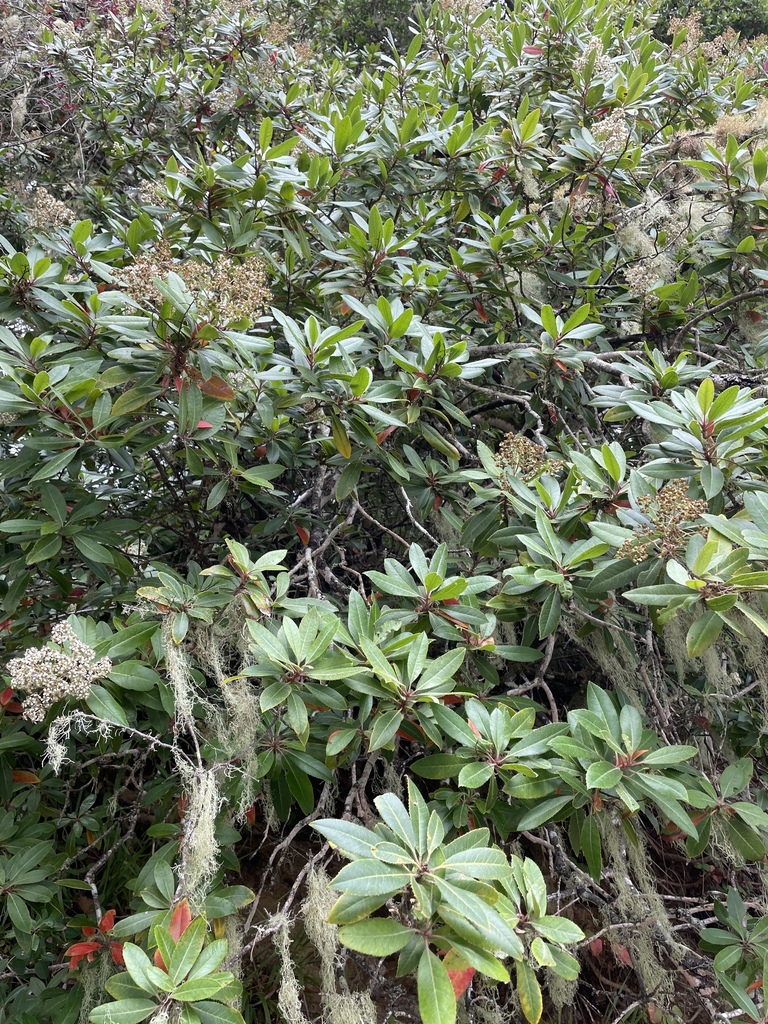 Toyon 🌿 Heteromeles arbutifolia also a berry shrub, but toyon has sharply toothed leaves and berries that stay red; coffeeberry's leaves are softer/smoother and its berries go red then black.