Cleveland Sage
Salvia clevelandii · Lamiaceae
- Form
- Shrub
- Height
- 3–5 ft
- Sun
- Full Sun
- Water
- Very Low
- Blooms
- May, Jun, Jul
- Habitat
- Chaparral · Coastal Sage Scrub
🌿 California native
Quick facts
- Habitat: Chaparral, dry slopes (widely planted in gardens)
- Form / size: Rounded shrub, 3–5 ft
- Sun: Full sun · Water (established): Very low
- Blooms: Late spring–summer · Pollinator value: High
Description
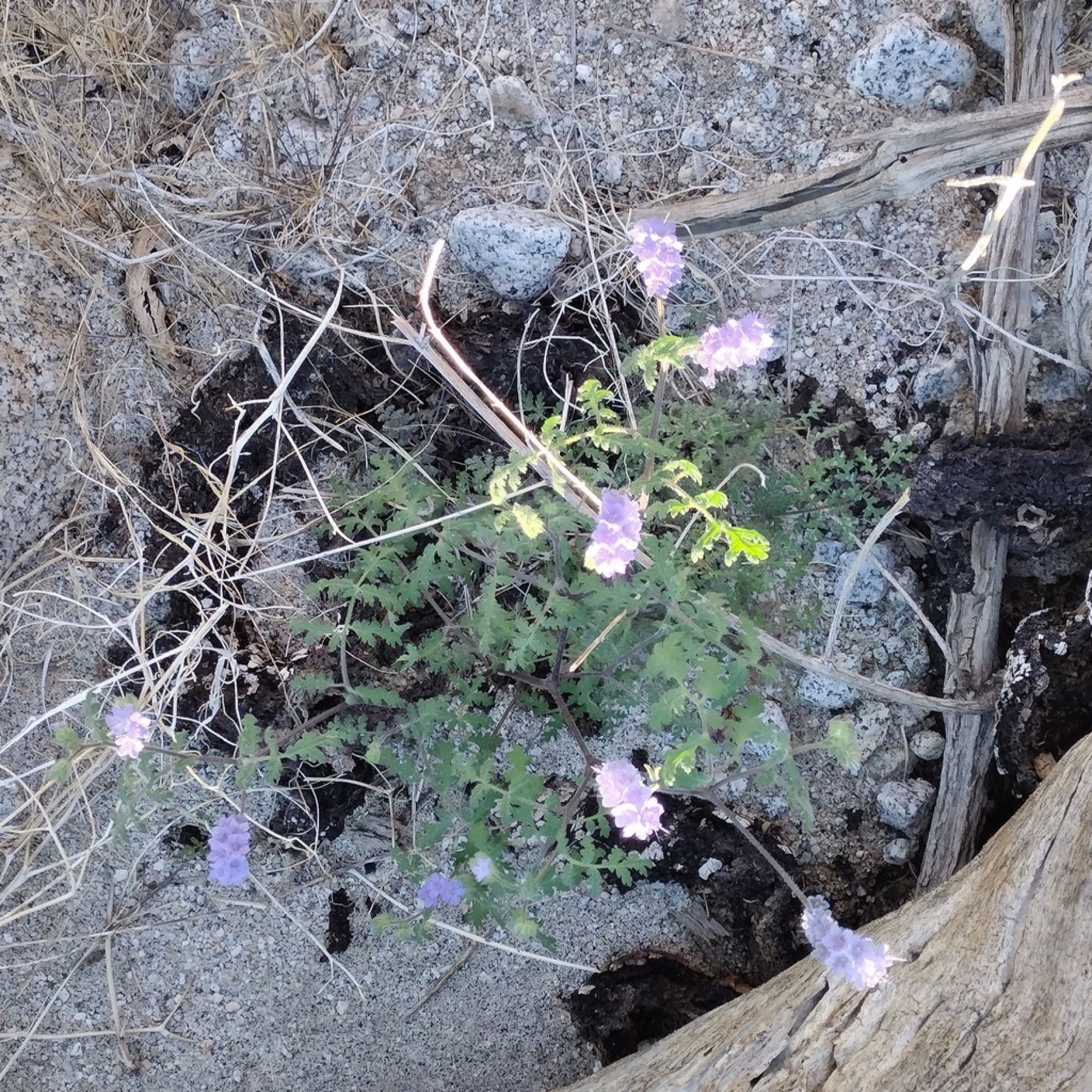
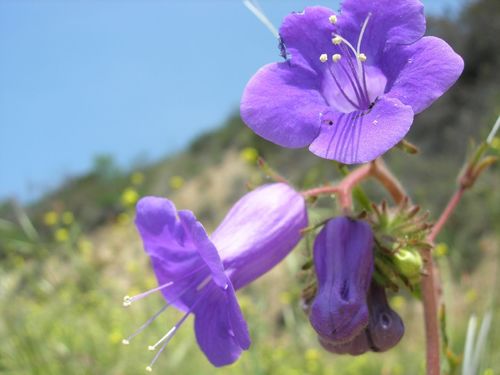
The most intensely fragrant of the local sages — brush it and the whole garden smells of it. Grey-green leaves and showy whorled clusters of blue-violet flowers spaced like beads up the stems, often drying into ornamental “ball” tiers. Natively a San Diego–region chaparral plant; widely grown (and hybridized, e.g. ‘Winnifred Gilman’, ‘Pozo Blue’) across Southern California.
Wildlife & pollinators
Bumble bees, native bees, hummingbirds, and butterflies all work it heavily.
Habitat & range
Dry chaparral slopes of the southern ranges; in OC most often encountered as a planted or naturalized garden sage.
In the garden
A garden star — compact, aromatic, and floriferous. Full sun, excellent drainage, very little summer water. Shear after bloom (leave some dried whorls for looks).
Propagation
Easy from semi-hardwood cuttings (named cultivars are cutting-grown to stay true) and from seed for the straight species.
Where to see it near you
Problems
Overwatering / humidity → fungal issues and Root Rot; keep it lean and airy.
Sources
Commonly confused with
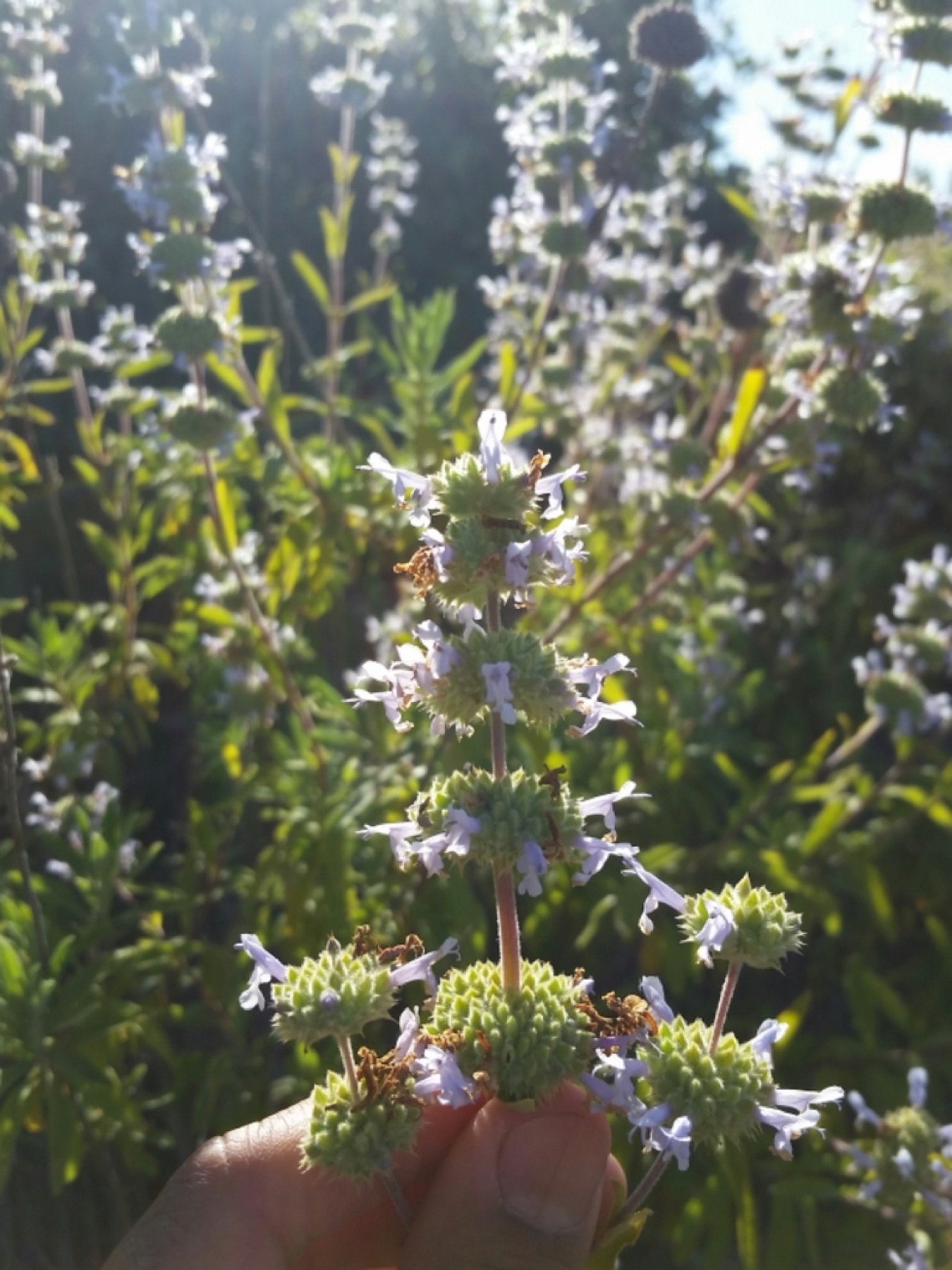 Black Sage 🌿 Salvia mellifera paler, smaller flowers and a coastal-scrub habit; Cleveland sage has richer blue-violet flowers and stronger scent.