California Dodder
Cuscuta californica · Convolvulaceae
- Form
- Parasitic vine
- Height
- twining vine
- Sun
- Full Sun
- Water
- Low Moderate
- Blooms
- Apr, May, Jun, Jul
- Pet toxicity
- Unknown
- Habitat
- Riparian · Coastal Sage Scrub · Chaparral
🌿 California native
Quick facts
- Habitat: Riparian edges, scrub, chaparral
- Form / size: Orange parasitic vine on host plants
- Sun: Full sun · Water: Follows its host plant
- Blooms: Spring-summer · Pollinator value: Moderate
Description
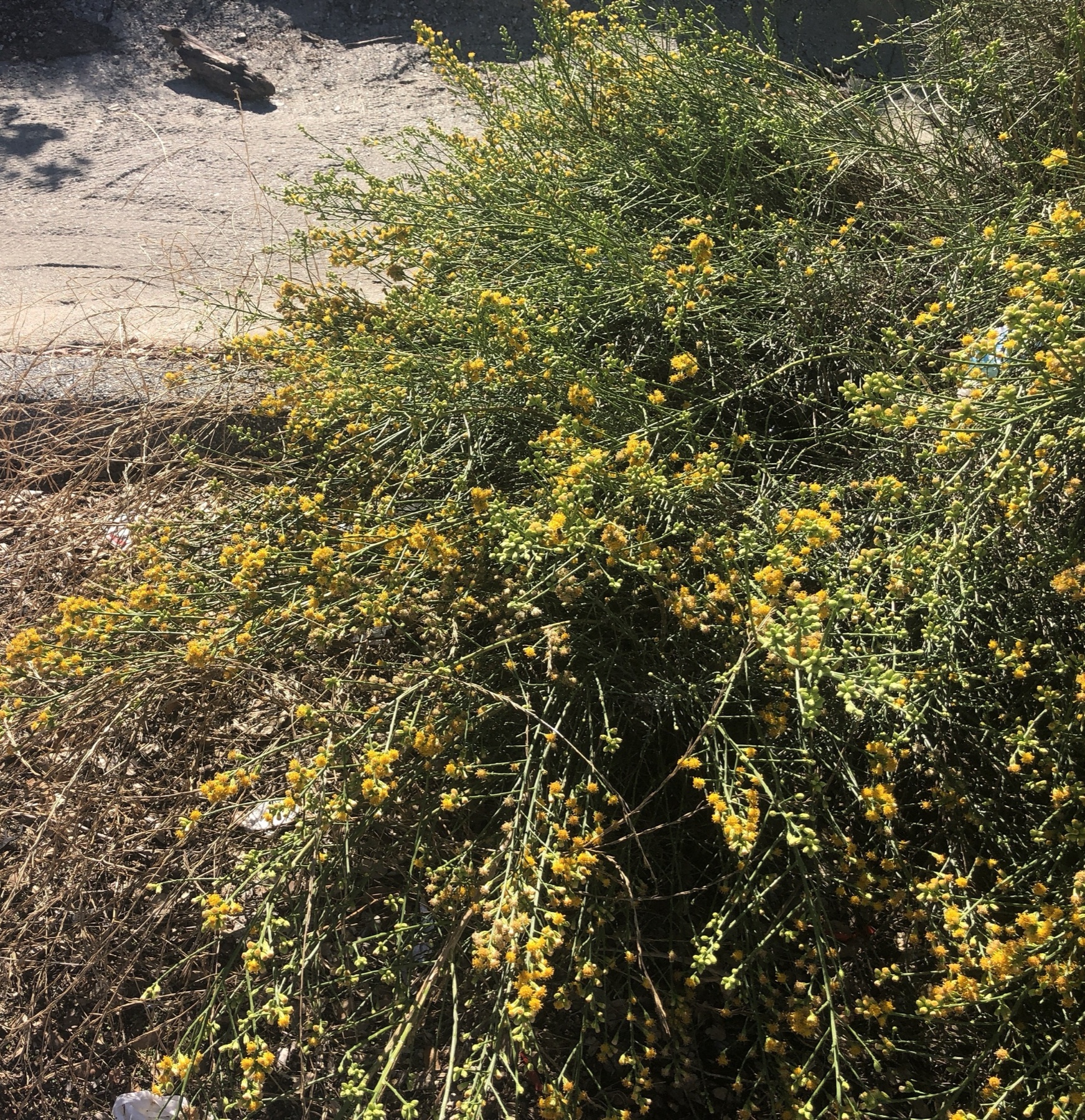
A strange native parasitic vine that looks like orange thread draped over shrubs and herbs. It has almost no visible leaves; once attached to a host, it draws water and nutrients through specialized structures.
Ecological role
California dodder is a parasitic vine. It draws water and nutrients directly from its host plant’s vascular system instead of producing its own tissue through photosynthesis. When dodder densely covers a host, the host plant experiences stress: its growth changes, and its internal conditions shift as energy gets diverted toward feeding the parasite.
A heavily parasitized host grows differently than an uninfected one. Canopy density changes, branching patterns shift, and the microhabitat under and around it becomes something new. That matters in riparian corridors, where plant diversity and spatial complexity support most of the life there. Restored creeks planted with uniform densities of the same natives can be ecologically flat at first, and dodder, paradoxically, adds texture — altered light and moisture pockets, stressed plant tissues, a different resource gradient, all transforming the microhabitat beneath the parasitized host.
Dodder’s tiny flowers are pale cream and clustered, blooming spring through early summer, and they offer nectar to small native bees and flies: insect food drawn from a plant that is itself feeding on its neighbors. In established native communities, the same tension that makes dodder something to manage in young restoration plantings is what keeps it from monopolizing riparian vegetation once that vegetation is established — one strand in a system shaped from within by complex dependencies.
Habitat & range
Coastal sage scrub, chaparral, riparian edges, and open disturbed native vegetation across California.
In the garden
Not a plant to intentionally add to ordinary gardens. In native habitat, it is part of the system; in a nursery bed or small planting, it can stress host plants.
Propagation
From seed on suitable host plants, but this is not recommended outside research or restoration work. Let natural populations remain in place where they are not damaging young restoration plantings.
Where to see it near you
- iNaturalist — observed near San Juan Capistrano
- Scrub and creek-edge vegetation where host shrubs are dense.
Problems
Can stress small restoration plantings. If it is overwhelming newly planted natives, remove infested stems before it flowers and seeds.