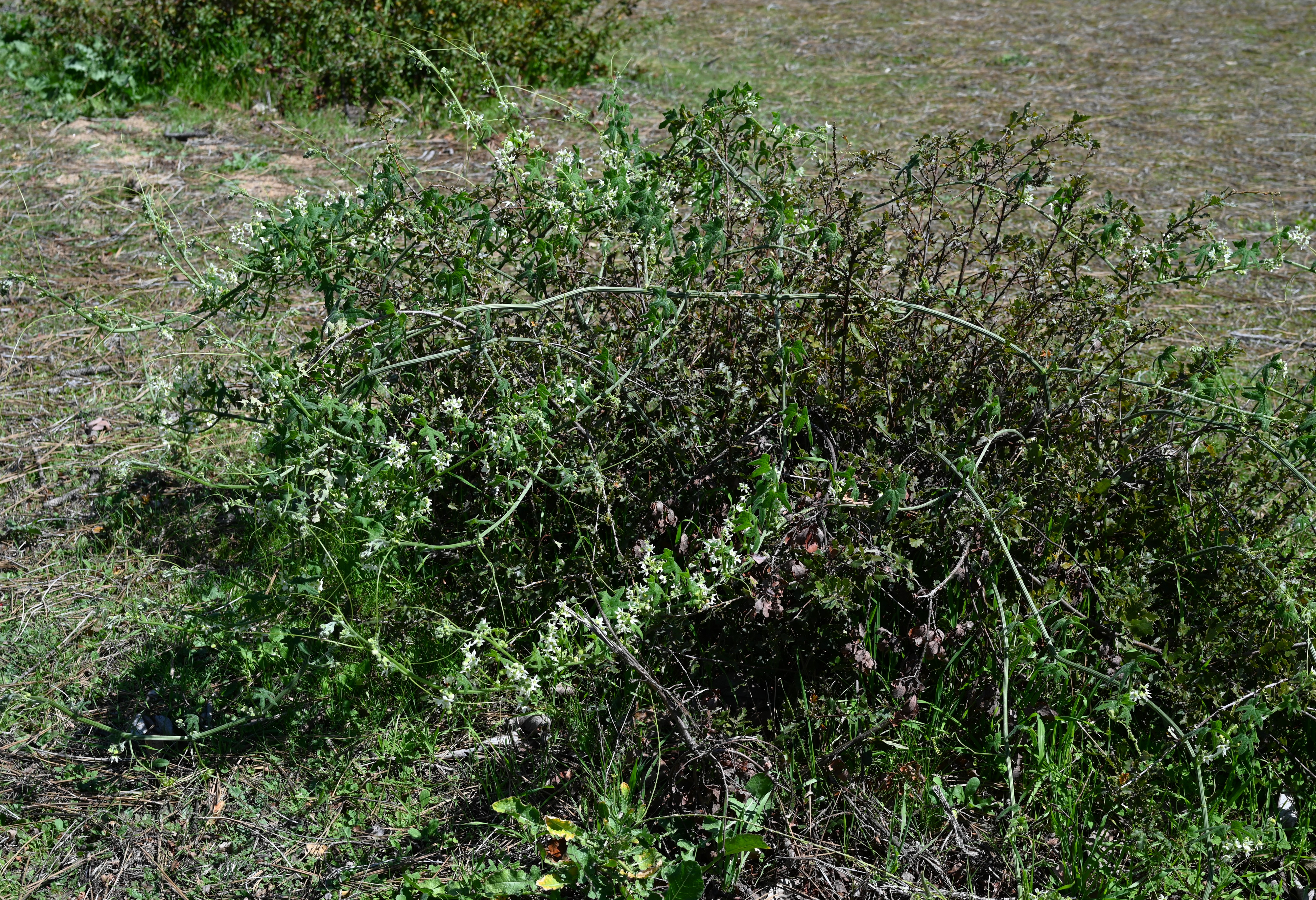
California Broomsage
Lepidospartum squamatum · Asteraceae
- Form
- Shrub
- Height
- 3-8 ft
- Sun
- Full Sun
- Water
- Low
- Blooms
- Aug, Sep, Oct, Nov
- Pet toxicity
- Unknown
- Habitat
- Riparian · Coastal Sage Scrub · Chaparral
🌿 California native
Quick facts
- Habitat: Riparian wash edges, alluvial scrub, dry creek terraces
- Form / size: Open broom-like shrub, 3-8 ft
- Sun: Full sun · Water: Low once established
- Blooms: Late summer-fall · Pollinator value: High
Description
A twiggy, broom-like native shrub with very small scale-like leaves and late-season yellow flower heads. From a distance it can look like a bundle of green stems; up close the tiny leaves and clustered yellow blooms give it away.
Ecological role
California broomsage fills a late-season pollinator niche. From August through November, when most spring and early-summer natives have finished flowering, this shrub is still producing blooms, and native bees, flies, and butterflies work its tiny yellow composite flowers during that window.
The plant also marks dynamic, frequently disturbed wash habitat, where riparian margins shift with seasonal floods and sediment turnover rather than holding a stable streambank. In these settings, where the channel itself moves, early-establishing shrubs like this one occupy ground as the system recovers from flood disturbance.
Habitat & range
Alluvial fans, dry washes, floodplain terraces, and open scrub along Southern California drainages. It is especially useful as an indicator of dynamic wash habitat rather than a permanently wet stream edge.
In the garden
Good for dry habitat gardens and restoration sites with sandy or rocky drainage. It can look sparse by ornamental standards, but it is tough and ecologically useful.
Propagation
From seed or cuttings. Seed may be easier for restoration scale; young plants need drainage and should not be overwatered.
Where to see it near you
- iNaturalist — observed near San Juan Capistrano
- Dry wash margins, alluvial benches, and open creek terraces.
Problems
Usually low-problem when planted in the right dry, well-drained setting. It dislikes rich soil and frequent irrigation.
Sources
Commonly confused with
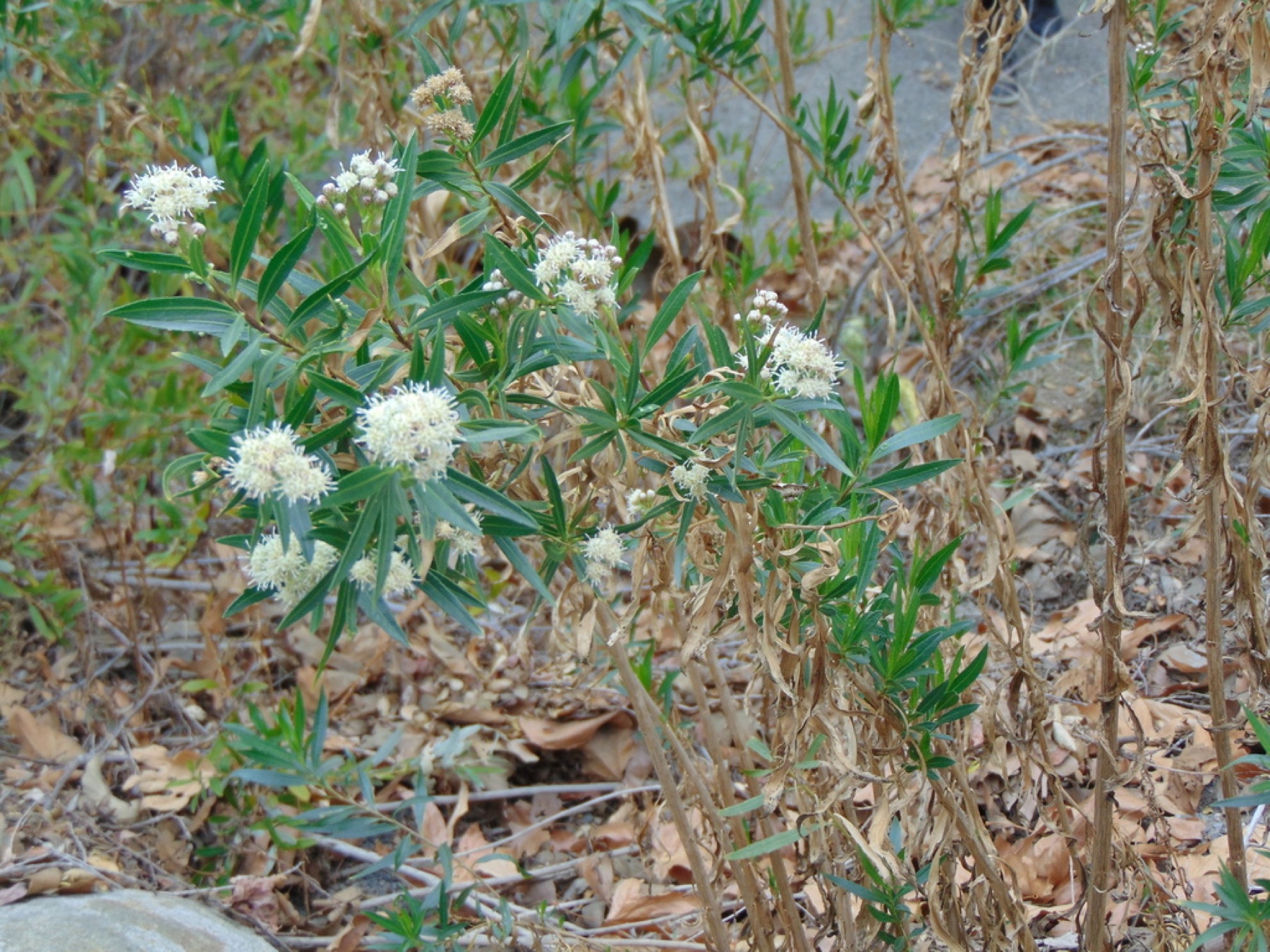 Mule Fat 🌿 Baccharis salicifolia also narrow-leaved and drainage-associated, but mule fat has broader willow-like leaves and white flower heads.