Black Cottonwood
Populus trichocarpa · Salicaceae
- Form
- Tree
- Height
- 60–150 ft
- Sun
- Full Sun
- Water
- High
🌿 California native
Quick facts
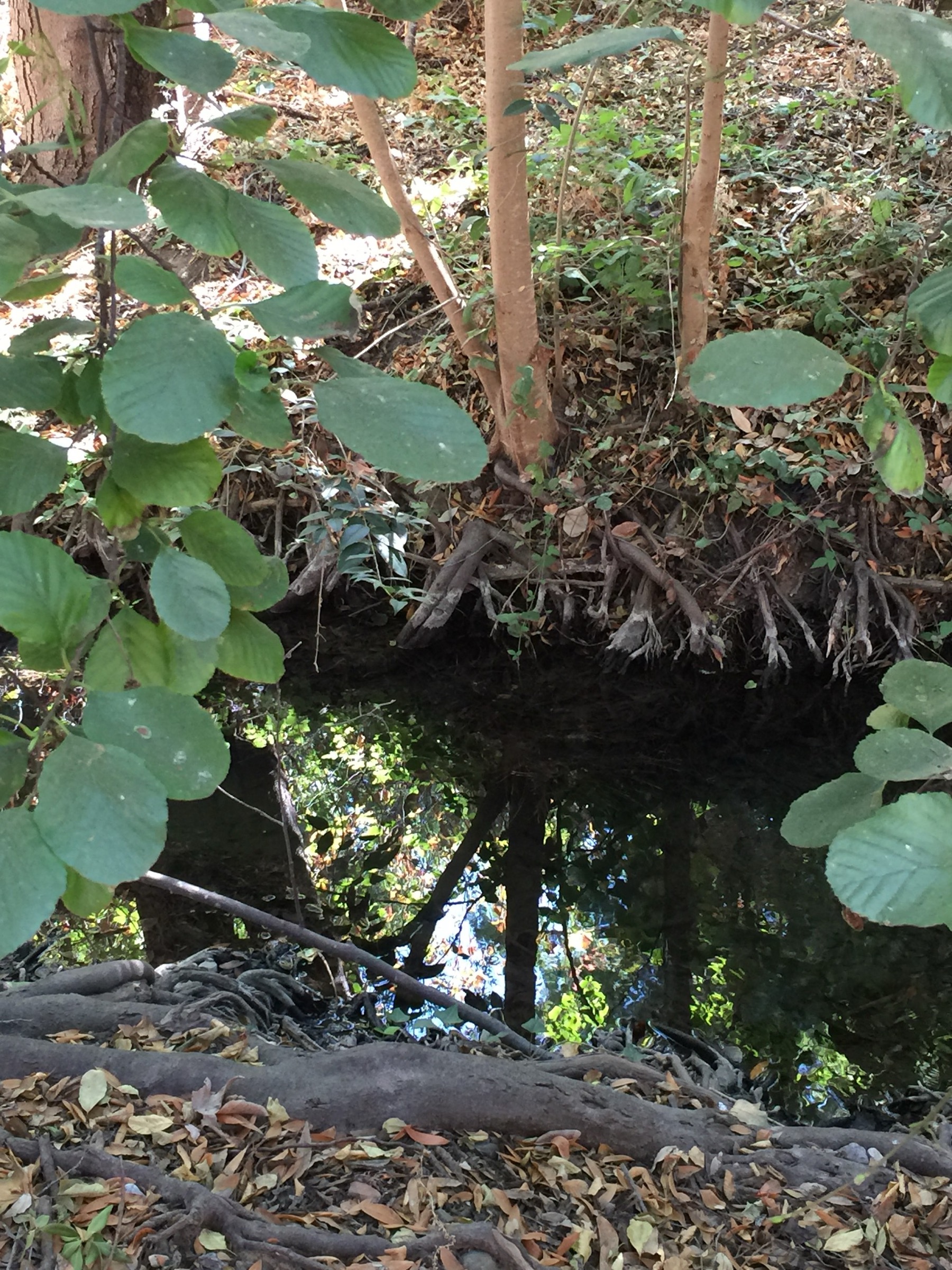
- Habitat: Riparian creek bottoms and canyon streams of the Montane zone
- Form / size: Tall deciduous tree, 60–150 ft
- Sun: Full sun · Water: High (streamside)
- The tell: big balsam-scented sticky buds; glossy leaves silvery-white beneath; drifting cotton in early summer
Description
The tallest of the American poplars, a fast-growing streamside tree that can top 150 feet on a good site. Its leaves are broadly ovate with a rounded to heart-shaped base, glossy dark green above and distinctly pale, silvery-white beneath, so a breeze turns the whole canopy two-toned. The spring buds are large, pointed, and sticky with resin, giving off the sweet balsam smell that hangs over a cottonwood grove after rain. Female trees release masses of cottony, wind-borne seed in early summer, the “cotton” of the name. Old bark is thick, deeply furrowed, and dark gray.
Indigenous & historical use
In the Pacific Northwest, within the tree’s northern range, the Squaxin used the bark medicinally for sore throats and in treating tuberculosis, a use recorded by Erna Gunther in her 1945 Ethnobotany of Western Washington. No use tied specifically to a California people was found for this species, though poplars and cottonwoods were widely worked for their resinous, healing buds across the West.
Ecological role
Black cottonwood is a foundational riparian tree and a fast pioneer of fresh streambank gravel, sprouting from seed and from broken stems to lock down bars after floods. Its seed stays viable only a few days and needs bare, wet mineral soil to germinate, which ties the tree’s whole next generation to the timing of the spring flood. Beavers preferentially cut it for food and dam-building, woodpeckers and other cavity-nesters use its soft wood, and it hosts the caterpillars of tiger swallowtail and mourning cloak butterflies. It was also the first tree to have its full genome sequenced, in 2006, making it a workhorse of tree biology.
Habitat & range
Streambanks, moist canyon bottoms, and alluvial flats along Sierra Nevada creeks and rivers, from low elevations up to about 9,000 ft. It is common in the Eastern Sierra along creeks such as Lee Vining, Rush, and McGee near Mammoth, where it reaches its elevational limit, and grows more sparingly in the Lake Tahoe basin. (California floras keep it as Populus trichocarpa; some references treat it as a subspecies of the balsam poplar, P. balsamifera.)
In the garden
Only for large properties with reliable water, at a streamside, pond, or basin. It is very fast but relatively short-lived, with brittle wood and aggressive, water-seeking roots, so keep it well away from foundations, pavement, and septic lines. Plant male or cutting-grown stock where drifting “cotton” would be a nuisance.
Propagation
Very easily from dormant hardwood cuttings, which root readily in moist soil. From seed, sow it fresh (it lasts only days), leave it uncovered, and keep the bed saturated for the first month. It also suckers from the roots and coppices vigorously when cut.
Where to see it near you
- iNaturalist — observed across California (map)
- Eastern Sierra creeks around Mammoth and Lee Vining, and lower streams in the Lake Tahoe basin.
Sources
- Calscape · iNaturalist · Wikipedia
- Indigenous use: Gunther, E., Ethnobotany of Western Washington (1945).
Commonly confused with
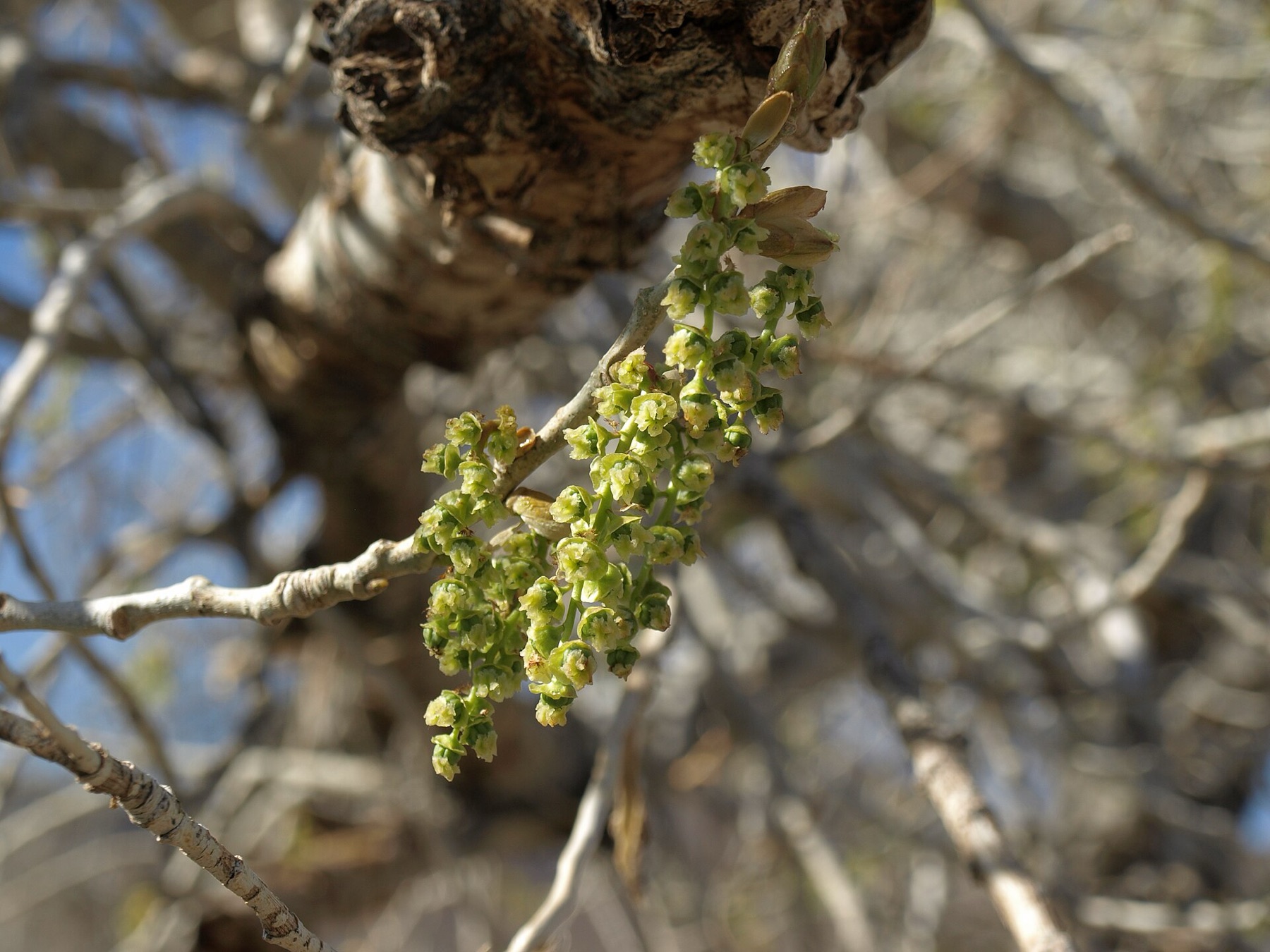 Fremont Cottonwood 🌿 Populus fremontii its leaves are triangular with coarse teeth and flat petioles that make them flutter, and are similar green on both sides. Black cottonwood leaves are ovate, glossy above, and whitish beneath.
 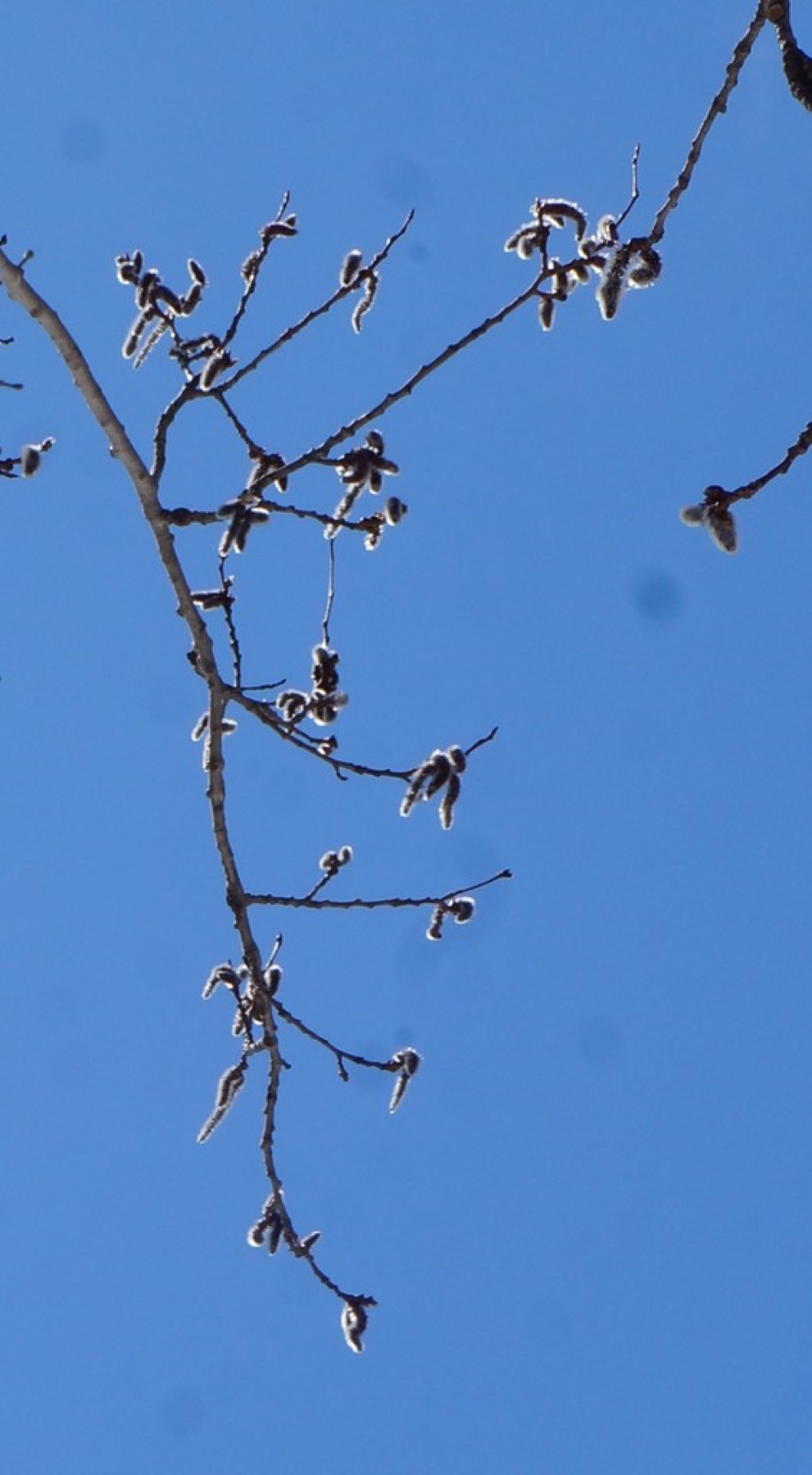 Quaking Aspen 🌿 Populus tremuloides small round trembling leaves and smooth chalky bark, versus black cottonwood's large ovate leaves and dark furrowed bark.