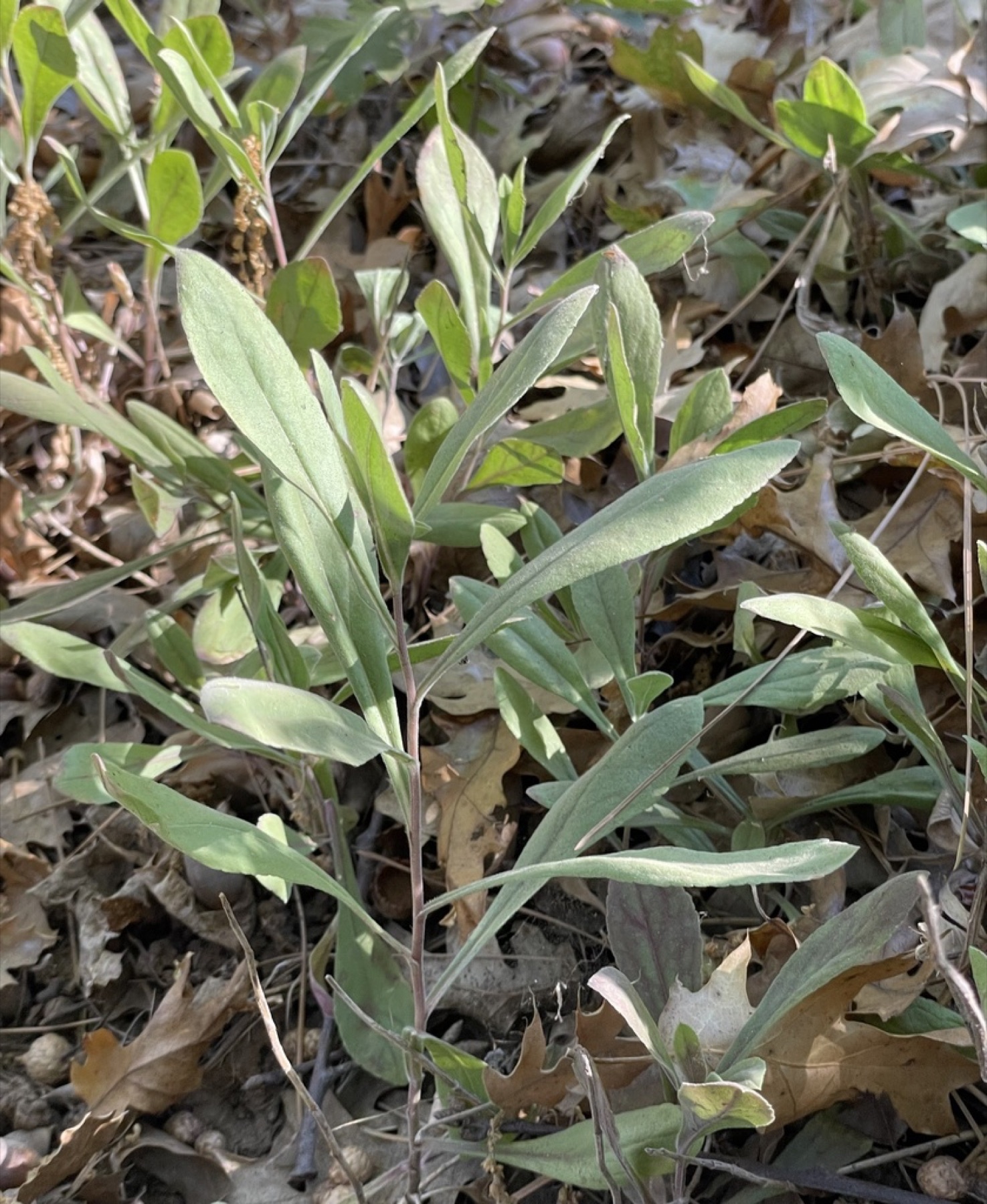
Bitter Cherry
Prunus emarginata · Rosaceae
- Form
- Shrub
- Height
- 3–15 ft
- Sun
- Full Sun
- Water
- Low
- Blooms
- May, Jun, Jul
- Pet toxicity
- Toxic
🌿 California native
Quick facts
- Habitat: Moist to rocky Montane slopes and Riparian streambanks
- Form / size: Thicket-forming shrub (rarely a small tree), 3–15 ft
- Sun: Full sun · Water: Low
- Blooms: White spring clusters, red-to-black fruit · Pollinator value: Moderate
Description
A deciduous, thicket-forming cherry of montane slopes and streambanks, with slender spreading branches and smooth gray-to-reddish bark banded by conspicuous horizontal lenticels. The leaves are small and oblong with fine rounded teeth and a distinctively rounded or notched (emarginate) tip, the trait the species name points to. White five-petaled flowers open in small flat-topped clusters rather than long racemes, followed by little round cherries that ripen red to nearly black over a bitter, inedible pulp. Crushed twigs give off the faint bitter-almond smell typical of the cherries.
Ecological role
Bitter cherry is a vigorous responder to fire and disturbance, sprouting strongly from the roots after a burn and germinating from long-stored seed, and it often forms clonal thickets by root suckers. Cedar waxwings and other birds, along with black bears, coyotes, and chipmunks, eat the cherries and scatter the hard pits, while deer browse the twigs in moderation. Its foliage and twigs carry cyanogenic compounds, a chemical defense that keeps heavier browsing in check.
Habitat & range
Moist to rocky montane slopes and streambanks in yellow-pine, red-fir, and mixed-conifer forest through the Sierra Nevada, roughly 2,000 to 9,000 ft. It is documented in the Eastern Sierra around Mammoth Lakes (near Lake George) and occurs through the range, including the Tahoe basin.
In the garden
A tough, low-water native for montane restoration, streambank stabilization, and informal hedgerows, tolerating full sun and poor rocky soil once established. It spreads by root suckers into thickets, so site it where a colony is welcome rather than in a tidy bed. Grown for its spring bloom and wildlife value, not for fruit.
Propagation
From seed, which needs about 90 to 120 days of cold-moist stratification after the pulp is cleaned from the pits. It is easiest by lifting root suckers or divisions from an existing clone, and it spreads naturally by root sprouting. Cuttings root inconsistently.
Where to see it near you
- iNaturalist — observed across California (map)
- Montane slopes and streambanks of the Eastern Sierra (near Lake George) and around Lake Tahoe.
Problems
The foliage, twigs, and seeds contain cyanogenic (prussic-acid) compounds and can poison livestock and pets, especially as wilted leaves. The fruit pulp is merely bitter, not a food. Site it away from paddocks and keep pets from browsing it.
Sources
Commonly confused with
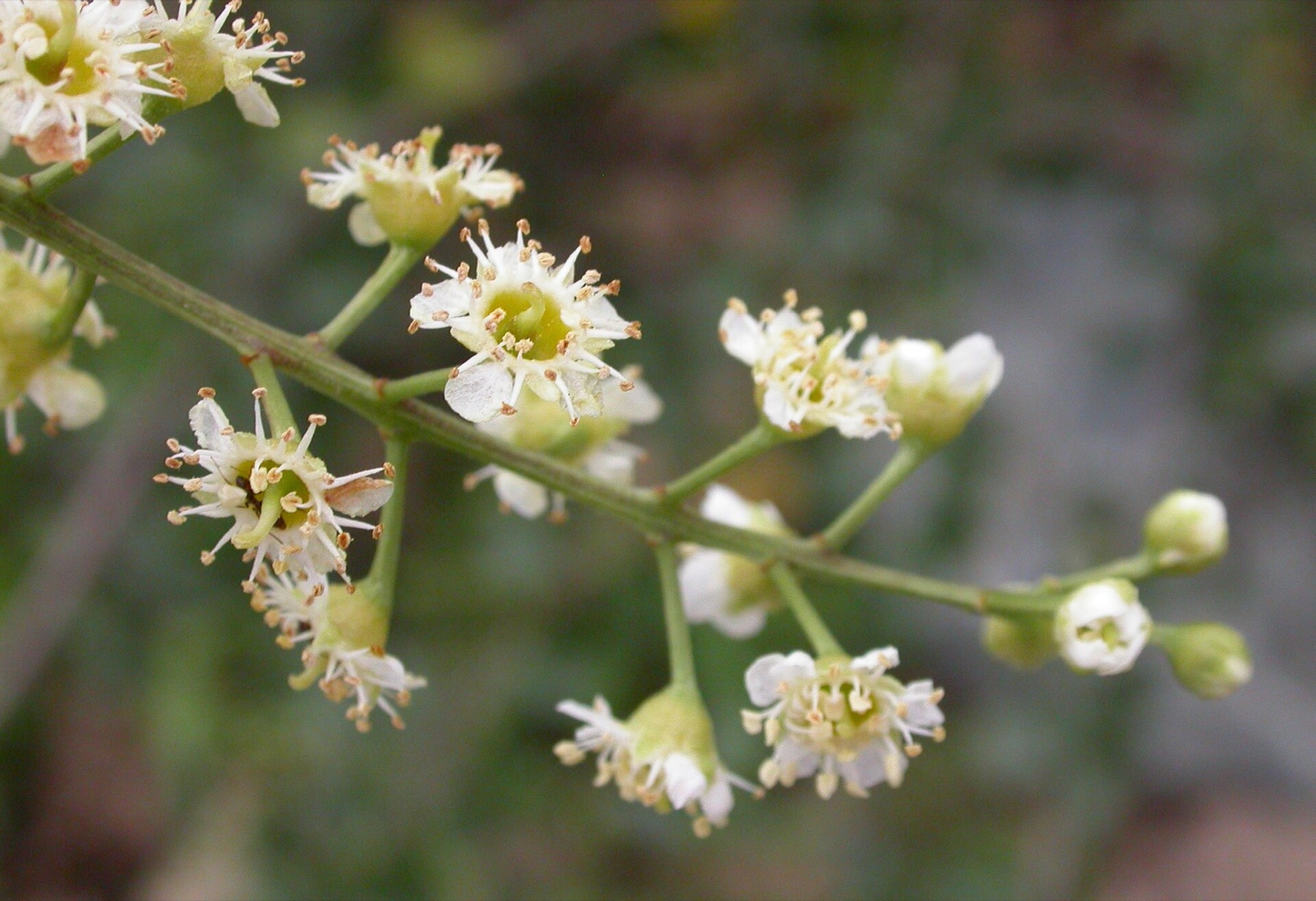 Hollyleaf Cherry 🌿 Prunus ilicifolia evergreen with thick, spiny, holly-like leaves (a SoCal chaparral plant), unlike bitter cherry's thin, soft, deciduous leaves.