Thimbleberry
Rubus parviflorus · Rosaceae
- Form
- Shrub
- Height
- 3–8 ft
- Sun
- Part Shade
- Water
- Moderate
- Blooms
- May, Jun, Jul
🌿 California native
Quick facts
- Habitat: Shaded moist Montane forest understory and Riparian creeksides
- Form / size: Thornless thicket shrub, 3–8 ft
- Sun: Part shade · Water: Moderate
- Blooms: Large white summer flowers, red raspberry-like fruit · Pollinator value: High
Description
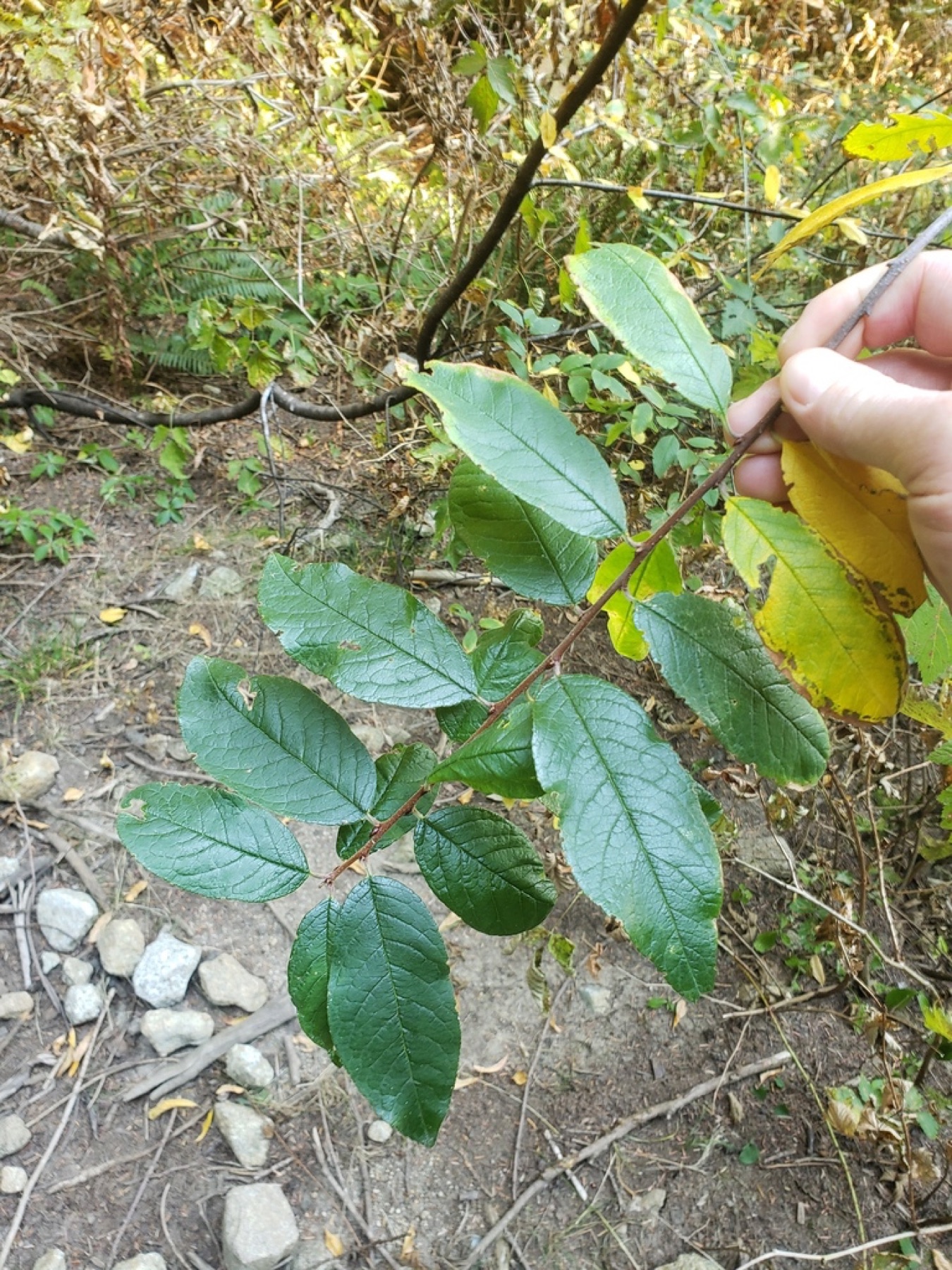
A bramble without thorns, which alone sets it apart from most of its relatives. Thimbleberry forms erect thickets of unarmed canes three to eight feet tall, clothed in large, soft, maple-shaped leaves up to eight inches across, fuzzy and slightly wrinkled. The flowers are among the biggest of any Rubus, two inches wide with five crinkled white petals. The fruit is a shallow, domed red cap that pulls off the receptacle like a thimble, softer and more fragile than a raspberry, and best eaten on the spot. Older canes have thin, tan, shredding bark.
Indigenous & historical use
The Karuk of the Klamath River country in northwestern California, within the plant’s range, ate the fresh berries and used a preparation of the root as a strengthening tonic. The uses are recorded by Sara Schenck and Edward Gifford in their 1952 study of Karuk ethnobotany.
Ecological role
Thimbleberry is an early colonizer of forest clearings, burns, and roadsides, spreading by rhizome into dense clonal thickets that stabilize streambanks and shaded slopes. Its large, open white flowers are a high-value nectar and pollen source for native bees and bumblebees in shaded montane forest, where few big-flowered shrubs grow, and its red fruit is spread by birds and bears. Deer browse the foliage.
Habitat & range
Shaded, moist montane forest understory and creek corridors through the Sierra Nevada, from low elevations up to about 9,800 ft. It is common around Lake Tahoe in the shaded pine and fir understory and along creeks of the west and north shores, and grows more sparingly on the drier Eastern Sierra side near Mammoth.
In the garden
Best in part to full shade with steady moisture; it is not drought-tolerant and struggles in hot, dry, exposed sites. It spreads aggressively by rhizome, so site it where a colonizing thicket or woodland-edge groundcover is wanted rather than in a tidy border. The thornless canes make it safe to plant along a path, unlike most brambles.
Propagation
Easiest by division — dig rooted suckers from the edge of a colony, or split the rhizomes. Softwood and hardwood cuttings root moderately well. Seed needs cold-moist stratification and germinates slowly, so vegetative methods are preferred.
Where to see it near you
- iNaturalist — observed across California (map)
- Shaded creeksides and forest understory around Lake Tahoe (west and north shores).
Sources
- Calscape · iNaturalist · Wikipedia
- Indigenous use: Schenck, S.M. & E.W. Gifford, “Karok Ethnobotany,” Anthropological Records 13(6):377–392 (1952).
Commonly confused with
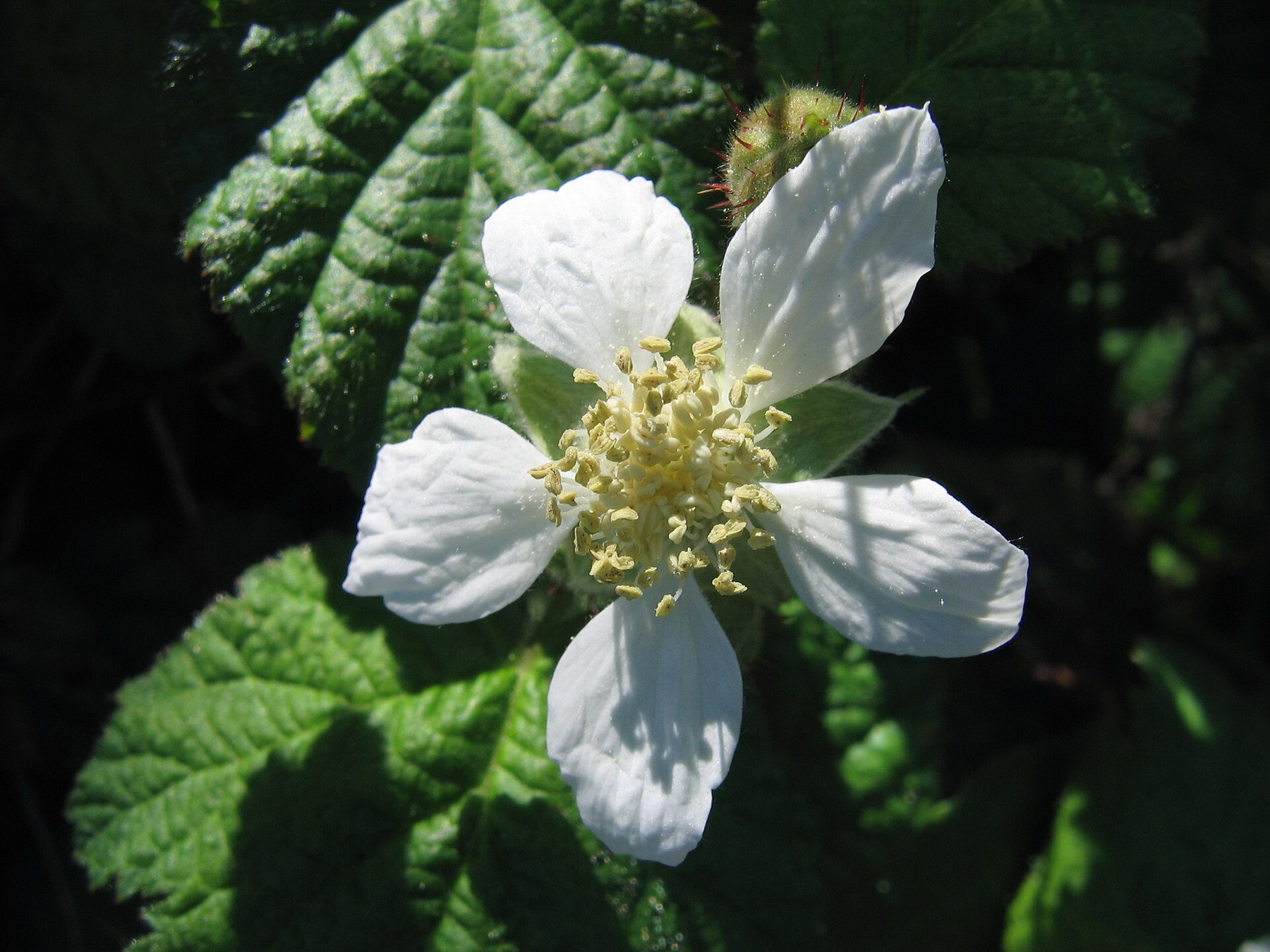 California Blackberry 🌿 Rubus ursinus trailing, prickly, with compound leaves and black fruit, versus thimbleberry's erect thornless habit and red thimble-cap fruit.