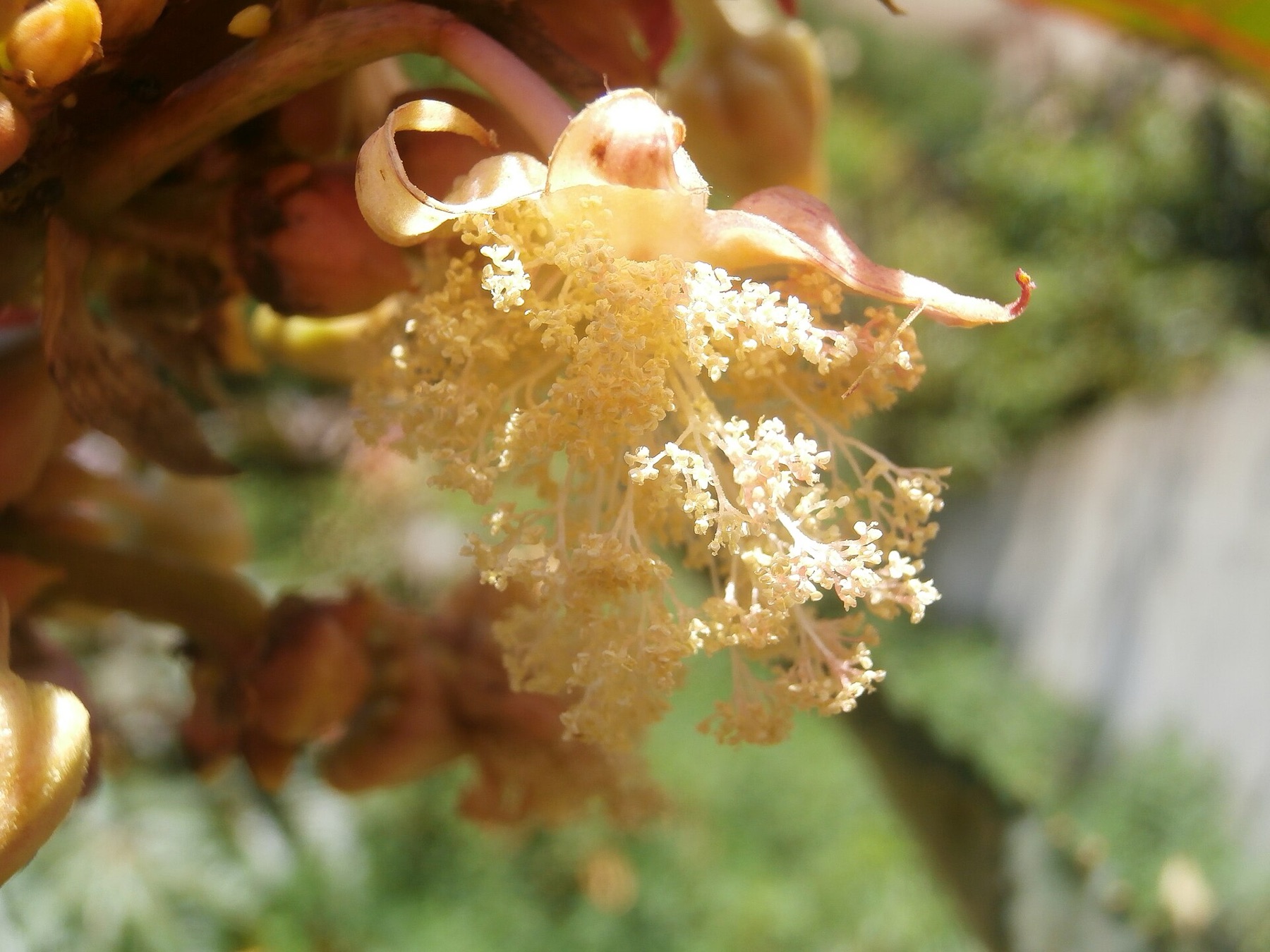
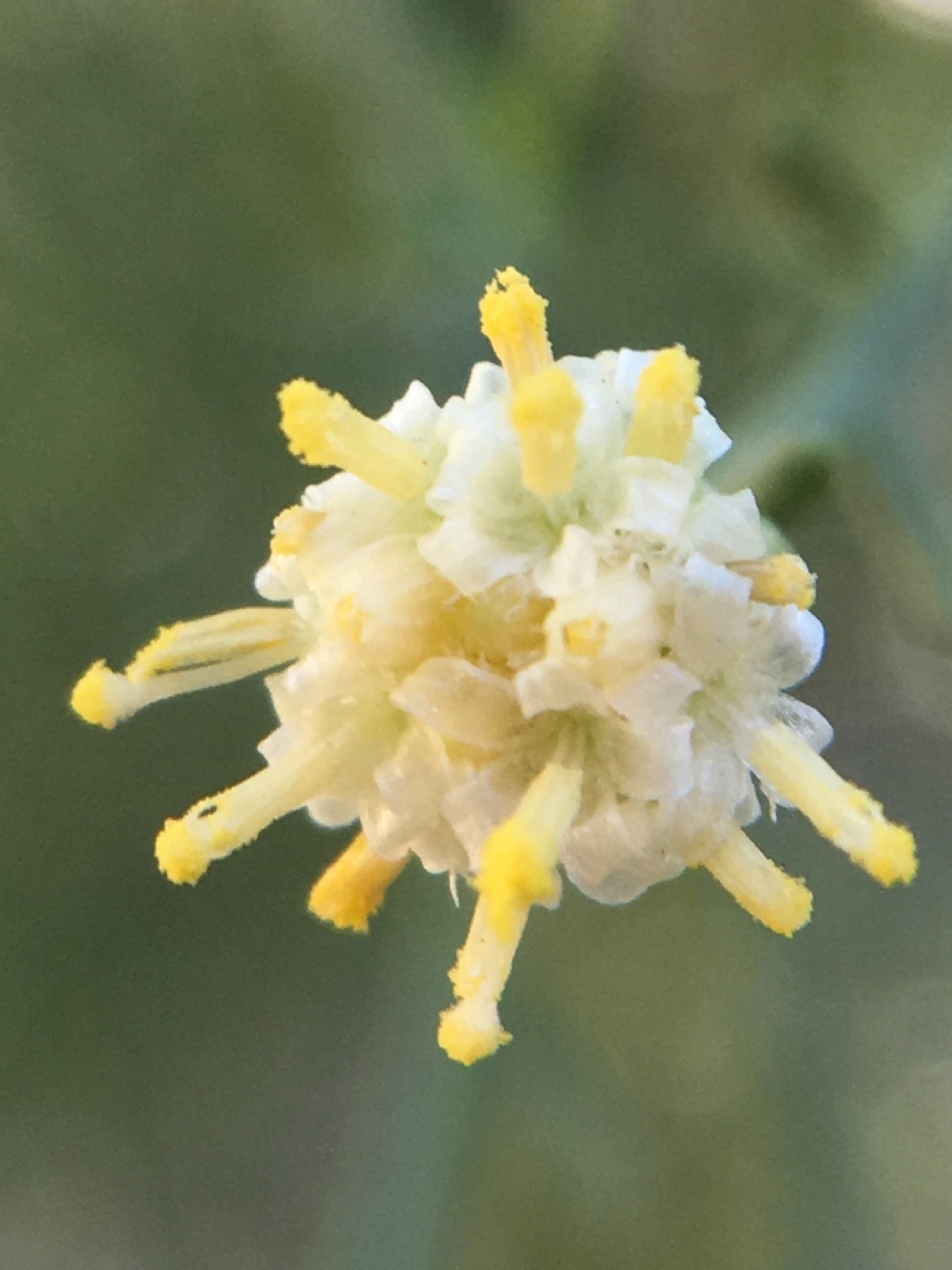
Spanish False Fleabane
Pulicaria paludosa · Asteraceae
- Height
- 1-3 ft
- Habitat
- Riparian · Disturbed
🚫 Invasive / non-native weed
At a glance · Tell-tale sign: Small pale-yellow daisy flowers on a branchy plant in moist, disturbed ground · Form: Annual / short-lived, ~1–3 ft
How to identify
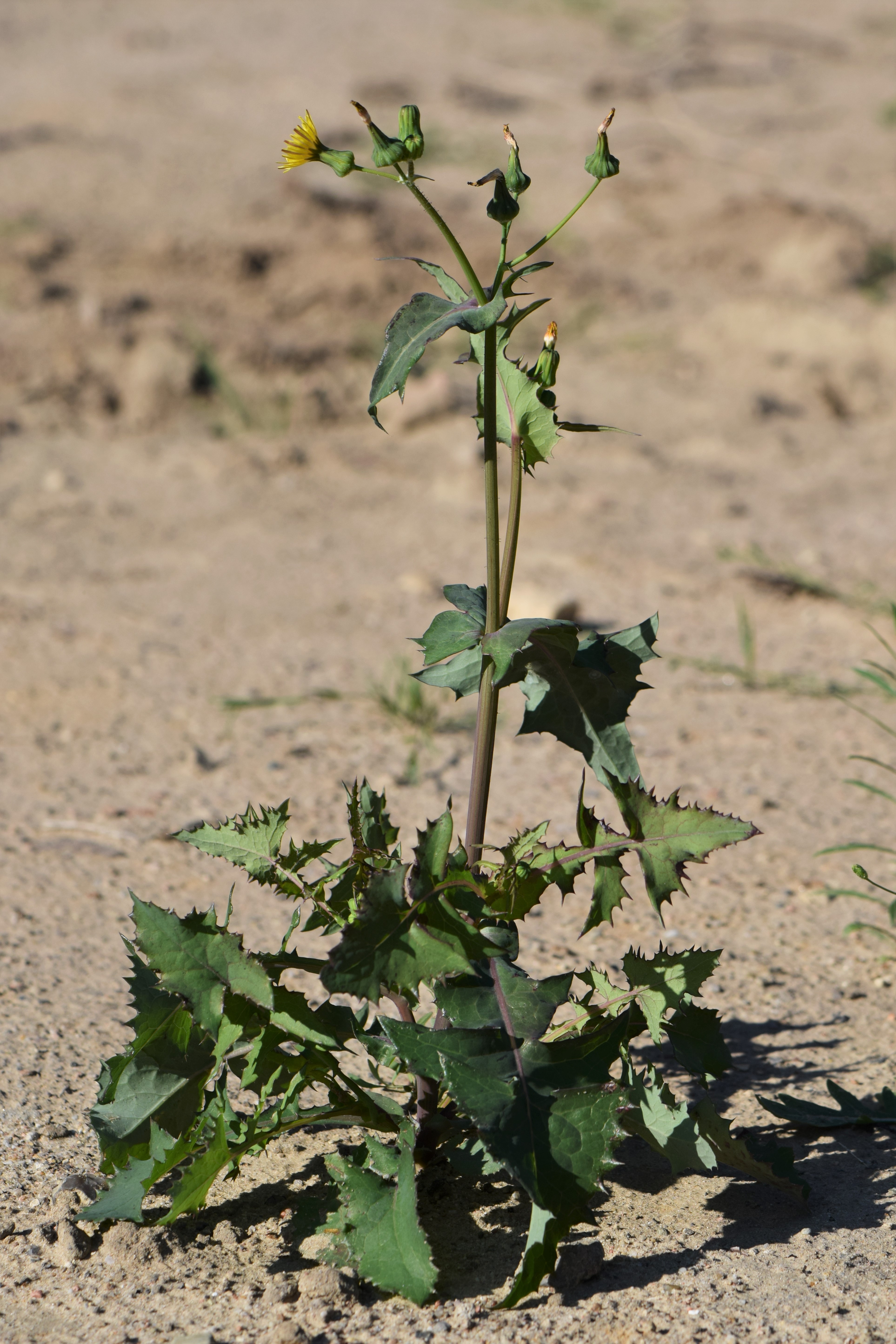
A branching, somewhat woolly composite with small pale yellow daisy-like flower heads (the rays short, giving a slightly “button-and-fringe” look) blooming through summer and fall. Favors damp, disturbed places — riverbeds, ditch edges, basins — and can carpet seasonally wet ground. The most-observed invasive in the Trabuco Creek survey.
How it got here
Spanish false fleabane is native to the Mediterranean lowlands of Portugal and Spain. It showed up in California a long way from home: the first known collection was in Orange County in 1946, though it wasn’t formally documented in the botanical literature until 1963. There’s no mission-trail myth attached to this one, no romantic story about who carried the seed or why. Cal-IPC’s own risk assessment is blunt about it. Exact methods of arrival are unknown. From that first Orange County population it spread through Southern California and has since turned up in Clark County, Nevada, and western Arizona. It’s always chasing the same thing. Disturbed ground that stays damp.
Why it’s a problem
Once it gets a foothold on damp, disturbed ground, Spanish false fleabane doesn’t share it. Cal-IPC’s risk assessment describes it forming dense monocultures that crowd out most of the understory, thick enough in places to create impenetrable stands that block wildlife movement along the creek corridors it favors. It spreads two ways at once. Above ground, a single plant can carry more than 20 flower heads, each producing around 35 seeds, and the seeds carry a pappus of bristles built for wind and for the flash floods that regularly move through these creek systems. Below ground, it runs on short rhizomes, so the plant doesn’t need seed to spread locally at all. Cal-IPC found that pulling and mulching it, the standard first move against most weeds, actually encourages new growth from root fragments and rhizomes left behind. Hand-pulling doesn’t slow this plant down — it multiplies it. That’s pushed land managers toward herbicide instead of hand crews, and it’s why this weed keeps winning ground in restoration sites that were cleared with the best of intentions. It also shares riparian and wetland ground in Southern California with special-status native plants like southern tarplant and saltspring checkerbloom, so the ground it takes isn’t just common natives.
How it spreads
By wind-dispersed seed (typical of the sunflower family) — prolific in open, damp ground.
How to remove it
- Dig, don’t just pull. It carries a woody, rhizomatous root system, and hand-pulling tends to snap the top off and leave rhizome fragments behind — which resprout. Cal-IPC flags it as difficult to control for this reason.
- Remove the root crown and rhizome, not just the visible stem, especially in soft wet ground where roots pull loose easily.
- Stay ahead of it on disturbed/cleared ground — bare moist soil is exactly what it colonizes, so replant or mulch cleared areas.
- Bag flowering/seeding plants, and monitor cleared sites for resprouts through the following season.
Restoration alternative
The closest match, right down to the name, is Marsh Fleabane (Pluchea odorata), a true California native that colonizes the same damp, disturbed ground: marsh edges, wet ditches, pond margins, riparian openings. It fills the same visual niche too — a branchy aromatic composite that looks a little weedy until it’s in bloom. Its flowers are pink-purple rather than pale yellow, and they’re genuinely valuable to native bees, flies, and butterflies through late summer and fall. For the wettest, most saturated spots, Yerba Mansa is the better pick. It spreads by rhizome too, but it forms a low, fragrant groundcover rather than a monoculture, and it holds wet, often alkaline flats that read in Southern California as a sign of real, persistent groundwater. Where the ground is seasonally wet rather than standing wet — seeps, springs, streambanks — Seep Monkeyflower fills the gap fast. Its sticky yellow flowers pull in pollinators instead of shading them out.