Garden Nasturtium
Tropaeolum majus · Tropaeolaceae
- Form
- Annual-vine
- Height
- trailing vine
- Sun
- Part Shade
- Water
- Moderate
- Blooms
- Feb, Mar, Apr, May, Jun
- Habitat
- Riparian · Disturbed · Urban
🪴 Cultivated / garden escape — not a control priority
Quick facts
- Habitat: Garden escape, Riparian edges, disturbed shade
- Form / size: Trailing annual/perennial vine
- Sun: Part shade to sun · Water: Moderate
- Blooms: Winter-spring locally · Status: Cultivated escape
Description
A familiar garden plant with round shield-like leaves and bright orange, yellow, or red spurred flowers. In Southern California it can escape from gardens into damp, shaded, disturbed edges.
Wildlife & pollinators
Flowers attract bees and butterflies, but its main guide value is recognition: it is a garden plant, not a habitat target.
Habitat & range
Landscapes, urban edges, creekside shade, fence lines, and disturbed moist soil near plantings.
In the garden
Widely grown and edible when correctly identified, but it is not a California native and should not be used as restoration planting.
Propagation
From seed. It self-sows readily in mild climates with moisture.
Where to see it near you
- iNaturalist — observed in Southern California
- Garden edges, damp urban slopes, and creekside disturbed patches.
How it got here
Garden nasturtium is native to the Andes, from Bolivia up through Colombia, and it’s been a garden plant in Europe since Spanish conquistadors carried it back around 1500. It picked up real fame in the 1600s and again when it turned up in the flower beds at Versailles under Louis XIV, and that same ornamental popularity is what brought it into North American home gardens by the 1800s. Nobody planted it in California wildlands on purpose. It’s a garden plant that reseeds itself hard, and it keeps reseeding: wild areas that border neighborhoods get a steady drip of new seed blowing or washing in from yards next door, year after year, which is part of why it’s so hard to actually clear out once it’s established on a canyon slope or creek edge.
Problems
Can smother small seedlings in damp sites. In restoration areas, remove it where it is covering native recruitment.
Sources
- iNaturalist · Wikipedia
- Introduction history: California Species Project — Tropaeolum majus · Nature Collective — Nasturtium (not native)
Commonly confused with
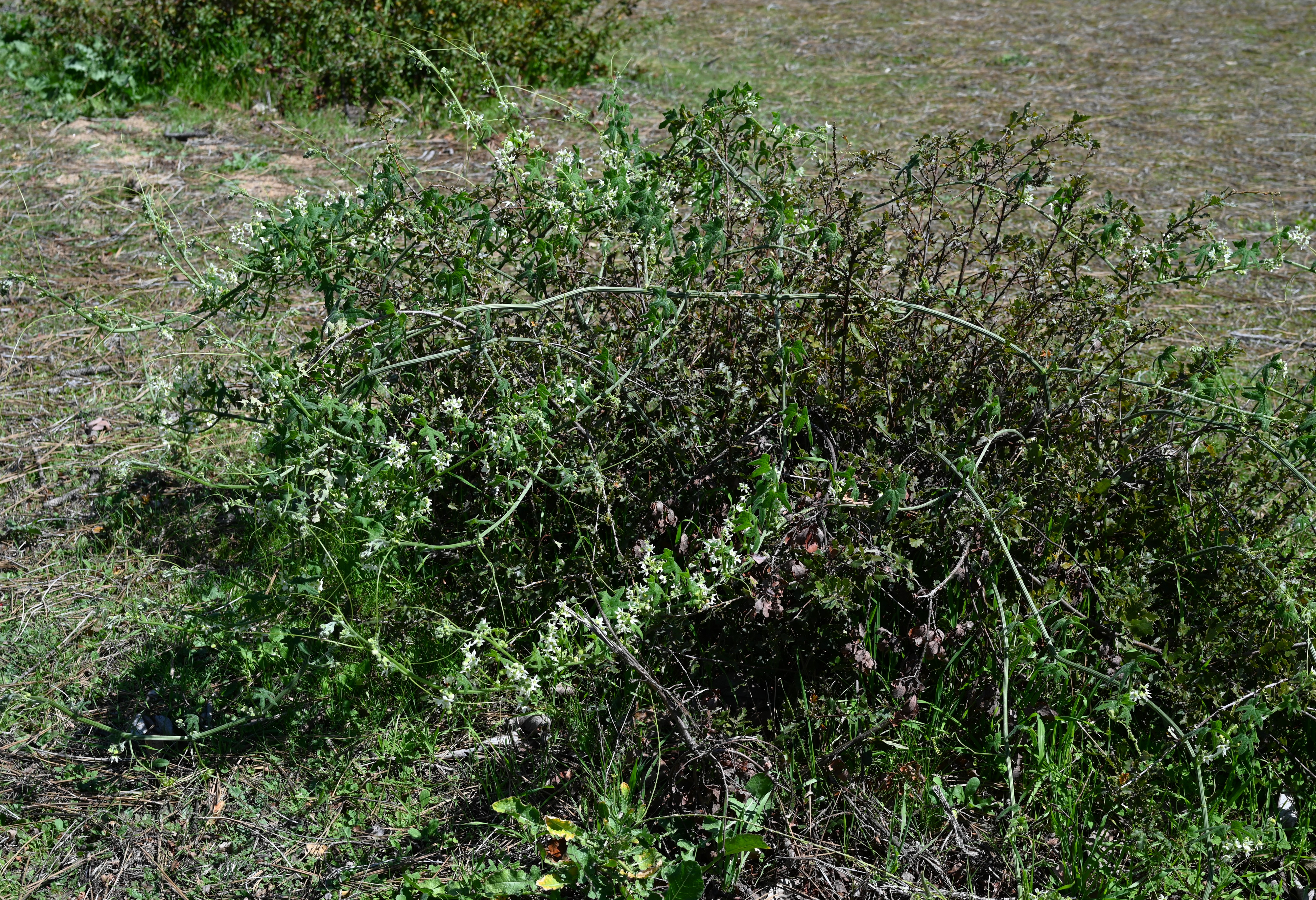 Wild Cucumber 🌿 Marah macrocarpa native vine with lobed leaves and white flowers, not round shield leaves and orange garden flowers.