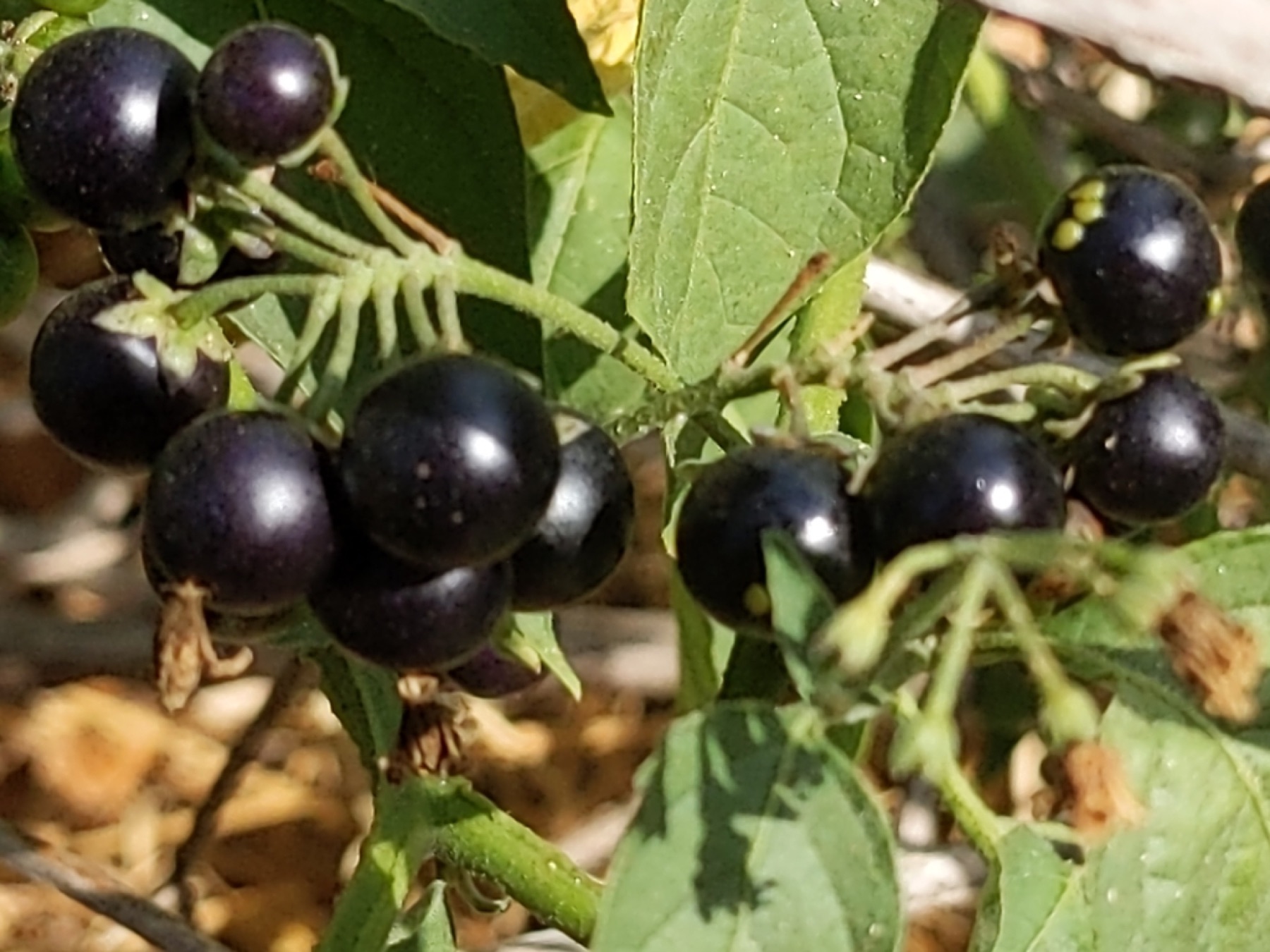
Brazilian Pepper
Schinus terebinthifolia · Anacardiaceae
- Height
- 10-30 ft
- Habitat
- Riparian · Disturbed · Urban
🚫 Invasive — priority to remove
At a glance · Tell-tale sign: Glossy compound leaves and clusters of bright red berries · Form: Evergreen shrub/tree escaping into creek and urban edges
How to identify
An evergreen shrub or small tree with glossy compound leaves, pale flowers, and showy red berry clusters. Crushed foliage can smell peppery/resinous. It belongs to the poison oak/cashew family, so sensitive people should handle it carefully.
How it got here
Brazilian pepper is native to South America, to Brazil, Paraguay, and Argentina, where it grows as an understory tree in tropical and subtropical forests. It came to California in the mid-twentieth century doing exactly what it looked like it would do: people planted it on purpose as a landscape ornamental. It spreads well from seed, grows fast in Mediterranean sun, and produces the showy red berries that made it attractive to gardeners. From there it took the same path most escaped ornamentals do. It jumped from yards into disturbed edges, creek corridors, and urban waste areas where nothing else had established yet. Birds ate the berries and carried the seeds downstream. Within a generation it stopped being a homeowner’s accent plant and started being a problem.
Why it’s a problem
Brazilian pepper forms dense shade that suppresses the native understory, the sedges, rushes, and wildflowers that are the actual food base for riparian insects. The roots also release allelopathic compounds that inhibit seed germination in neighboring plants, compounding the competitive stranglehold. Unlike the native mixed canopy that lets light and space cycle through, pepper stands become a closed, dark monoculture where nothing else can root. It also guzzles water during the dry season, outcompeting the drought-adapted natives that normally stabilize streambanks. After fire, it rebounds fast and dense, while the natives that depend on post-fire gaps to regenerate get smothered. The structure of the riparian corridor shifts from a diverse food web to a simple wall of berries, exactly the wrong kind of simplification for a habitat already under pressure from development and urban runoff.
How it spreads
Mostly by bird-dispersed seed. Cut plants may resprout if not controlled correctly.
How to remove it
- Pull small seedlings when soil is moist.
- Cut-stump or other approved methods are usually needed for established shrubs/trees.
- Bag fruiting branches when practical so berries are not spread during removal.
- Wear gloves and eye protection; sap can irritate sensitive skin.
Restoration alternative
Replacing Brazilian pepper with a native canopy means choosing trees that occupy the same water-rich niche without the monoculture. Fremont Cottonwood and Western Sycamore provide similar height and shade along riparian margins; Arroyo Willow and Goodding’s Willow establish quickly to stabilize banks and build riparian structure. The dense understory that pepper creates can be rebuilt with Mule Fat, California Grape, and native shrubs that actually host insects instead of shading them out. Add Yerba Mansa, California Goldenrod, and Marsh Fleabane to the wet edge for the herbaceous layer pepper suppresses. These natives rebuild the riparian food web that pepper flattens: willows host butterfly larvae, cottonwoods feed dozens of bird species, and the native understory feeds pollinators all season.
Where it’s spread near you
Sources
Commonly confused with
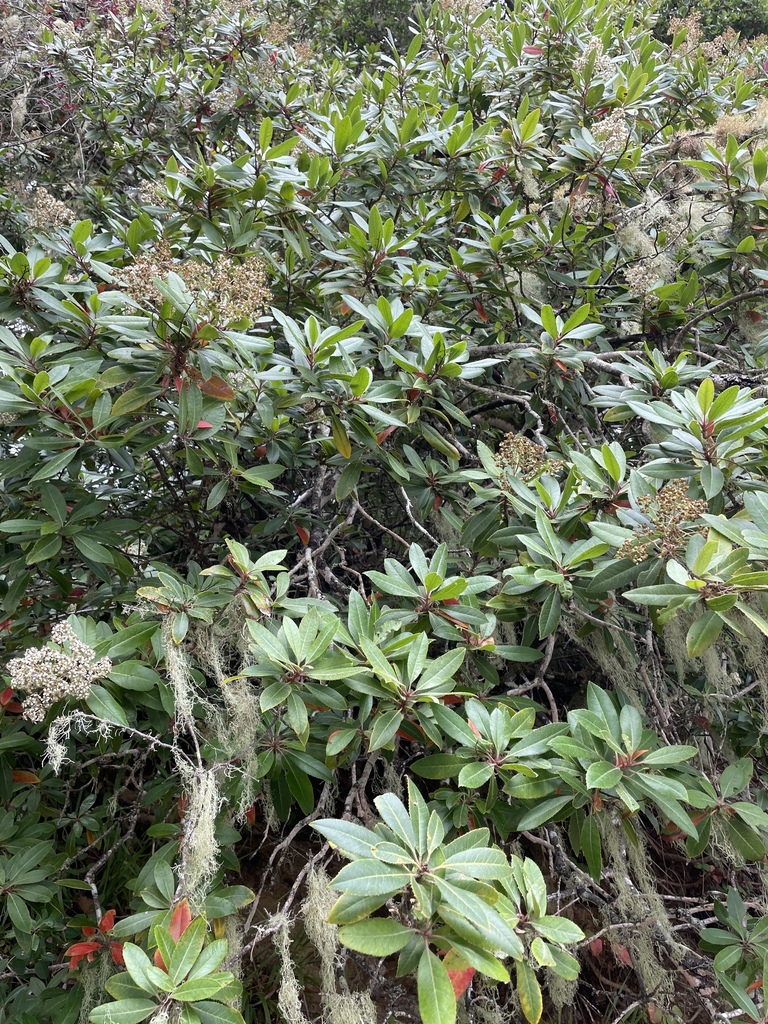 Toyon 🌿 Heteromeles arbutifolia native with simple serrated leaves, not compound leaves.