Common Hedge Parsley
Torilis arvensis · Apiaceae
- Height
- 1-3 ft
- Habitat
- Disturbed · Riparian
🚫 Invasive / non-native weed
At a glance · Tell-tale sign: Small, sparse white flower umbels + bur-like seeds that cling to clothing and fur · Form: Slender annual, 1–3 ft
How to identify
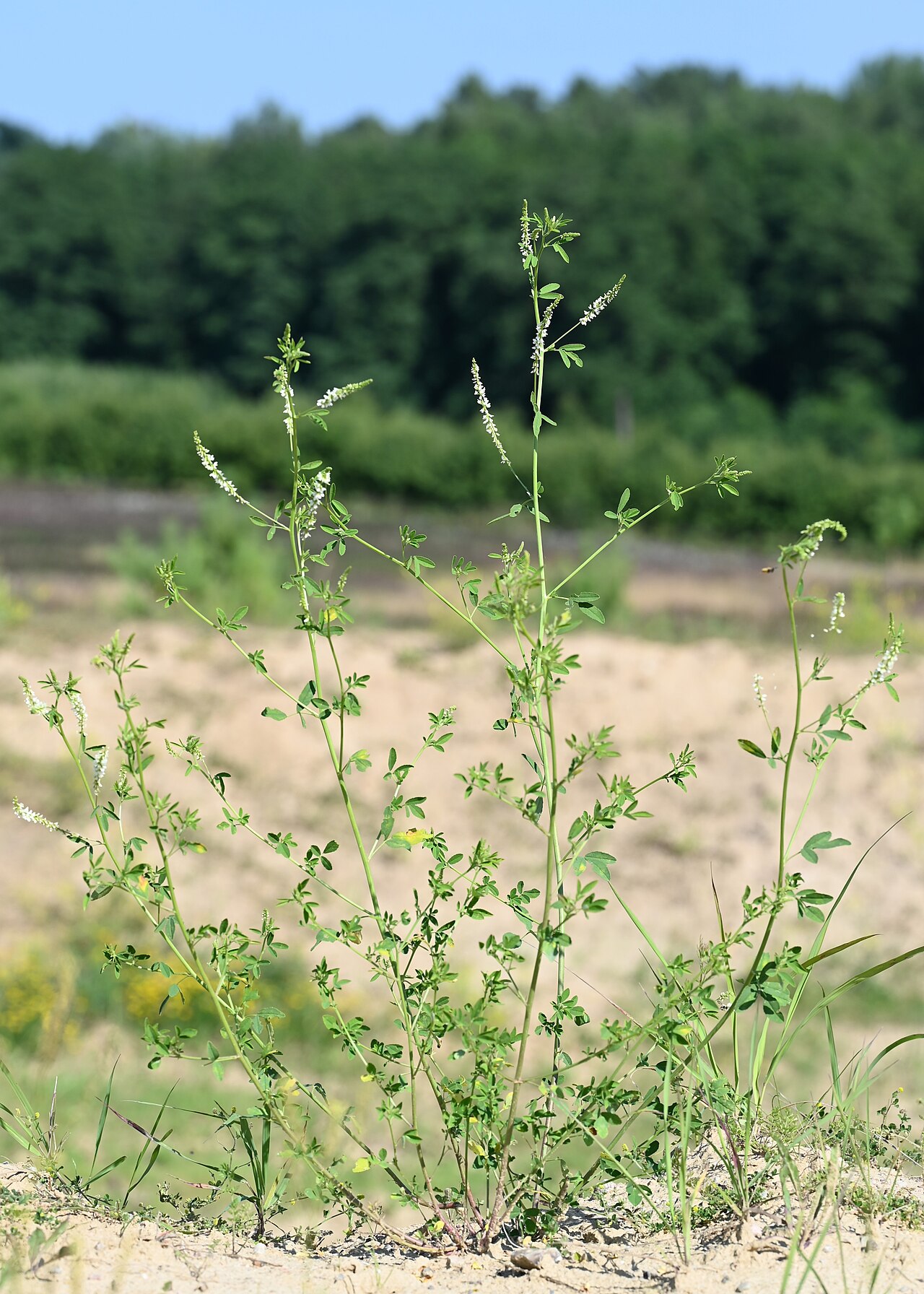
A wiry annual in the carrot family with lacy, finely divided leaves and small, open umbels of tiny white flowers on thin branches. The clincher comes after flowering: it forms small, egg-shaped seeds covered in hooked bristles (burs) that stick to socks, pant legs, and animal fur — its main dispersal trick. Found along shaded edges, trails, and disturbed riparian ground.
How it got here
There’s no ribbon-of-gold story attached to this one. Hedge parsley is native to southern Europe and the Mediterranean, and it got to California the ordinary way weeds do. It rode in mixed with crop seed, hay, and soil, tagging along with agriculture rather than getting planted on purpose. Cal-IPC’s own assessment doesn’t try to romanticize it — the researchers who reviewed the species found almost nothing published about how or when it actually arrived. What they do have is one field observation, from one person. Bob Case, a longtime Cal-IPC and CNPS contributor who worked in the Contra Costa County Agricultural Commissioner’s office, wrote in 2005 that the plant had been established in the Bay Area for more than 30 years, moving slowly enough that nobody paid it much attention. Then, in roughly the last five to ten years before he wrote that, it took off. That’s a Northern California account, not a Southern California one, and it’s a single dated observation rather than a broad survey — worth keeping in mind, since nobody has published the equivalent for Orange County. Wikipedia notes the plant has picked up the nickname “tall sock-destroyer” in some places, and the name tells you more about how it spreads than any founding myth would. The seeds are covered in small hooked prickles that grab onto fur and fabric and go wherever the fur and fabric go — trails, work boots, dog walks.
Why it’s a problem
It doesn’t take over open ground the way a lot of invasive grasses do. Cal-IPC describes it turning up across a wide range of California habitats — oak woodlands with an open, grassy understory, disturbed grasslands, roadsides, urban lots — basically anywhere the ground has been worked over. Around here that mostly means trailsides and other disturbed, often shaded margins, the same damp edges where native groundcover like Miner’s Lettuce tends to grow, though nobody has published a study showing it directly displacing that species — it’s a reasonable inference from where both plants show up, not a documented fact. Where hedge parsley does take hold, it forms a low, wiry tangle fast enough to crowd out native seedlings before they get established. The burs are doing most of the work. Every hooked seed that grabs a sock or a dog’s coat gets carried to the next disturbed patch, so trail use spreads the weed on its own, and popular trails end up reseeding themselves year after year. It doesn’t stop at annoying hikers, either. Cal-IPC’s assessment flags it as a real problem for grazing animals and wildlife, since the burs stick in fur, wool, and skin and cause genuine irritation and matting. There’s one break in the pattern. Cal-IPC’s own assessment form rates its reproductive potential as low and specifically marks that its seeds do not remain viable in the soil for three or more years. It’s an annual with no way to spread vegetatively. Pull it before it sets seed, several years running, and a patch can actually be exhausted rather than just knocked back.
How it spreads
By bur-like seeds that hitchhike on people and animals (and move with water) — so foot traffic through a patch spreads it.
How to remove it
- Pull before the burs form (it’s an easy-to-pull annual); timing is everything, since once burs set, every passerby spreads it.
- Check and de-bur clothing/gear after working in infested areas so you don’t carry it to clean sites.
- Bag any seeding plants.
Restoration alternative
For the shaded, disturbed ground this plant actually occupies, Miner’s Lettuce is the closest native match. It wants the exact same part-shade, moist-soil conditions along creek edges and oak-woodland understory, and as a low winter annual it does the job hedge parsley is faking. It gives quick winter-spring groundcover that holds the soil and then dies back on its own, rather than leaving a dense mat that persists into a fire hazard. For the same disturbed canyon-bottom and riparian-edge ground on a longer timeline, plant Mugwort alongside it. This is a spreading rhizomatous perennial built for exactly that niche — disturbed, damp shade — and unlike an annual weed it comes back on its own root system year after year, which makes it a more durable competitor once it’s established. Where the ground calls for something bigger and more structural, California Wild Rose and California Blackberry both hold riparian-edge thickets against reinvasion better than any low groundcover can on its own. None of these need to replace a full hedge parsley removal effort. They’re what should go into the bare ground right after you pull it, so something native fills the gap before the next batch of burs does.