California Wild Rose
Rosa californica · Rosaceae
- Form
- Shrub
- Height
- 3-8 ft
- Sun
- Full Sun
- Water
- Moderate
- Blooms
- Apr, May, Jun, Jul
- Habitat
- Riparian · Woodland
🌿 California native
Quick facts · Habitat: Riparian edges, moist woodland, thickets · Form / size: Thorny shrub, 3-8 ft · Sun: Full sun to part shade · Water: Moderate · Blooms: Spring-summer · Pollinator value: High
Description
A loose, thorny native rose with arching stems, pinnate leaves, fragrant single pink flowers, and red-orange hips. It often forms patches where moisture lingers, creating valuable cover along creek edges and woodland openings.
Indigenous & historical use
The Cahuilla, whose territory extends into the inland valleys and mountains of Southern California, valued California wild rose for both medicine and food. Rose hips were eaten raw, crushed into jelly, or steeped in water to make tea, and blossoms gathered from May through June were made into a beverage; the roots could be steeped for a medicinal tea. The Kumeyaay, who held territory in San Diego County and northern Baja California, prepared an infusion of rose petals to treat fever in infants and decocted the leaves to bathe the eyes during colds.
Ecological role
California wild rose blooms for months, April through July, offering nectar when much of the creek has little else to offer. Calscape lists it as a host plant for 2 confirmed and more than 70 likely butterfly and moth species, making it a significant resource for Lepidoptera. Come fall, the plant produces deep red rose hips that persist through winter, providing food for birds and mammals when other forage has disappeared.
Thickets of California wild rose create protective cover for small animals and ground-nesting birds. The shrub spreads through lateral underground stems, and these roots stabilize moist soil along streambanks, helping to hold banks in place during winter floods — the USDA’s own Plant Materials program recognizes it as a tool for erosion control and revegetation on disturbed riparian sites. A single thicket does several jobs at once: food, shelter, and structural support for a stretch of creek that depends on all three.
Habitat & range
Common in moist places across much of California: creekbanks, seeps, meadow edges, and oak woodland margins. In Southern California riparian corridors, it is a classic thicket plant.
In the garden
Best for habitat edges, hedgerows, restoration plantings, and informal native gardens. It can sucker and make a patch, which is either the point or the problem depending on where you plant it.
Propagation
Grow from seed after cold-moist stratification, or from suckers/divisions in winter. Hardwood cuttings may root with patience.
Where to see it near you
- iNaturalist — observed in Orange County
- Moist canyon bottoms, creek edges, and woodland thickets.
Problems
Thorns, suckering, and occasional mildew. Give it room and prune in winter if needed.
Sources
- Calscape · iNaturalist · Wikipedia · NRCS USDA — Plant Materials Program
- Indigenous use: Ethnoherbalist — Wild Rose Hips
Commonly confused with
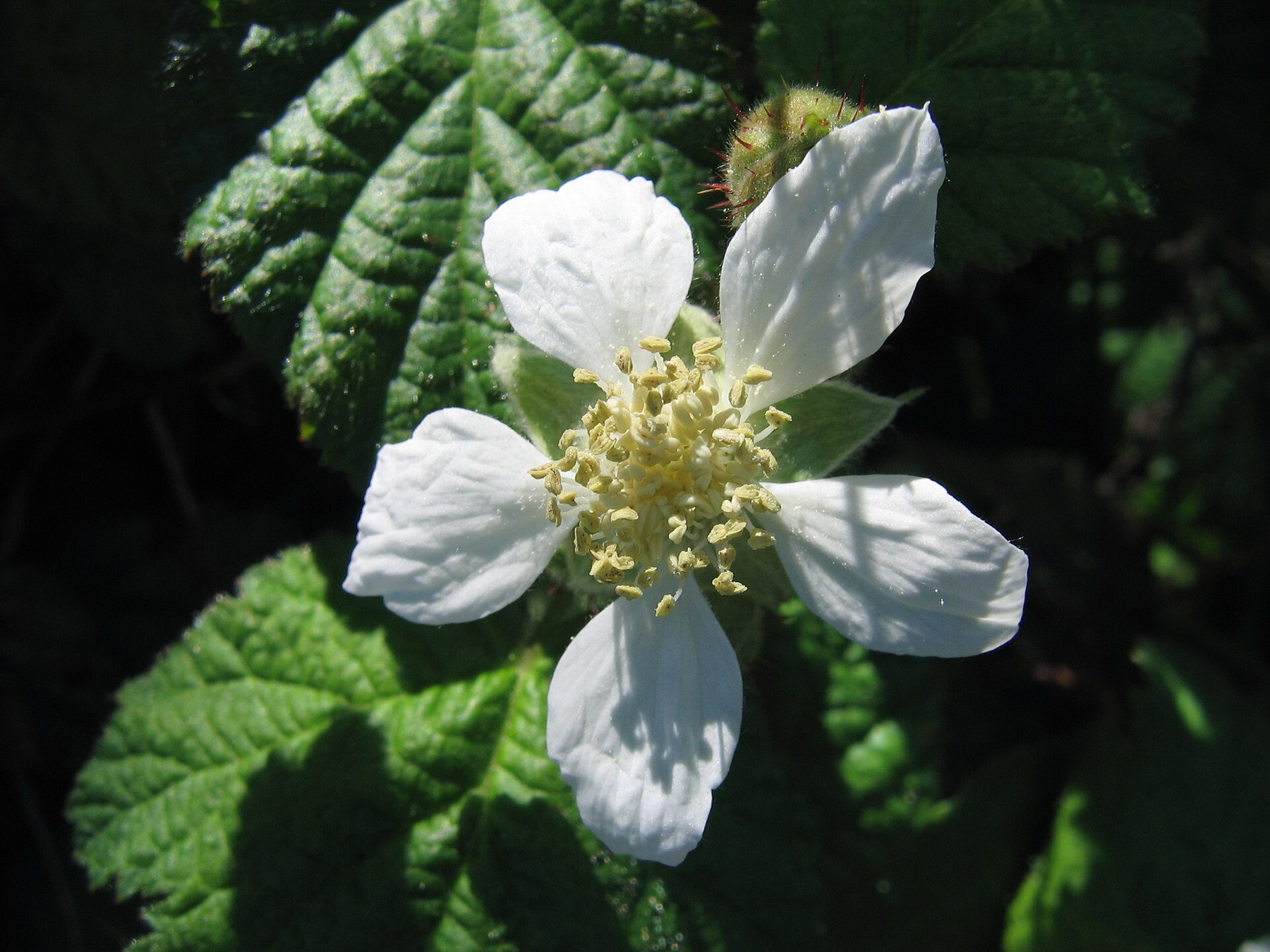 California Blackberry 🌿 Rubus ursinus blackberry trails and fruits as clustered drupelets; rose is an upright shrub with hips.