Prickly Lettuce
Lactuca serriola · Asteraceae
- Height
- 2-5 ft
🌍 Non-native — naturalized; not a control priority
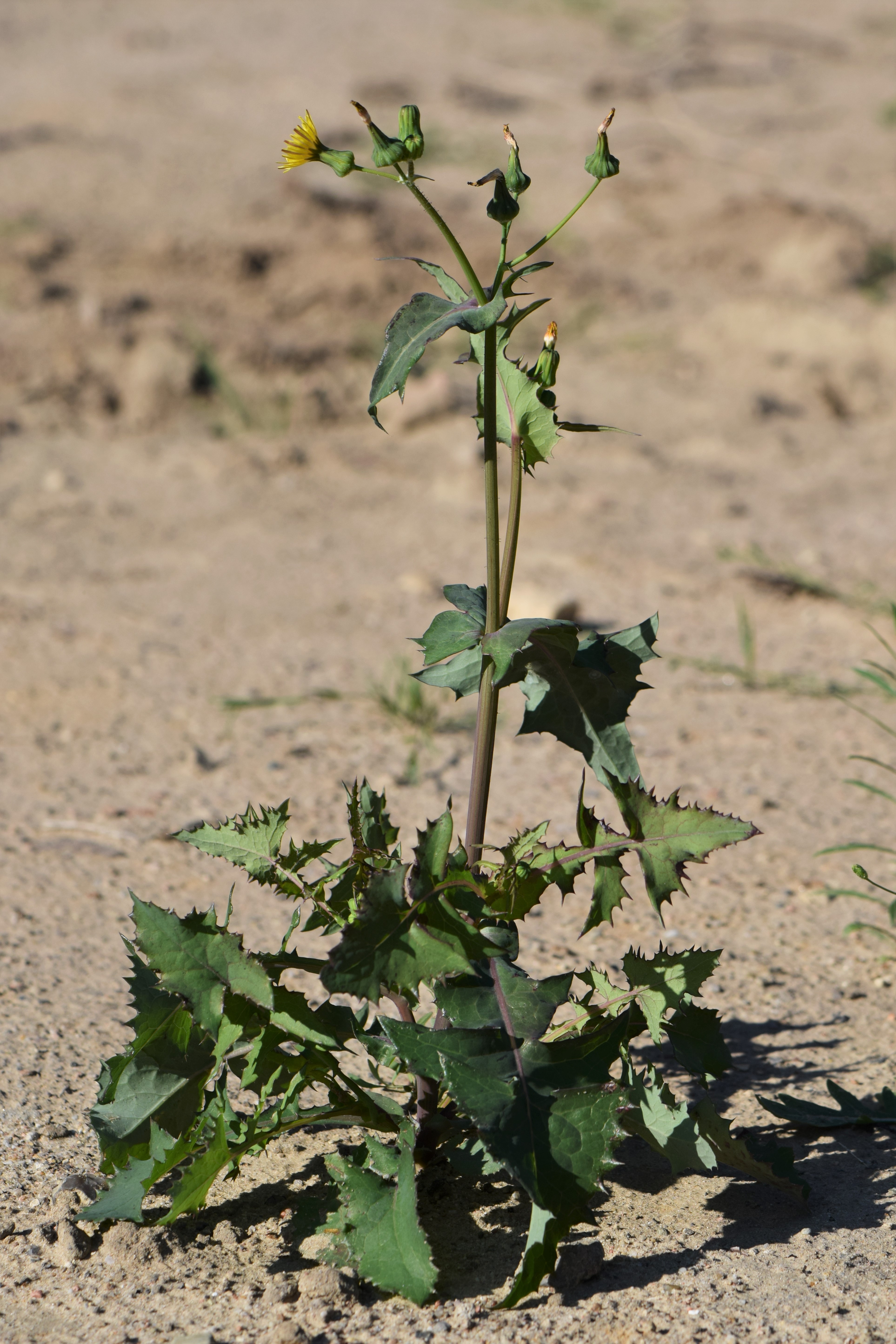
A common weedy annual — the wild ancestor of cultivated lettuce. Tall (2–5 ft), with milky sap, small pale-yellow dandelion-like flowers, and clasping, often spiny-edged leaves bearing a distinctive row of stiff prickles along the underside of the midrib. Lower leaves often twist to align vertically (the “compass plant” trick). A ubiquitous plant of disturbed ground, roadsides, and field edges.
Historical use: This is not just a throwaway weed. Prickly lettuce is the closest wild relative of cultivated lettuce, and the young leaves have been eaten raw or cooked, though they get bitter fast. Older herbal sources also treat the milky latex, lactucarium, as part of the wild-lettuce medicine story. That does not make a roadside plant safe to use, but it does change the frame: people did not introduce this species to California as a crop, yet it belongs to the same long human history that gave us garden lettuce.
How it got here: Purely an accidental introduction. It came over from Europe as a stowaway in agricultural seed, showing up in North America in the late 1890s, not on purpose. Once loose, it didn’t need any help spreading — one plant can throw off up to 100,000 wind-borne seeds, and it rode further along roadsides, railways, and irrigation ditches into just about every disturbed corner of the state on its own.
Commonly confused with: Sow Thistle (also yellow-flowered with milky sap, but no prickly midrib and softer leaves). The spiny midrib is the quick tell for prickly lettuce.
Where seen near you: iNaturalist — Orange County
Sources: iNaturalist · Wikipedia · Biology, Ecology, Distribution and Control of the Invasive Weed, Lactuca serriola L.: A Global Review · King’s American Dispensatory — Lactuca