Buffalo Gourd
Cucurbita foetidissima · Cucurbitaceae
- Form
- Vine
- Height
- sprawling vine
- Sun
- Full Sun
- Water
- Low Moderate
- Blooms
- May, Jun, Jul, Aug, Sep
- Pet toxicity
- Mild
🌿 California native
Quick facts
- Habitat: Riparian edges, washes, dry disturbed flats
- Form / size: Coarse sprawling vine from a deep perennial root
- Sun: Full sun · Water: Low to moderate once established
- Blooms: Summer · Pollinator value: High
Description
A rough, sprawling native gourd with large triangular leaves, bright yellow squash-like flowers, and round green fruits that dry tan. The foliage has a strong unpleasant smell when crushed, which is one of the fastest field clues.
Ecological role
Buffalo gourd’s main ecological role is serving as a pollen and nectar source for squash bees and native bees that visit its large yellow flowers. Its extended summer bloom period, May through September, provides these pollinators with resources through the warmer months. The sprawling vine grows readily on disturbed creek terraces and wash edges, the kind of bare, sun-exposed ground that opens up after winter floods. The fruits are dispersed by mammals, carrying seeds downstream and into adjacent upland areas.
Habitat & range
Dry washes, creek terraces, road edges, alluvial flats, and disturbed sunny openings. Around San Juan Creek it is the kind of native that shows up where the soil has been moved but still has some wash character.
In the garden
Mostly for large habitat gardens, restoration edges, or educational plantings. It is too sprawling and coarse for small polished beds, but it is locally interesting and tough.
Propagation
From seed. Scarification and warm soil help; plants form a deep storage root and resent transplanting once established.
Where to see it near you
- iNaturalist — observed near San Juan Capistrano
- Sunny creek terraces, disturbed wash edges, and open alluvial ground.
Problems
Can sprawl over young plantings. In restoration, protect it where it belongs but keep it from smothering tiny new seedlings.
Sources
Commonly confused with
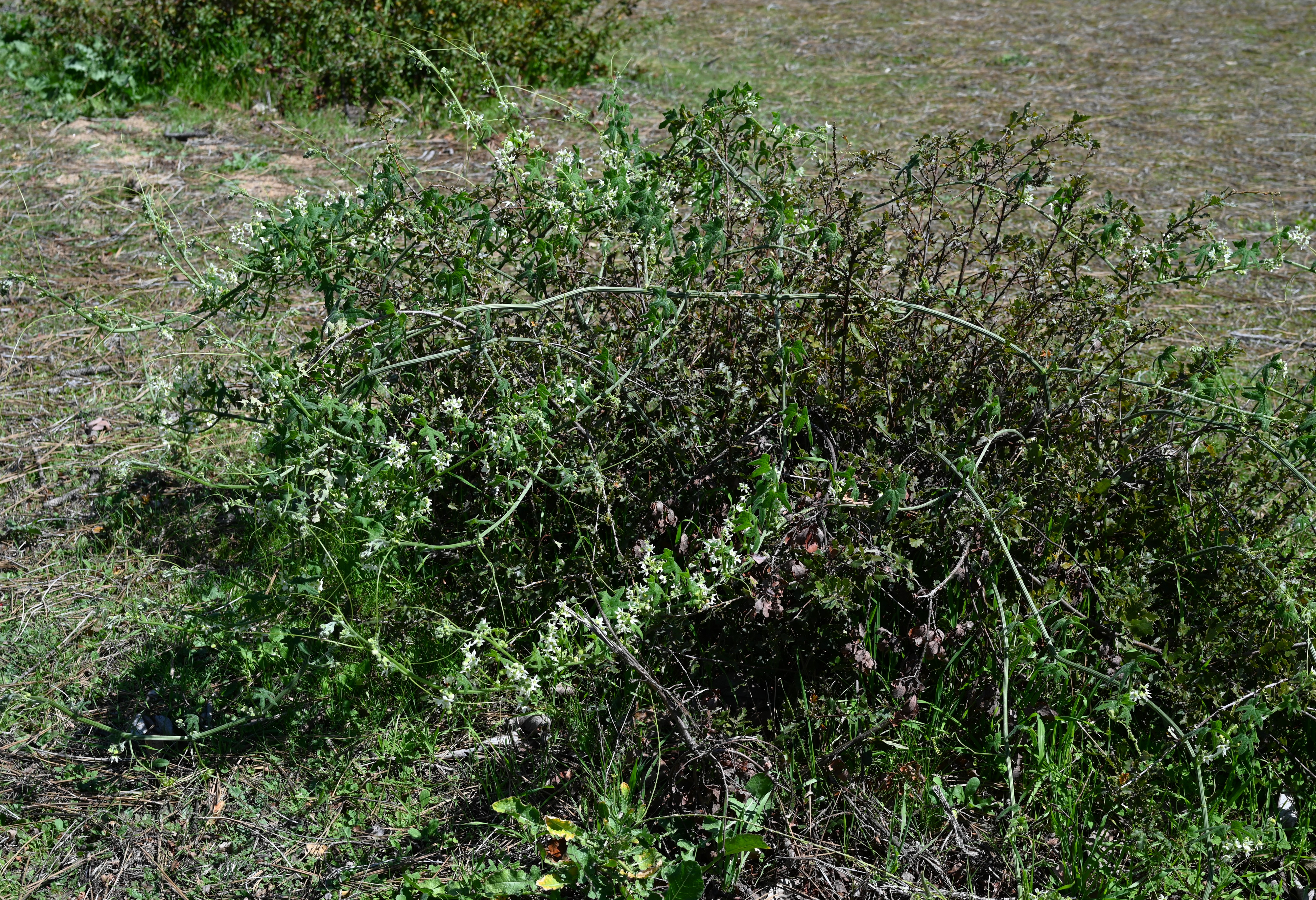 Wild Cucumber 🌿 Marah macrocarpa climbs shrubs in winter/spring and has spiny fruits; buffalo gourd sprawls in warmer months with squash-like yellow flowers.