Poison Hemlock
Conium maculatum · Apiaceae
- Height
- 6-10 ft
- Habitat
- Riparian · Disturbed
🚫 Invasive — priority to remove
Deadly poisonous — do not ingest, and wash after handling Every part contains potent toxins (coniine and related alkaloids). Ingestion can be fatal to people and livestock; sap can irritate skin and toxins can be absorbed. Wear gloves, keep it away from mouths, never burn it (toxic smoke) or feed it to animals, and wash hands and tools afterward. This is the plant that killed Socrates.
At a glance · Family: carrot/parsley (Apiaceae) — lacy leaves, white flower umbels · Tell-tale sign: Purple/red blotches on smooth, hairless stems + a musty, “mousy” smell · Priority: Yes — toxic and a target for removal
How to identify
A tall biennial (rosette the first year, flowering stalk up to 6–10 ft the second). Key features:
- Stems smooth and hairless with distinct purple-to-reddish blotches/streaks.
- Fern-like, finely divided, glossy leaves that smell musty/unpleasant when crushed (not like food).
- Flat-topped umbels of tiny white flowers in late spring. Thrives in moist, disturbed ground — roadsides, ditches, and creek edges.
How it got here
Poison hemlock didn’t sneak in. It was brought here on purpose. UC IPM and the National Park Service agree on the basic facts: it was introduced from Europe as an ornamental garden plant sometime in the 1800s, marketed as a “winter fern” for its lacy, fern-like foliage. Nobody was thinking about the eight alkaloid compounds packed into every part of the plant, or that it would eventually kill livestock and hospitalize foragers who mistook it for wild carrot or parsley. It didn’t stay in gardens long. Exactly how it got from flower beds into the wild isn’t documented. There’s no real record of it. What is documented is where it ended up: spread across California in every region below 5,000 feet except the Great Basin and desert provinces. A plant bought for its looks turned into a public health hazard nobody plants on purpose anymore.
Why it’s a problem
Poison hemlock gets a head start most native annuals don’t. It germinates in fall with the first rains and spends winter building a rosette while natives are still dormant, so by spring it’s already tall enough to shade out anything trying to come up underneath it. That lacy foliage looks delicate, but a dense stand of it closes off the ground completely. It also has a defense nothing else in the meadow has. Almost nothing eats it. The one real exception is the hemlock moth (Agonopterix alstroemeriana), whose caterpillars chew through the foliage, buds, and flowers, but even a heavy infestation of them doesn’t slow the plant down enough to matter. Deer and cattle mostly leave it alone too, though “mostly” is doing real work in that sentence: UC IPM notes they’ll eat it anyway once it turns up in their hay or their pasture runs out of anything better. A single plant can throw off thousands of seeds, and they don’t need to sprout right away. They sit in the soil and wait for the next disturbance, so pulling one generation doesn’t finish the job. Along creeks and drainages, that combination is enough to convert a stretch of native riparian understory into a hemlock monoculture within a few seasons.
How it spreads
By seed only — a single plant produces thousands. Control hinges on stopping seed set.
How to remove it
- Wear gloves (and ideally long sleeves/eye protection); avoid skin contact with sap.
- Dig or pull (the taproot comes up best in moist soil) before it flowers/seeds. For large stands, cut/treat in the rosette stage.
- Bag and dispose of plants and seed heads in the trash — do not compost and do not burn.
- Wash hands, tools, and clothes afterward. Monitor the site for new seedlings for several years.
Restoration alternative
Poison hemlock takes over exactly the ground this vault already has native answers for: moist, disturbed edges along creeks and drainages. Mule Fat is the structural replacement, a fast-growing riparian shrub built for the same disturbed streambanks hemlock colonizes. It holds that ground as habitat instead of a toxic monoculture. The low, dense herbaceous layer hemlock chokes out has an answer too. Stinging Nettle grows into the same damp, part-shaded riparian niche, and it supports far more life than hemlock ever will, including several native butterfly species that depend on it as a host plant for their caterpillars. Neither is a decorative swap. Both hold wet, disturbed soil together, and both feed something while they do it.
Where it’s spread near you
Sources
- Cal-IPC profile · iNaturalist · Wikipedia
- Introduction history: UC IPM — Poison Hemlock · National Park Service — Exotic Species: Poison Hemlock
Commonly confused with
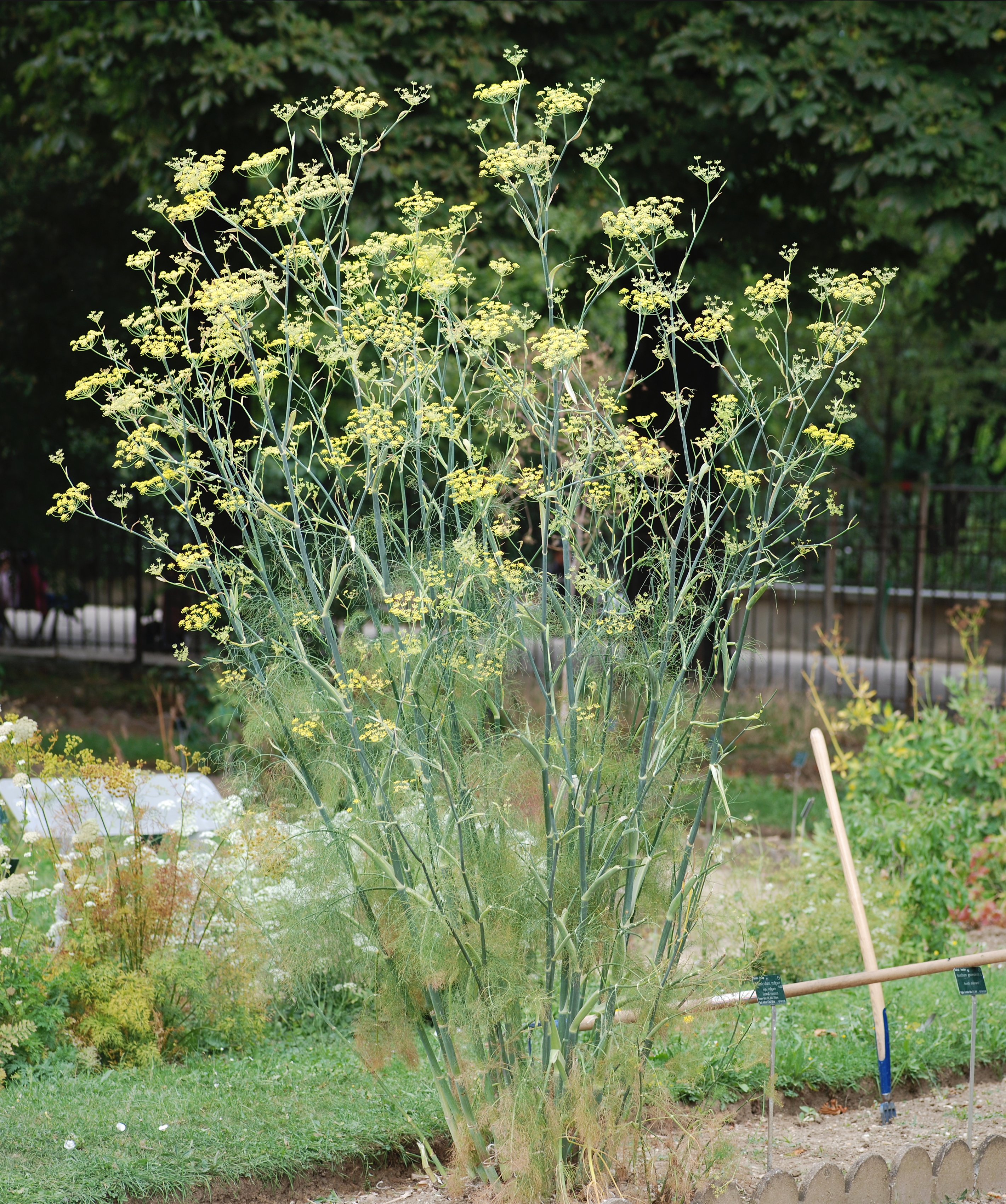 Fennel 🚫 Foeniculum vulgare also tall and lacy, but smells strongly of licorice/anise, has no purple blotches, and bears yellow flowers. (Fennel is edible; hemlock is deadly — never rely on guesswork.)