Coastal Goldenbush
Isocoma menziesii · Asteraceae
- Form
- Shrub
- Height
- 2–4 ft
- Sun
- Full Sun
- Water
- Low
- Blooms
- Jul, Aug, Sep, Oct, Nov
- Habitat
- Coastal Sage Scrub · Coastal · Disturbed
🌿 California native
Quick facts
- Habitat: Coastal bluffs, scrub edges, sandy or disturbed ground
- Form / size: Rounded shrub, 2–4 ft
- Sun: Full sun · Water (established): Low
- Blooms: Late summer–fall · Pollinator value: High
Description
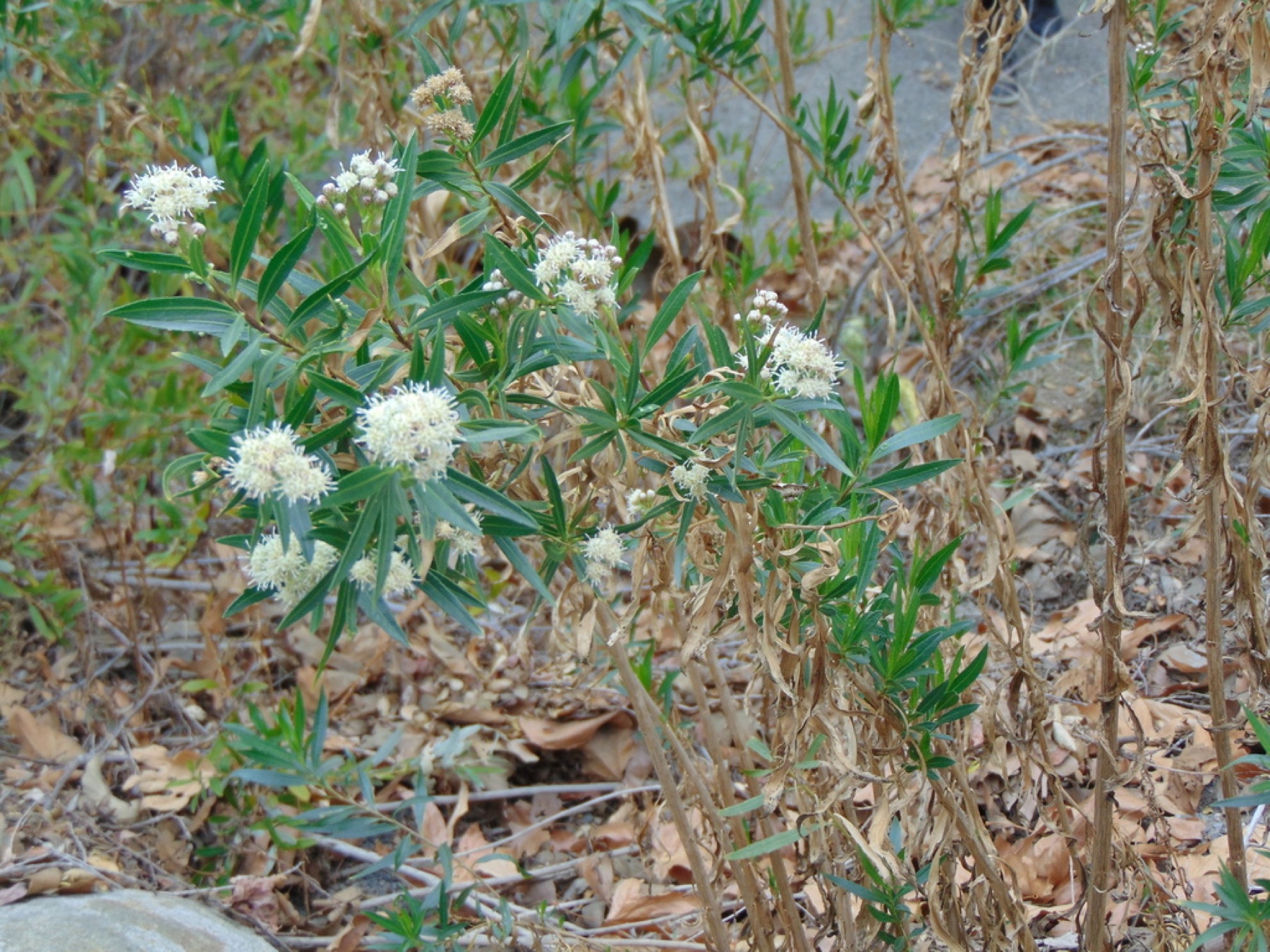
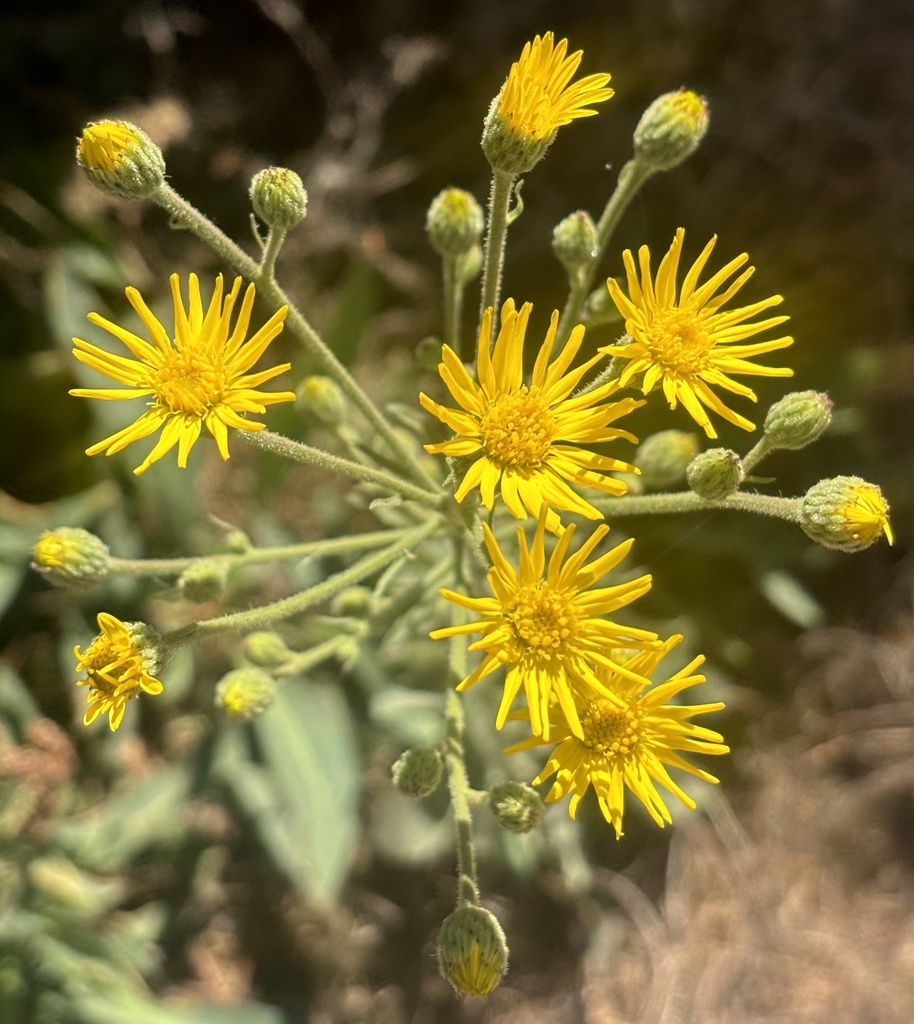
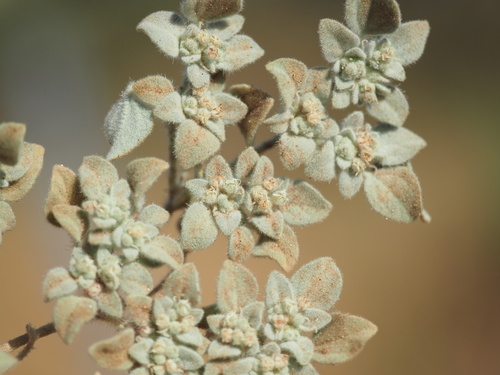
A late-blooming coastal shrub with narrow resinous leaves and clusters of bright yellow flower heads. It often looks unassuming until dry-season bloom, when it becomes a pollinator station.
Ecological role
Coastal goldenbush blooms from midsummer into late fall, when coastal sage scrub has already shifted from spring ephemerals into dry-season scarcity. Native bees, butterflies, and beneficial insects visit the flower heads steadily through a season when few other shrubs are still offering nectar and pollen. This timing makes it a dependable late-season nectar and pollen source in its habitat. The dense, bushy structure provides shelter for insects.
Habitat & range
Coastal bluffs, terraces, scrub, sandy flats, and disturbed edges along Southern California and Baja California.
In the garden
Good for coastal gardens, dry slopes, and late-season pollinator plantings. It is not fussy, but it wants sun and drainage.
Propagation
Grow from seed or semi-hardwood cuttings.
Where to see it near you
- iNaturalist — observed in Orange County
- Coastal bluffs, scrubby roadsides, and sandy disturbed ground.
Problems
Can get woody with age. Tip-prune or lightly cut back after bloom.