Lemonade Berry
Rhus integrifolia · Anacardiaceae
- Form
- Shrub
- Height
- 3–10 ft
- Sun
- Full Sun
- Water
- Low
- Blooms
- Feb, Mar, Apr
- Habitat
- Coastal Sage Scrub · Coastal
🌿 California native
Quick facts
- Habitat: Coastal bluffs and Coastal Sage Scrub
- Form / size: Evergreen shrub, 3–10 ft (mounding to bank-covering)
- Sun: Full sun · Water: Low
- Blooms: Late winter–spring · Fruit: sticky, tart, reddish
Description
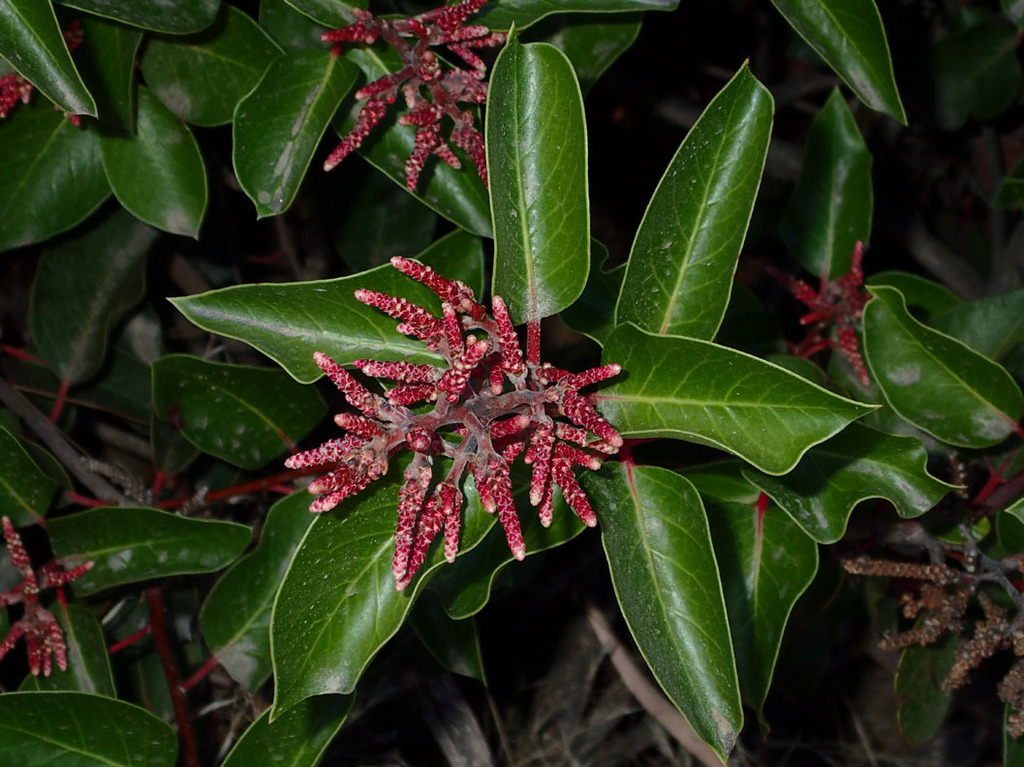
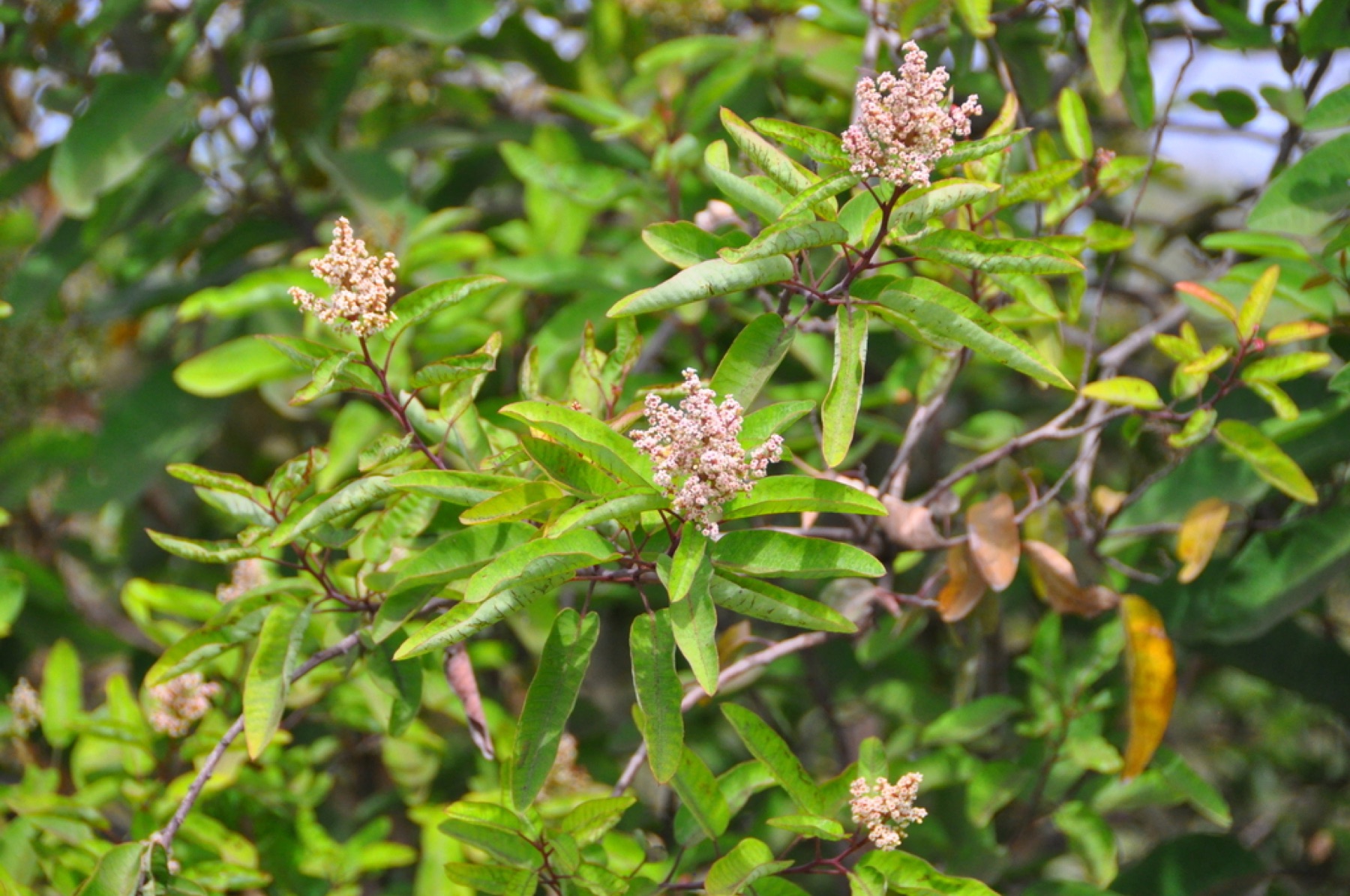
A tough coastal evergreen with flat, leathery, often red-edged leaves, clusters of small pink-and-white flowers in late winter, and flattened sticky reddish berries with a tart, lemony coating (historically soaked in water for a sour drink — hence the name). Takes salt wind and forms dense, bank-holding mounds.
Indigenous & historical use
The Kumeyaay ate the berries fresh or soaked them in water for a flavored drink, ground the seeds for a medicinal tea, brewed the bark into a postpartum tea, and chewed the leaves to quench thirst on long journeys, uses recorded by Florence Shipek from Delfina Cuero, a Kumeyaay elder. The Luiseño likewise drank a beverage made from the berries and used the plant’s stems in basketry.
Ecological role
Lemonade berry’s early spring blooms provide pollen and nectar for native bees and other insects when much of coastal sage scrub has little else to offer. The sticky, tart berries are a food source for birds, which disperse seeds as they feed. Its dense, evergreen form provides shelter and structure for wildlife in open scrub, maintaining cover through winter when many deciduous neighbors have dropped leaves entirely.
Habitat & range
Coastal bluffs, canyons, and Coastal Sage Scrub near the ocean, from the coast inland to the lower foothills.
In the garden
Excellent coastal hedge, screen, or bank cover — salt-tolerant, fire-resistant when hydrated, and shearable. Full sun, low water; tolerates clay better than many natives.
Propagation
From seed (heat-treated) and semi-hardwood cuttings.
Where to see it near you
- iNaturalist — observed in Orange County
- Coastal bluffs — Crystal Cove, Laguna, Dana Point.
Problems
Very tough; minimal issues with good drainage.
Sources
- Calscape · iNaturalist · Wikipedia
- Indigenous use: Shipek, Florence (1991). Delfina Cuero: Her Autobiography, an Account of Her Last Years, and Her Ethnobotanic Contributions, cited in CSUSM Community Ethnobotany — Rhus integrifolia · La Jolla Band of Luiseño Indians (2008)