California Peony
Paeonia californica · Paeoniaceae
- Form
- Perennial herb
- Height
- 1-3 ft
- Sun
- Part Sun
- Water
- Low
- Blooms
- Feb, Mar, Apr
- Pet toxicity
- Mild
- Habitat
- Coastal Sage Scrub · Chaparral
🌿 California native
Quick facts
- Habitat: Shaded slopes in Coastal Sage Scrub and Chaparral
- Form / size: Spring perennial, usually 1-3 ft
- Sun: Part sun to light shade · Water: Low
- Blooms: Late winter-spring · Pollinator value: Moderate
Description
One of the most distinctive spring wildflowers in Southern California, with divided leaves and large, usually nodding maroon flowers that feel almost improbably lush in dry-country habitat. By summer it often disappears into dormancy.
Indigenous & historical use
The Chumash treated dysmenorrhea and premenstrual symptoms with California peony or with mugwort, a women’s-health use documented by researchers Jasmine Adams and Cecilia Garcia in a 2006 study of Chumash women’s health practices.
Ecological role
The plant blooms from February through April, when many pollinators are seeking early food sources. Native bees and beetles visit the large maroon flowers for pollen and nectar. The species’ seasonal pattern, early growth and bloom followed by summer dormancy, fits the climate of dry foothill slopes where it grows.
Habitat & range
Dry hillsides, north-facing slopes, and canyon scrub in Southern California’s coastal mountains and foothills, especially where some shade and seasonal moisture linger.
In the garden
Best with excellent drainage and a dry summer rest. It suits native gardens that imitate foothill scrub rather than irrigated perennial borders.
Propagation
Usually from seed or careful division of nursery material. It resents repeated disturbance once established.
Where to see it near you
- iNaturalist — observed in Southern California
- Shaded scrubby slopes, chaparral canyons, and foothill openings.
Problems
Usually short-lived in heavy summer irrigation. Let it go summer-dry instead of forcing constant growth.
Sources
- Calscape · iNaturalist · Wikipedia
- Indigenous use: Adams, J.D. & Garcia, C. (2006). “Women’s Health Among the Chumash.” Evidence-Based Complementary and Alternative Medicine 3(1):125–131. · Timbrook, Chumash Ethnobotany: Plant Knowledge Among the Chumash People (2007)
Commonly confused with
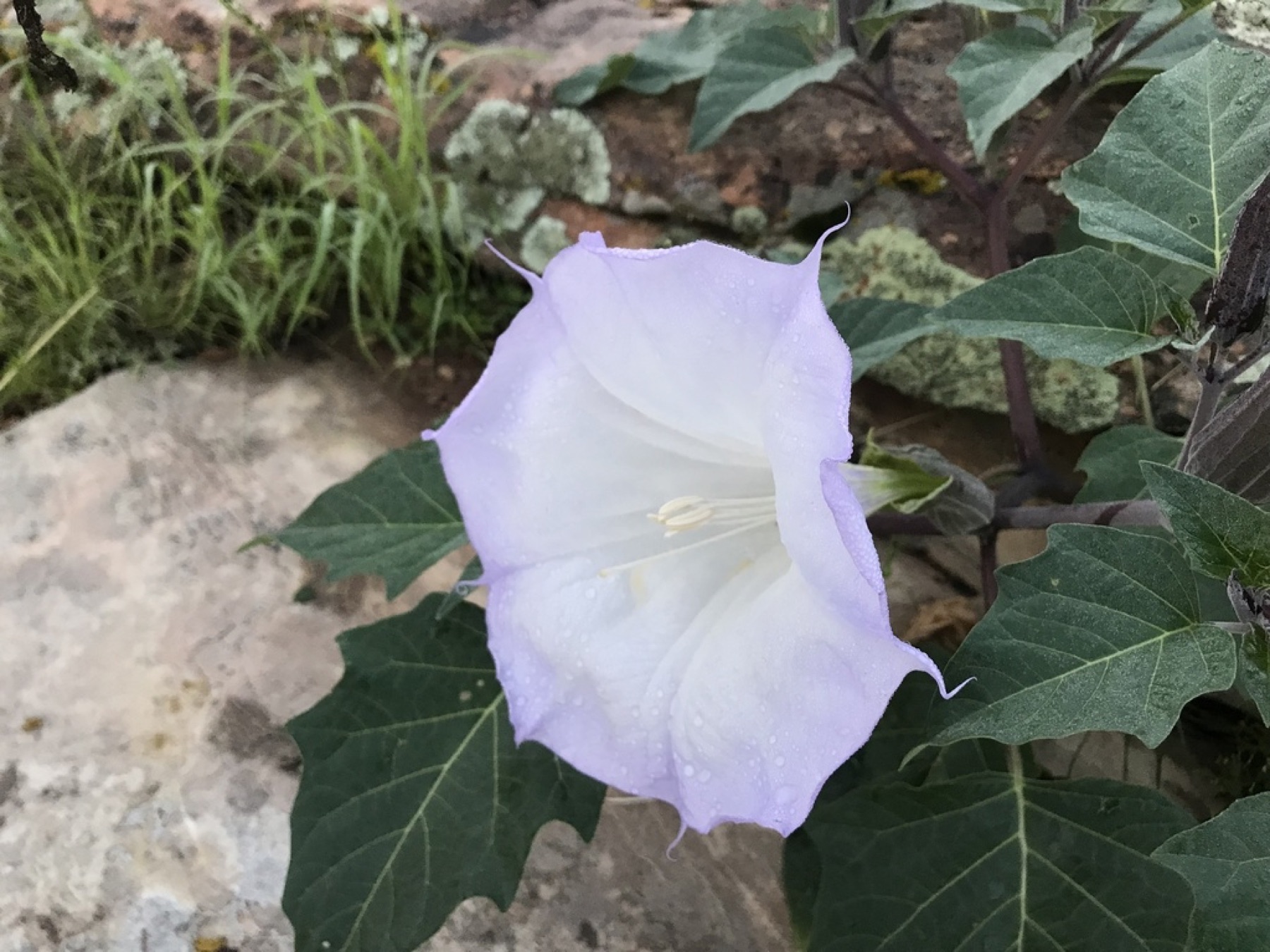 Sacred Datura 🌿 Datura wrightii much larger white trumpet flowers and coarser foliage; datura blooms later and in hotter exposed sites.