Scarlet Milkvetch
Astragalus coccineus · Fabaceae
- Form
- Perennial
- Height
- 2–10 in
- Sun
- Full Sun
- Water
- Very Low
- Blooms
- Apr, May, Jun
- Pet toxicity
- Toxic
- Habitat
- Desert · Sagebrush Scrub
🌿 California native
Quick facts
- Habitat: Open Desert and dry Sagebrush Scrub
- Form / size: Low perennial, 2–10 in
- Sun: Full sun · Water: Very low
- Blooms: Spring scarlet flowers · Pollinator value: High
Description
A startling desert legume that hugs the ground and throws out brilliant scarlet-red pea flowers against bare mineral soil. It is one of those species that can stop you instantly because the color feels almost impossible in such dry country.
Wildlife & pollinators
The flowers support native bees and other spring pollinators.
Habitat & range
Open desert flats, gravelly fans, and sparse shrub country of the eastern Sierra south end and adjacent Mojave / Great Basin transition.
In the garden
A specialist plant for serious desert-native growers. It wants sharp drainage, open soil, and little interference.
Propagation
From seed, often helped by scarification as with other hard-coated legumes.
Where to see it near you
- iNaturalist — observed across California (map)
- Best in the drier southern stretches of the Eastern Sierra corridor, especially around Lone Pine.
Sources
Commonly confused with
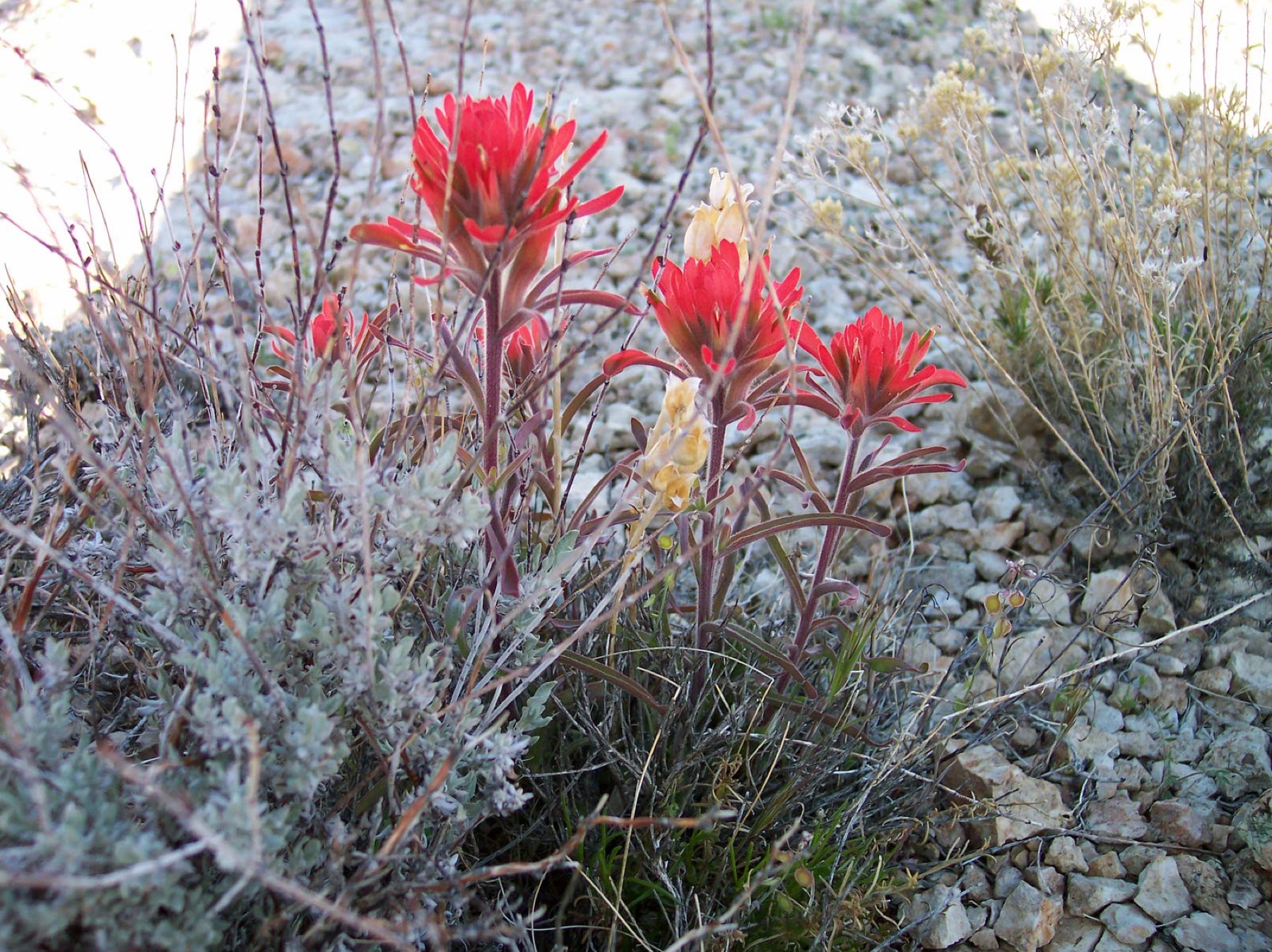
🌿 Desert paintbrushes also bright red in dry country, but paintbrush color comes from bracts and a different flower shape; milkvetch is a true pea flower.