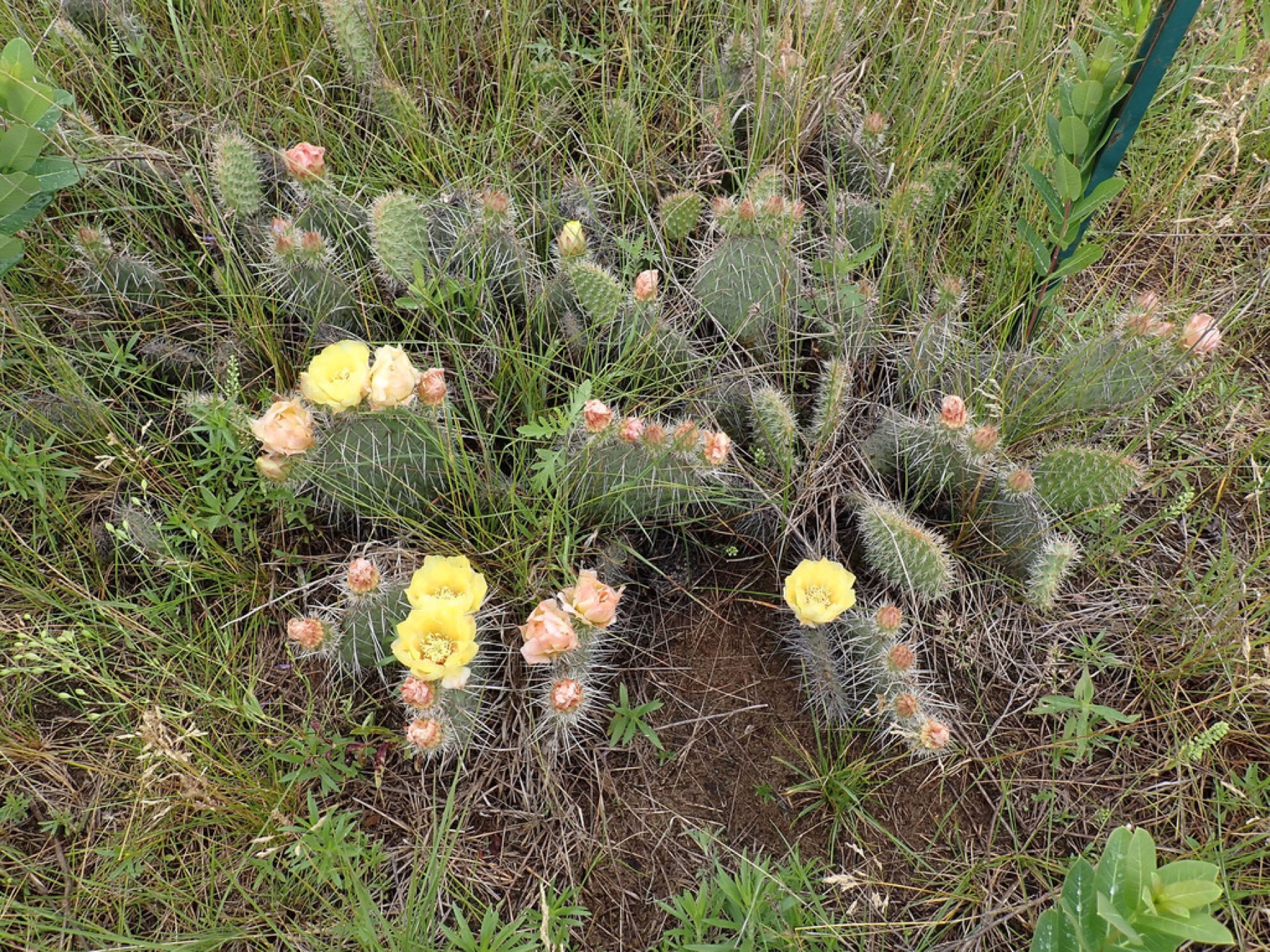
Beavertail Pricklypear
Opuntia basilaris · Cactaceae
- Form
- Succulent
- Height
- 0.2–1 ft
- Sun
- Full Sun
- Water
- Very Low
- Blooms
- Mar, Apr, May
- Pet toxicity
- Mild
- Habitat
- Sagebrush Scrub · Desert
🌿 California native
Quick facts
- Habitat: Dry Sagebrush Scrub margins and desert slopes
- Form / size: Low clumping pad cactus, usually under 1 ft tall
- Sun: Full sun · Water: Very low
- Blooms: Spring magenta flowers · Pollinator value: High
Description
A broad-padded desert pricklypear with bluish to gray-green pads and large, vivid pink-magenta flowers that can light up whole rocky slopes in spring. It often looks softer and broader than other pricklypears, though the glochids will quickly correct that impression if touched.
Wildlife & pollinators
Flowers attract native bees and other pollinators; fruits are used by wildlife.
Habitat & range
Desert slopes, bajadas, and rocky scrub of the Mojave and adjacent east-side dry country. Along the 395 corridor it is strongest in the warmer southern reaches around Lone Pine.
In the garden
Excellent for true desert plantings with full sun and lean soil. Needs heat, drainage, and room away from foot traffic.
Propagation
From pad cuttings or seed. Allow pads to dry and callus before planting.
Where to see it near you
- iNaturalist — observed across California (map)
- Most likely in the warmer southern stretches of the eastern Sierra corridor, especially around Lone Pine.