Raspberry Buckwheat
Eriogonum gracilipes · Polygonaceae
- Form
- Perennial
- Height
- 0.5–2 ft
- Sun
- Full Sun
- Water
- Very Low
- Blooms
- May, Jun, Jul
- Habitat
- Sagebrush Scrub · Desert
🌿 California native
Quick facts
- Habitat: Sagebrush Scrub and open east-side desert slopes
- Form / size: Airy perennial, 0.5–2 ft
- Sun: Full sun · Water: Very low
- Blooms: Late spring–summer pinkish heads · Pollinator value: High
Description
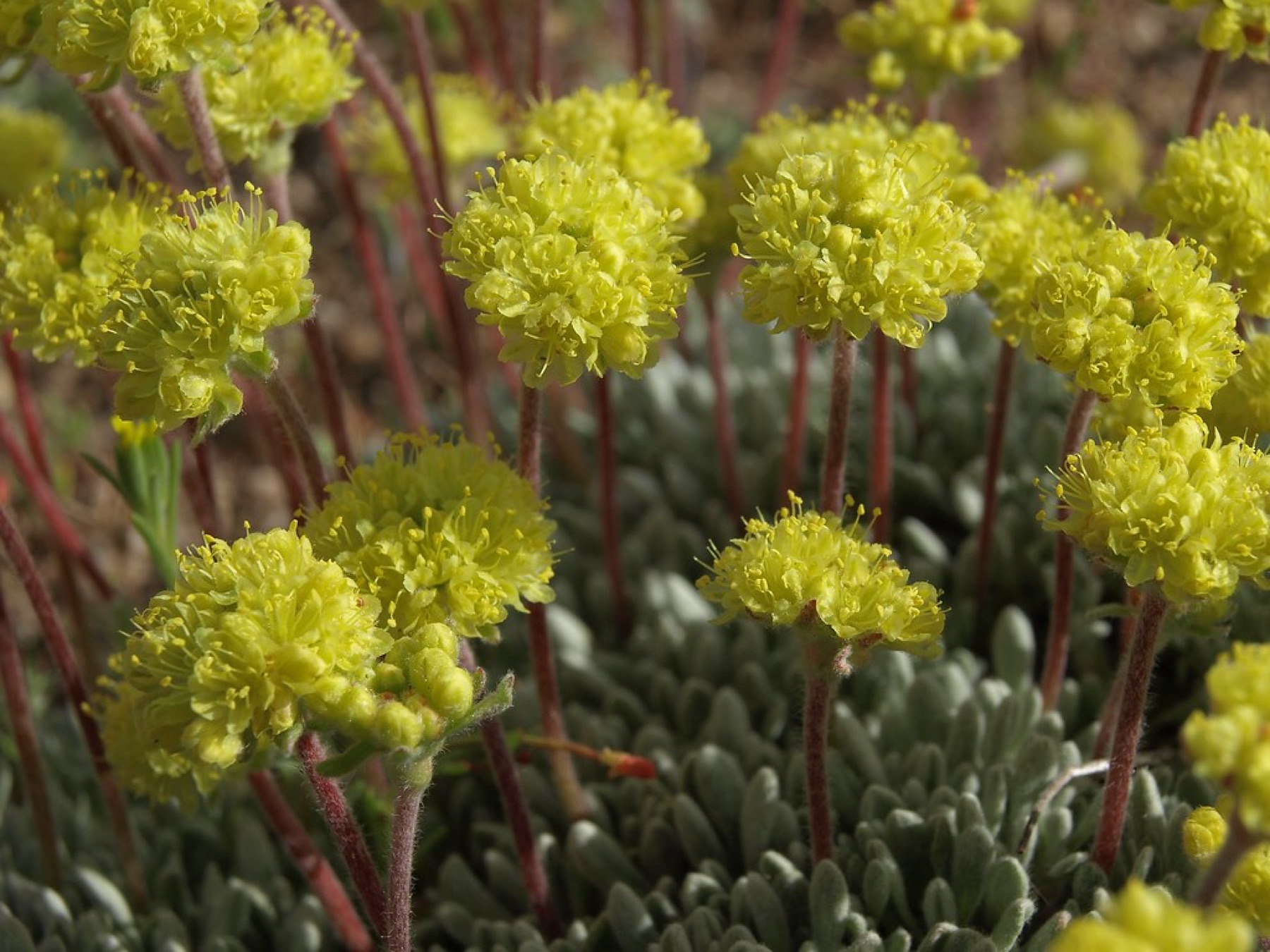
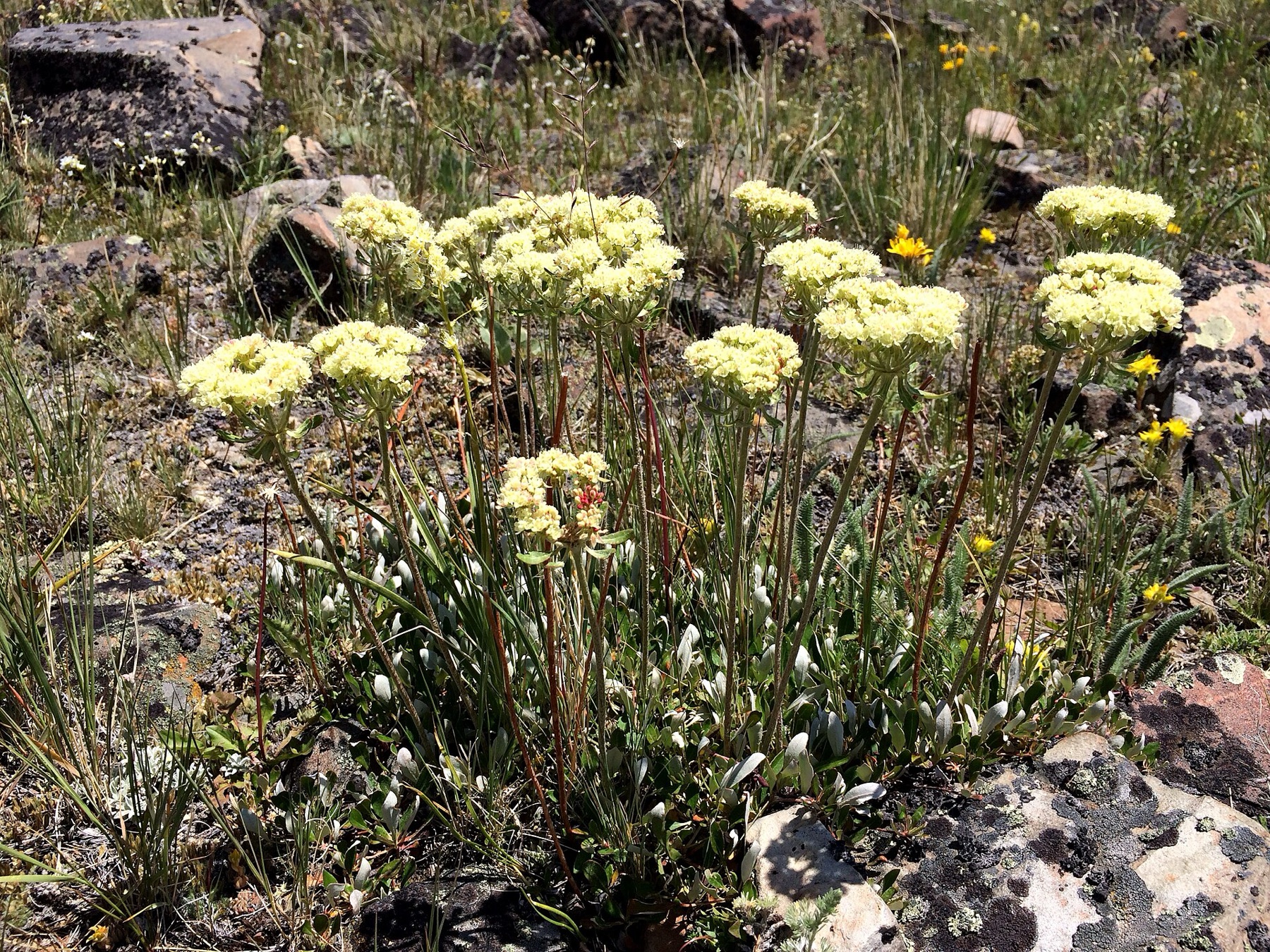
An elegant east-side buckwheat with finer stems and clustered flower heads that can age into richer raspberry-pink or red tones, giving the plant its common name. It reads lighter and more graceful than the bulkier shrubby buckwheats.
Wildlife & pollinators
Like many buckwheats, it is a strong pollinator plant and an important nectar resource in dry landscapes.
Habitat & range
Open dry slopes, gravelly flats, and shrub-steppe country on the east side of the Sierra and adjacent Great Basin terrain.
In the garden
A good dryland native for people who like buckwheats but want something more airy and herbaceous than a woody shrub.
Propagation
From seed. Best in lean soil with little summer water.
Where to see it near you
- iNaturalist — observed across California (map)
- Common on the east side around Bishop and other dry sections of the Eastern Sierra corridor.