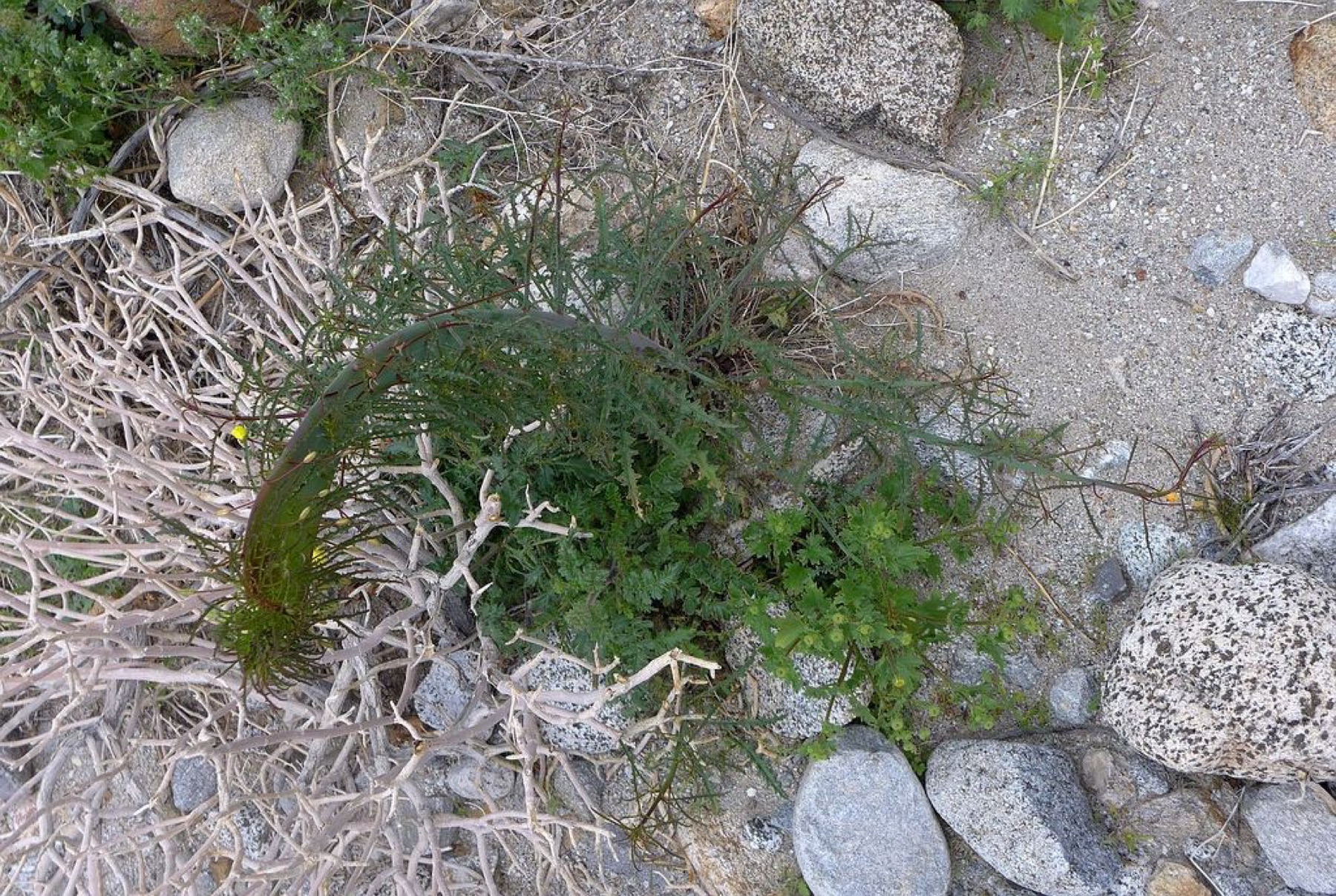
Apricot Globemallow
Sphaeralcea ambigua · Malvaceae
- Form
- Perennial
- Height
- 1–3 ft
- Sun
- Full Sun
- Water
- Very Low
- Blooms
- Feb, Mar, Apr, May, Jun
🌿 California native
Quick facts
- Habitat: Desert flats, washes, dry slopes, roadsides
- Form / size: Perennial/subshrub, 1–3 ft
- Sun: Full sun · Water (established): Very low
- Blooms: Spring–early summer · Pollinator value: High
Description
A soft gray-green mallow with upright stems and satiny orange-apricot flowers. In a good year it can make desert roadsides glow.
Wildlife & pollinators
Flowers attract native bees, butterflies, and hummingbirds.
Habitat & range
Desert flats, washes, dry slopes, and roadsides across the Southwest.
In the garden
Excellent for desert gardens, hot slopes, and dry pollinator patches. Cut back after bloom if it gets rangy.
Propagation
From seed. Scarification or hot-water treatment improves germination.
Where to see it near you
- iNaturalist — observed in Southern California
- Desert wildflower areas, dry washes, and hot roadsides.
Problems
Needs drainage and sun. Can be short-lived in heavy, irrigated soil.
Sources
Commonly confused with
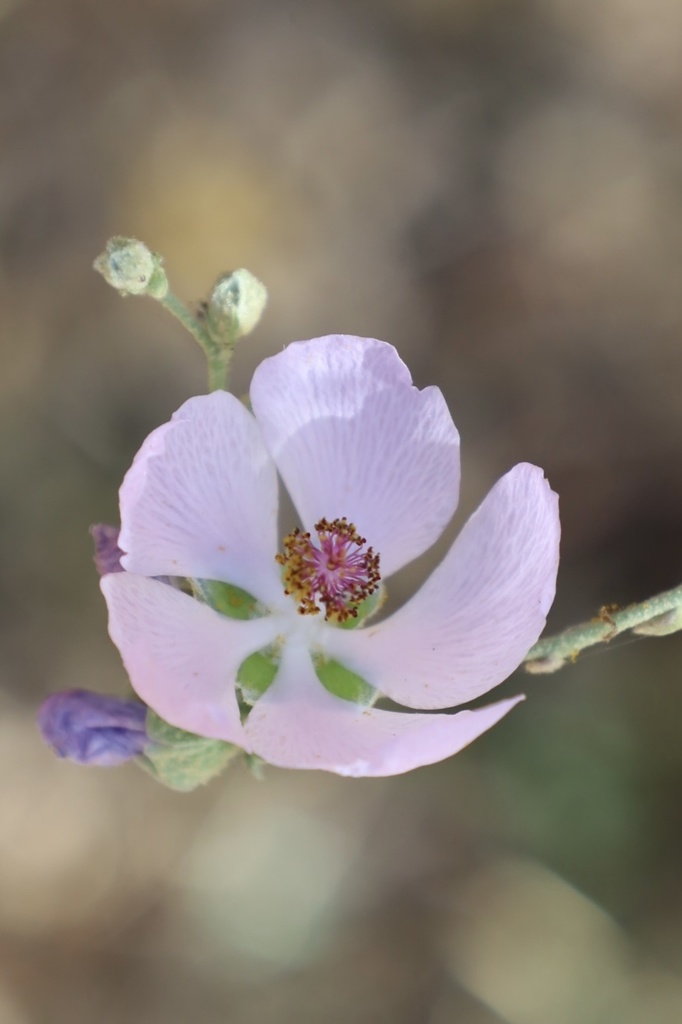 Southern Coastal Bushmallow 🌿 Malacothamnus fasciculatus larger coastal-scrub shrub with pink flowers.
 🌿 Garden mallows often larger-leaved and less drought-adapted.