Rubber Rabbitbrush
Ericameria nauseosa · Asteraceae
- Form
- Shrub
- Height
- 2–6 ft
- Sun
- Full Sun
- Water
- Very Low
- Blooms
- Aug, Sep, Oct
- Habitat
- Sagebrush Scrub
🌿 California native
Quick facts
- Habitat: Sagebrush Scrub, disturbed high-desert flats and roadsides
- Form / size: Rounded shrub, 2–6 ft
- Sun: Full sun · Water: Very low
- Blooms: Fall — a blaze of gold when little else flowers · Pollinator value: High
Description
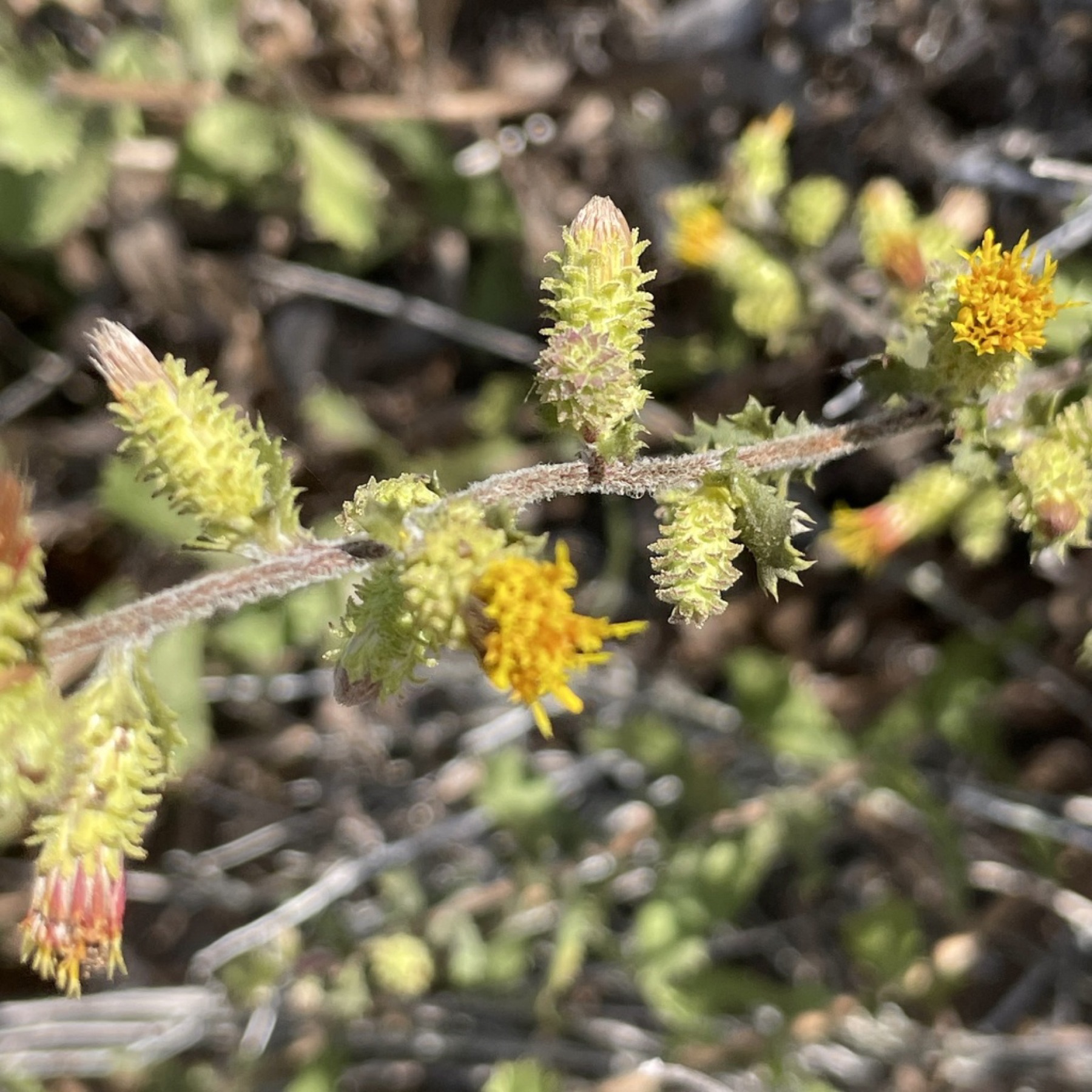
A rounded shrub of soft, flexible, silvery-white felted stems topped, in late summer and fall, with dense clusters of bright golden flowers — the last big nectar event of the high-desert year, drawing clouds of bees and butterflies. The sap contains natural rubber (hence the name). Tough, fast, and a classic roadside colonizer along US-395.
Wildlife & pollinators
A premier fall nectar/pollen plant for native bees, butterflies, and beneficial insects; seeds feed birds.
Habitat & range
Sagebrush Scrub and disturbed ground throughout the Great Basin and Eastern Sierra; high-desert flats around Big Bear.
In the garden
A fast, cheerful, drought-proof shrub for late-season pollinator color in hot, dry gardens. Full sun, very low water; shear after bloom.
Propagation
Easy from seed (sow in fall); also from cuttings. Self-sows on open ground.
Where to see it near you
- iNaturalist — observed across California (map)
- Roadsides and sage flats of the Eastern Sierra.
Sources
Commonly confused with
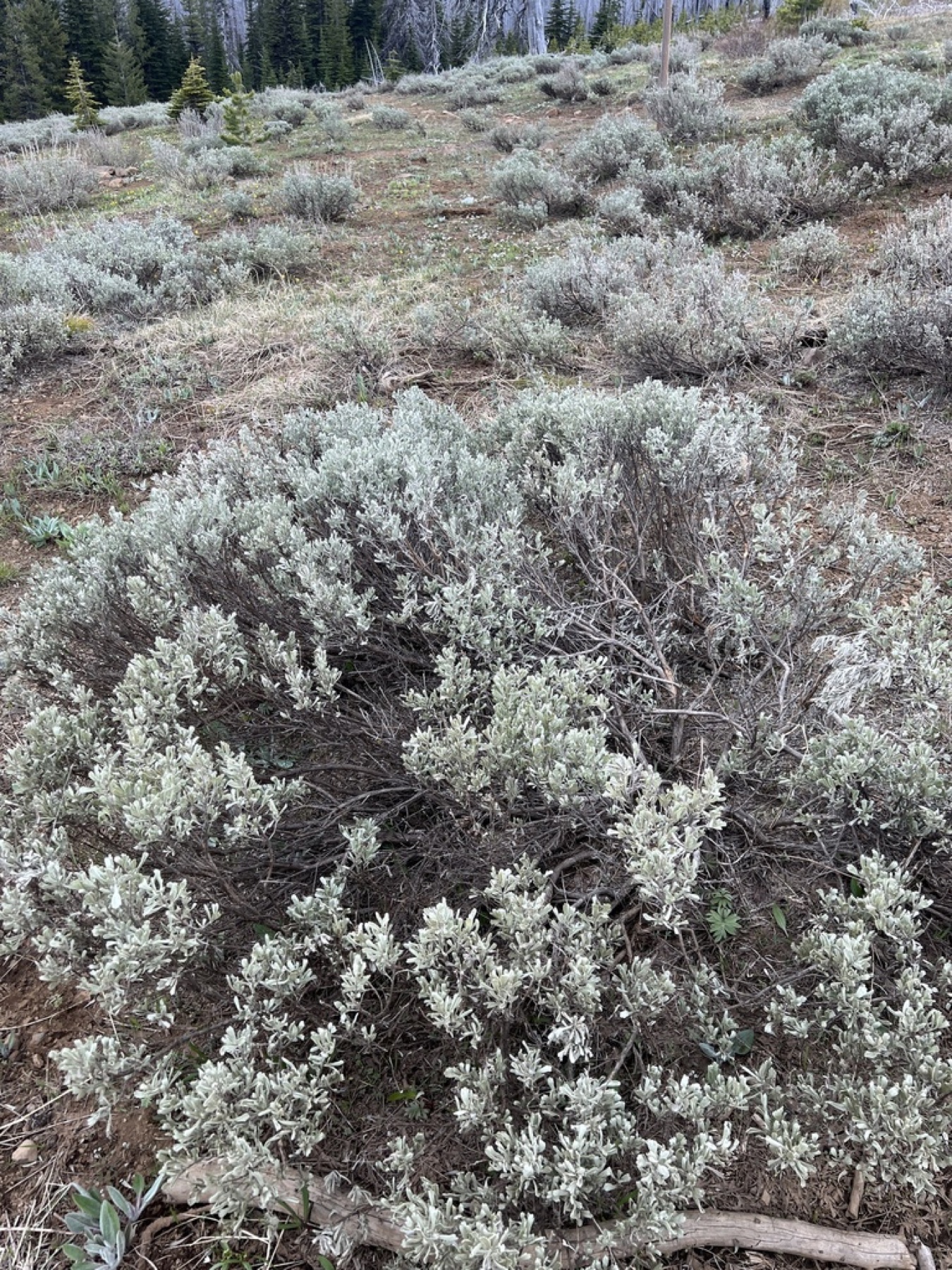 Big Sagebrush 🌿 Artemisia tridentata same habitat but silvery and not yellow-flowered; rabbitbrush turns gold in fall.