Antelope Bitterbrush
Purshia tridentata · Rosaceae
- Form
- Shrub
- Height
- 2–8 ft
- Sun
- Full Sun
- Water
- Very Low
- Blooms
- May, Jun
- Habitat
- Sagebrush Scrub · Montane
🌿 California native
Quick facts
- Habitat: Sagebrush Scrub and open Montane slopes (east side)
- Form / size: Branchy shrub, 2–8 ft
- Sun: Full sun · Water: Very low
- Blooms: Late spring — covered in small yellow flowers · Pollinator value: High
Description
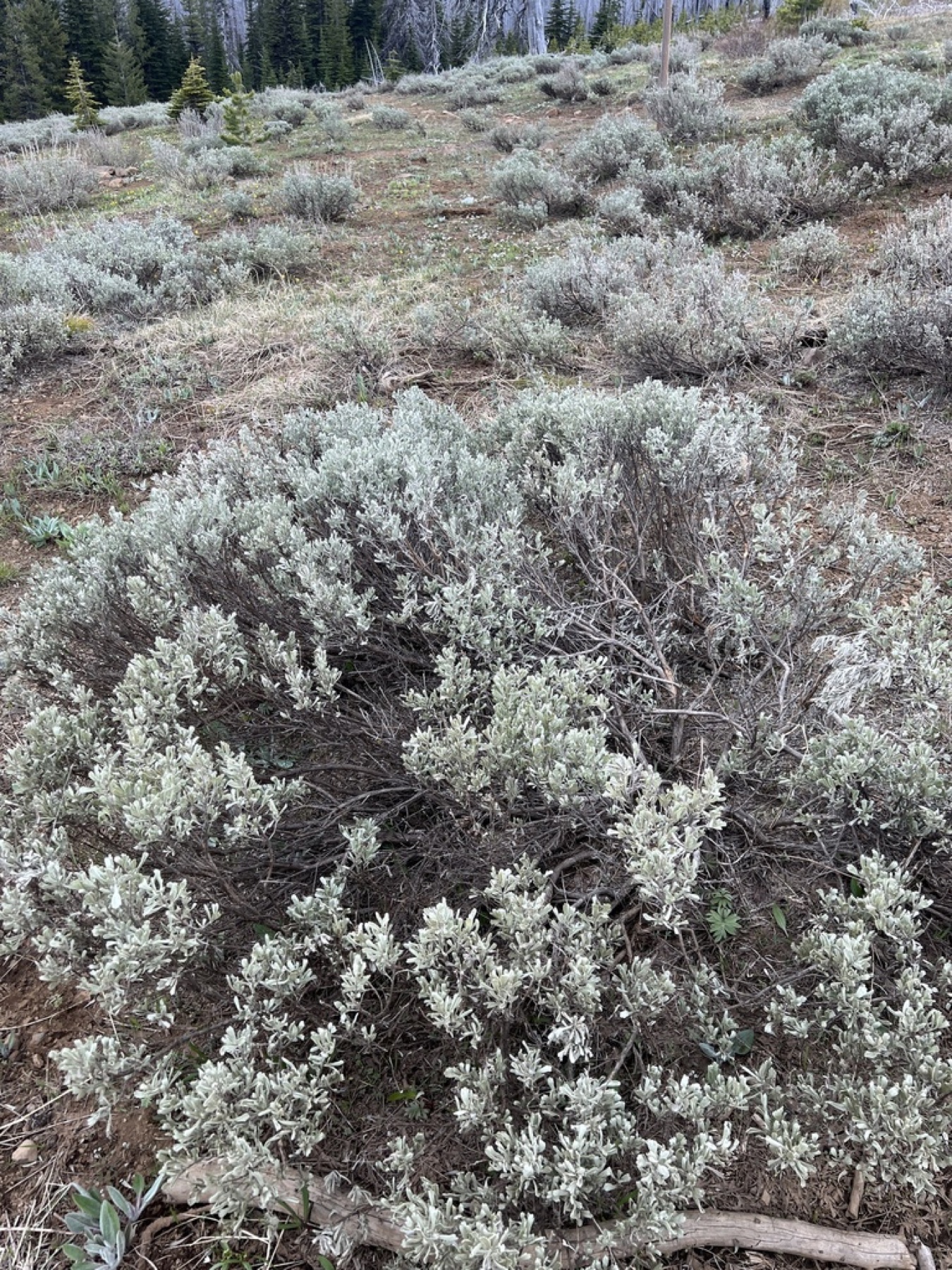
A Great Basin shrub that looks a lot like sagebrush from a distance — small, wedge-shaped, three-toothed leaves — but it’s greener, only faintly aromatic, and in late spring it’s smothered in small, fragrant, pale-yellow rose-family flowers (5 petals). One of the single most important mule-deer browse plants in the West.
Wildlife & pollinators
Critical winter browse for mule deer and pronghorn; flowers feed native bees; rodents cache the seeds (and plant new shrubs).
Habitat & range
Sagebrush Scrub and open pine/montane slopes of the Eastern Sierra, Great Basin, and high SoCal mountains; mixes with big sagebrush and bitterbrush flats around Mono and Big Bear.
In the garden
A tough, wildlife-rich, nitrogen-fixing shrub for hot, dry, cold-winter gardens. Full sun, very low water, sharp drainage.
Propagation
From seed (cold-moist stratify); rodent-cached seed germinates readily in the wild.
Where to see it near you
- iNaturalist — observed across California (map)
- Sage flats of the Eastern Sierra; high desert near Big Bear.