Big Sagebrush
Artemisia tridentata · Asteraceae
- Form
- Shrub
- Height
- 2–8 ft
- Sun
- Full Sun
- Water
- Very Low
- Blooms
- Aug, Sep, Oct
- Habitat
- Sagebrush Scrub
🌿 California native
Quick facts
- Habitat: Sagebrush Scrub — the dominant shrub of the high desert east of the Sierra
- Form / size: Aromatic grey shrub, 2–8 ft
- Sun: Full sun · Water: Very low
- The smell: crush a leaf — this is the scent of the Great Basin
Description
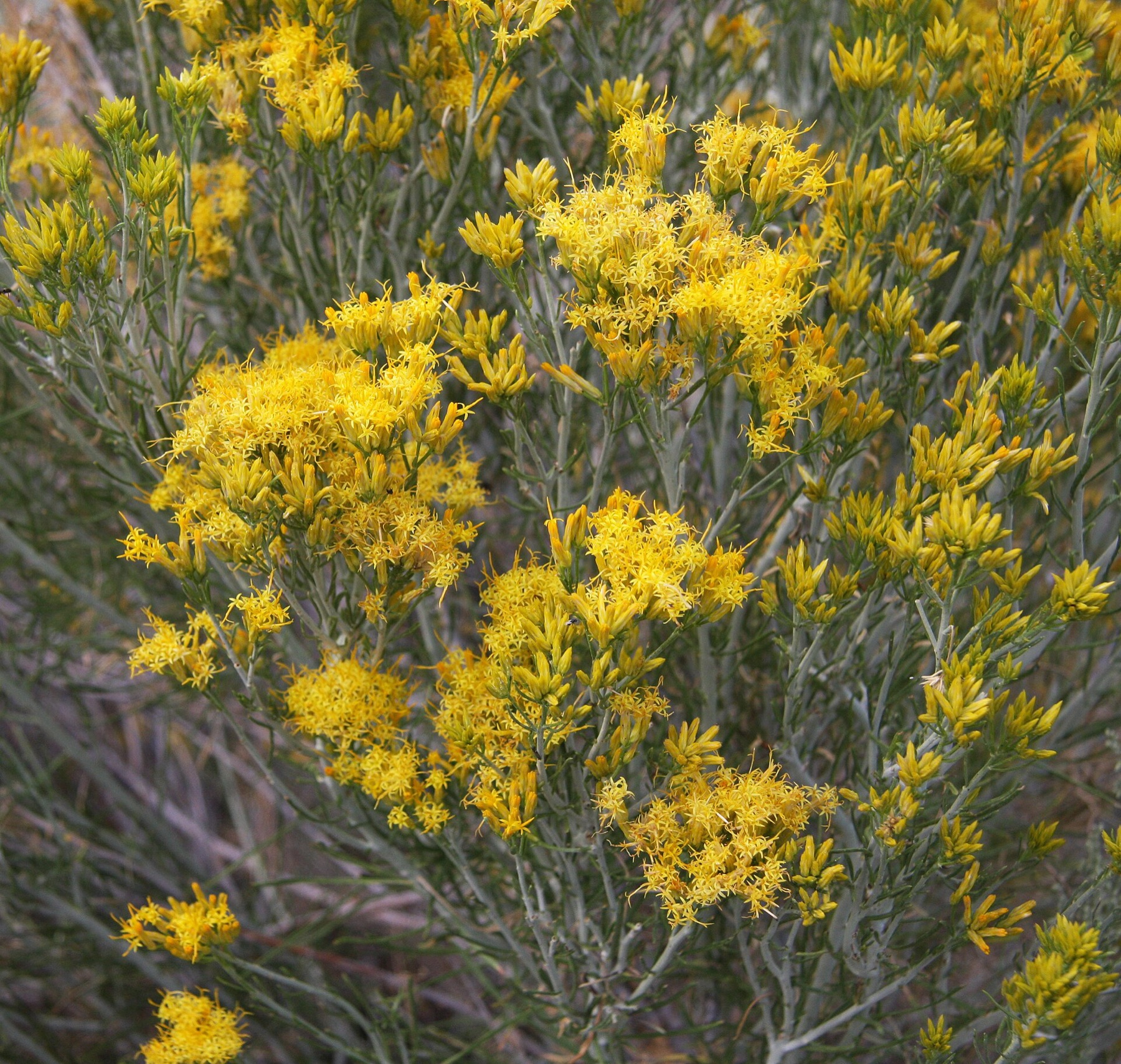
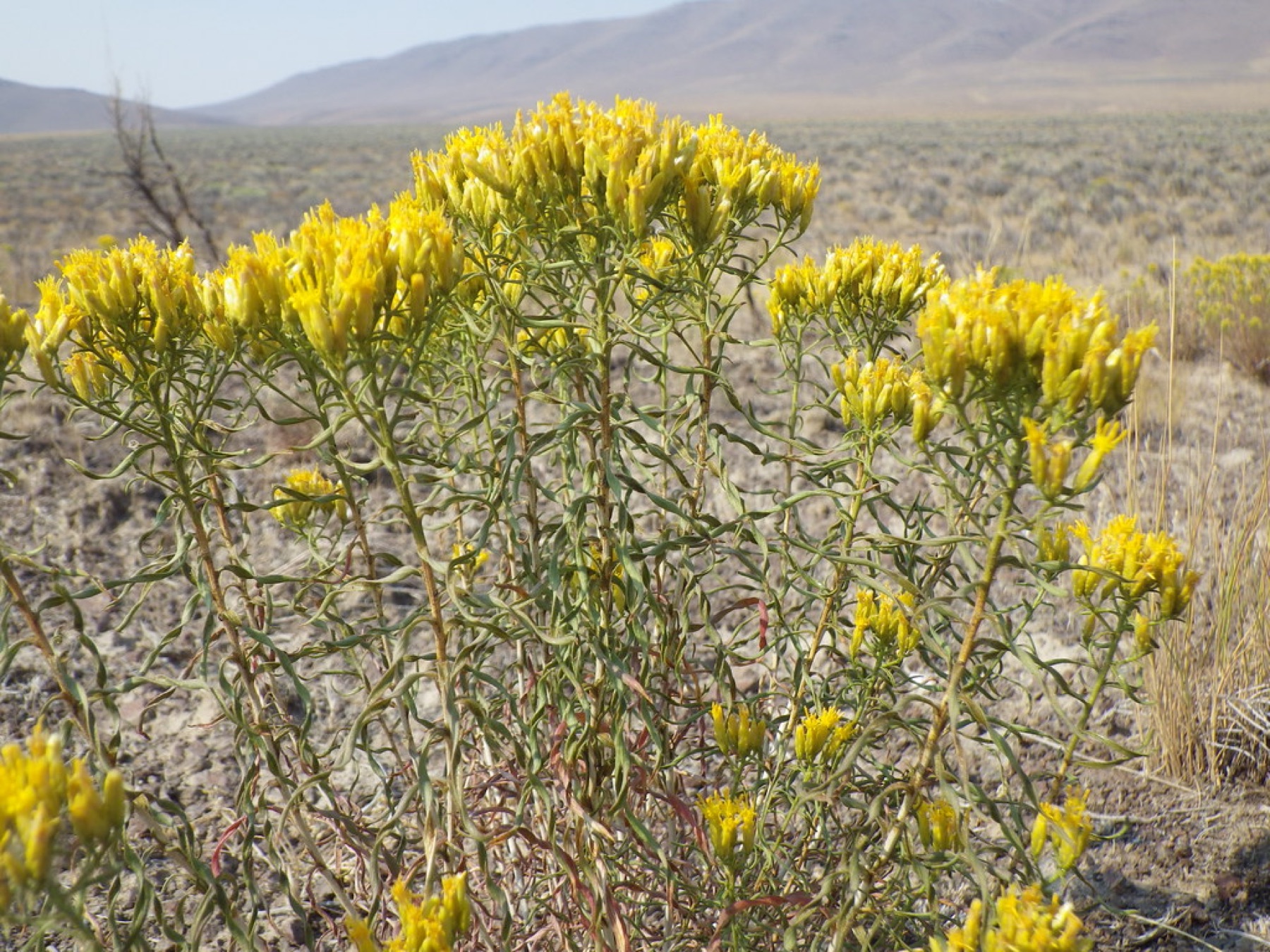
The defining shrub of the Eastern Sierra and Mono Basin — silvery, aromatic grey-green leaves tipped with three small teeth (tridentata), on shreddy-barked stems, releasing the unmistakable sweet-bitter “sagebrush after rain” smell. (It’s a true sagebrush — Artemisia — not a culinary sage.) Tiny yellowish flowers in late summer are wind-pollinated and easy to miss. Forms the vast silver seas along US-395.
Wildlife & pollinators
A keystone of the sage ecosystem — essential cover and browse for sage-grouse, mule deer, pronghorn, and many songbirds and small mammals.
Ecological role
Big sagebrush runs the water and the nitrogen for everything growing around it. Its roots reach both deep and wide, and it was in Artemisia tridentata that researchers first demonstrated hydraulic lift: at night the deep roots pull moisture up from wet subsoil and release some of it into the dry surface layer, where shallow-rooted grasses and wildflowers can reach it. A sagebrush is a water pump its neighbors get to share, which is a large part of why the spaces between shrubs are not bare.
What it cannot do is come back fast from fire. Sagebrush has no ability to resprout from its root crown, so a burn kills the plant outright and the stand can only return from seed, over decades. That timeline used to be survivable because fires in sagebrush country were rare. Cheatgrass changed the arithmetic. The introduced annual grass fills the gaps between shrubs, cures to tinder by early summer, and carries fire across ground that used to stop it, shortening the interval between burns to a few years. Sagebrush cannot re-establish that quickly, cheatgrass can, and enormous stretches of the Great Basin have converted from shrubland to annual grassland as a result. Sage-grouse, which eat sagebrush leaves through the winter and cannot substitute anything else, go with it.
Habitat & range
Sagebrush Scrub across the Great Basin, the east side of the Sierra (Mammoth, June Lake, Mono), and high-desert flats around Big Bear.
In the garden
A fragrant, bombproof grey accent for hot, dry, cold-winter gardens. Full sun, very low water, sharp drainage.
Propagation
From seed (tiny; surface-sow on the rains) or semi-hardwood cuttings.
Where to see it near you
- iNaturalist — observed across California (map)
- The Eastern Sierra and high desert around Big Bear.
Sources
Commonly confused with
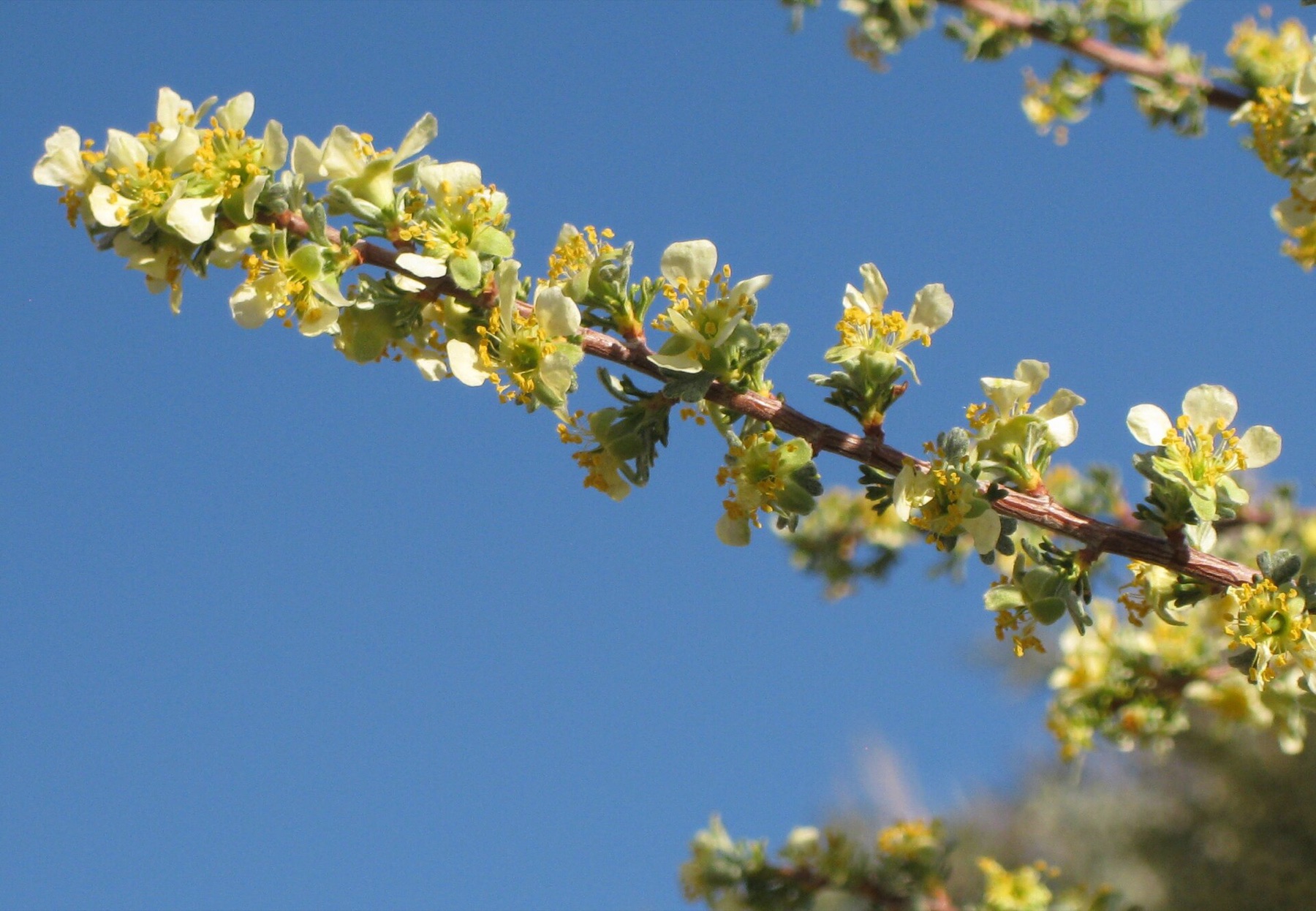 Antelope Bitterbrush 🌿 Purshia tridentata grows right alongside it with similarly 3-toothed leaves, but bitterbrush is greener, not strongly aromatic, and has small yellow rose-family flowers; sagebrush is silvery, intensely aromatic, with inconspicuous flowers.
 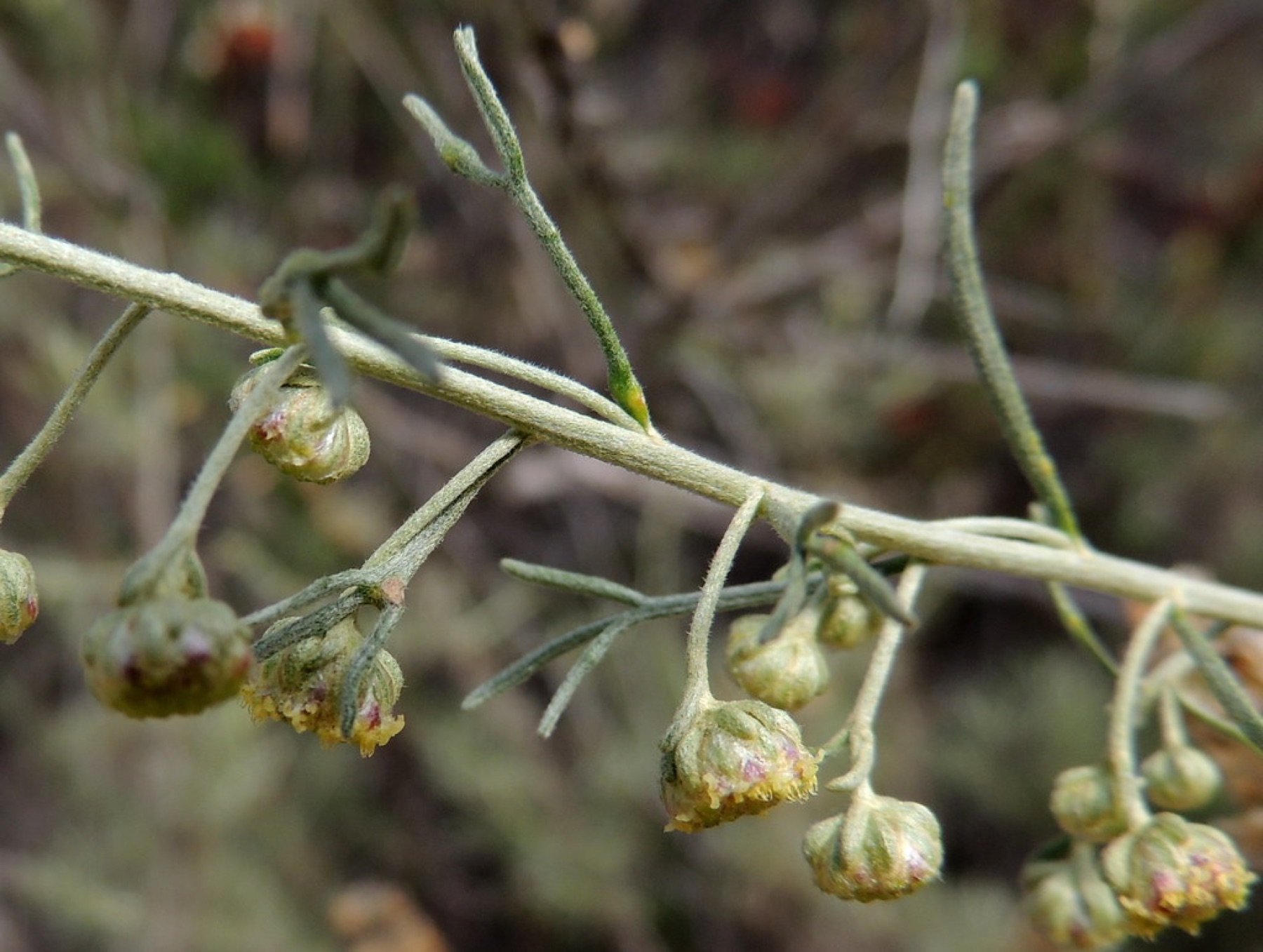 California Sagebrush 🌿 Artemisia californica same genus, same strong smell, wrong elevation. It is a coastal and inland-foothill plant of sage scrub, with thread-fine leaves divided into narrow lobes rather than the blunt three-toothed wedge. If you are up at 6,700 ft, you are not looking at it.
 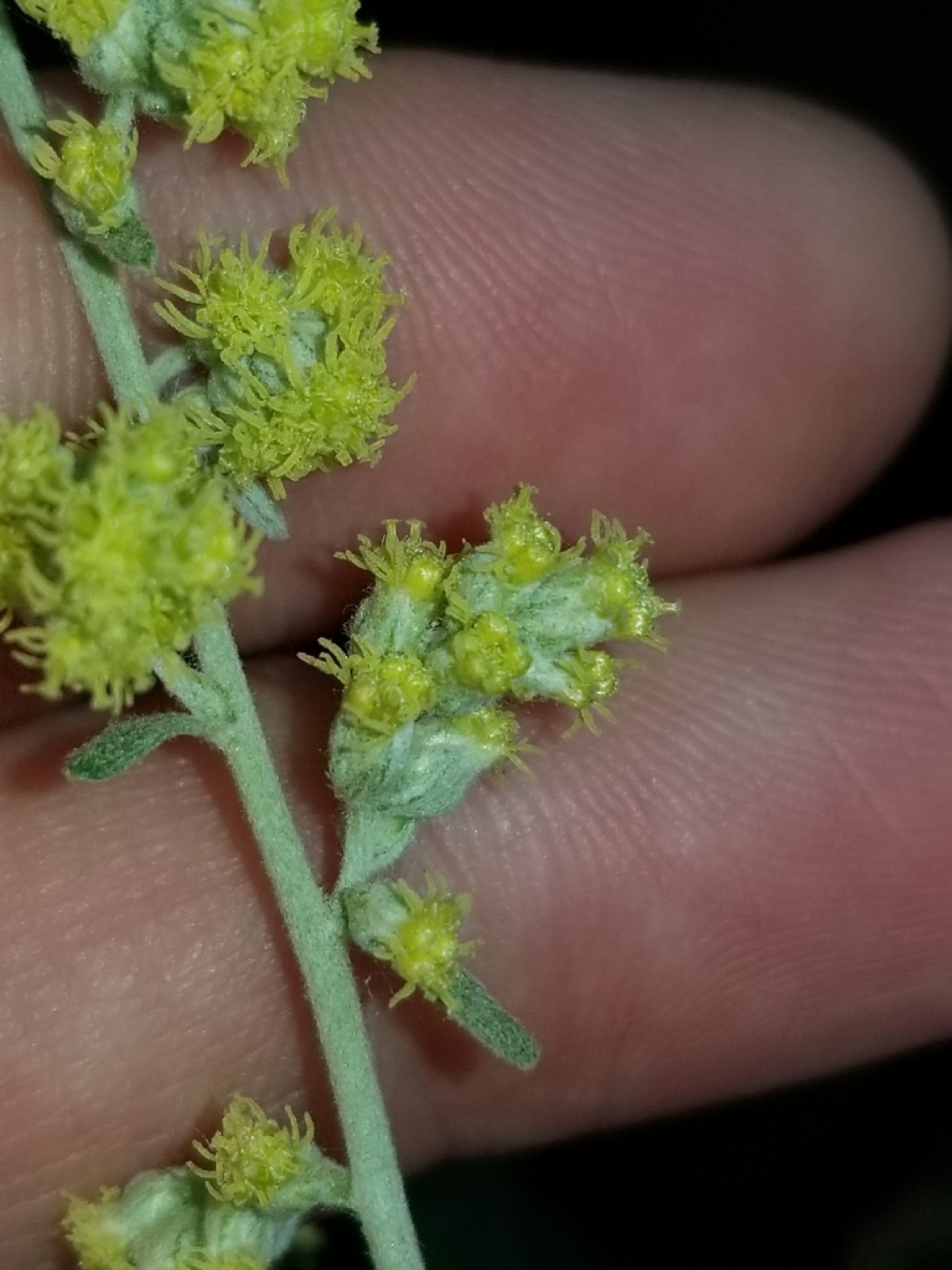 Mugwort 🌿 Artemisia douglasiana a streamside plant, tall and green on top with a white-woolly underside, and lobed leaves. Wet ground and a two-tone leaf mean mugwort, not sagebrush.