Desert Peach
Prunus andersonii · Rosaceae
- Form
- Shrub
- Height
- 2–6 ft
- Sun
- Full Sun
- Water
- Very Low
- Blooms
- Mar, Apr, May
- Pet toxicity
- Mild
- Habitat
- Sagebrush Scrub · Pinyon Juniper
🌿 California native
Quick facts
- Habitat: Sagebrush Scrub and dry Pinyon-Juniper Woodland
- Form / size: Rigid, thorny-looking shrub, 2–6 ft
- Sun: Full sun · Water: Very low
- Blooms: Spring pink blossoms before or with leaf-out · Pollinator value: High
Description
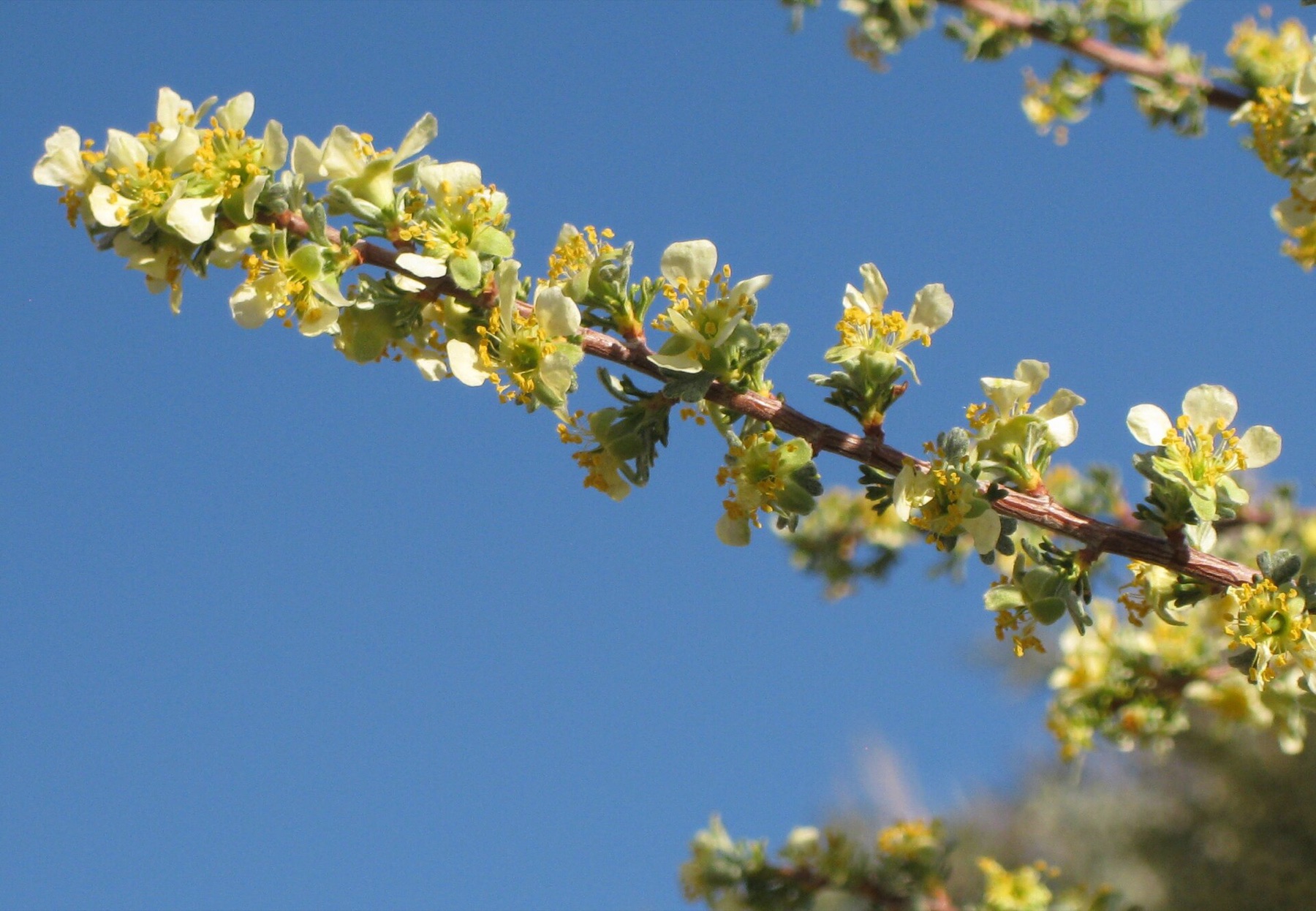
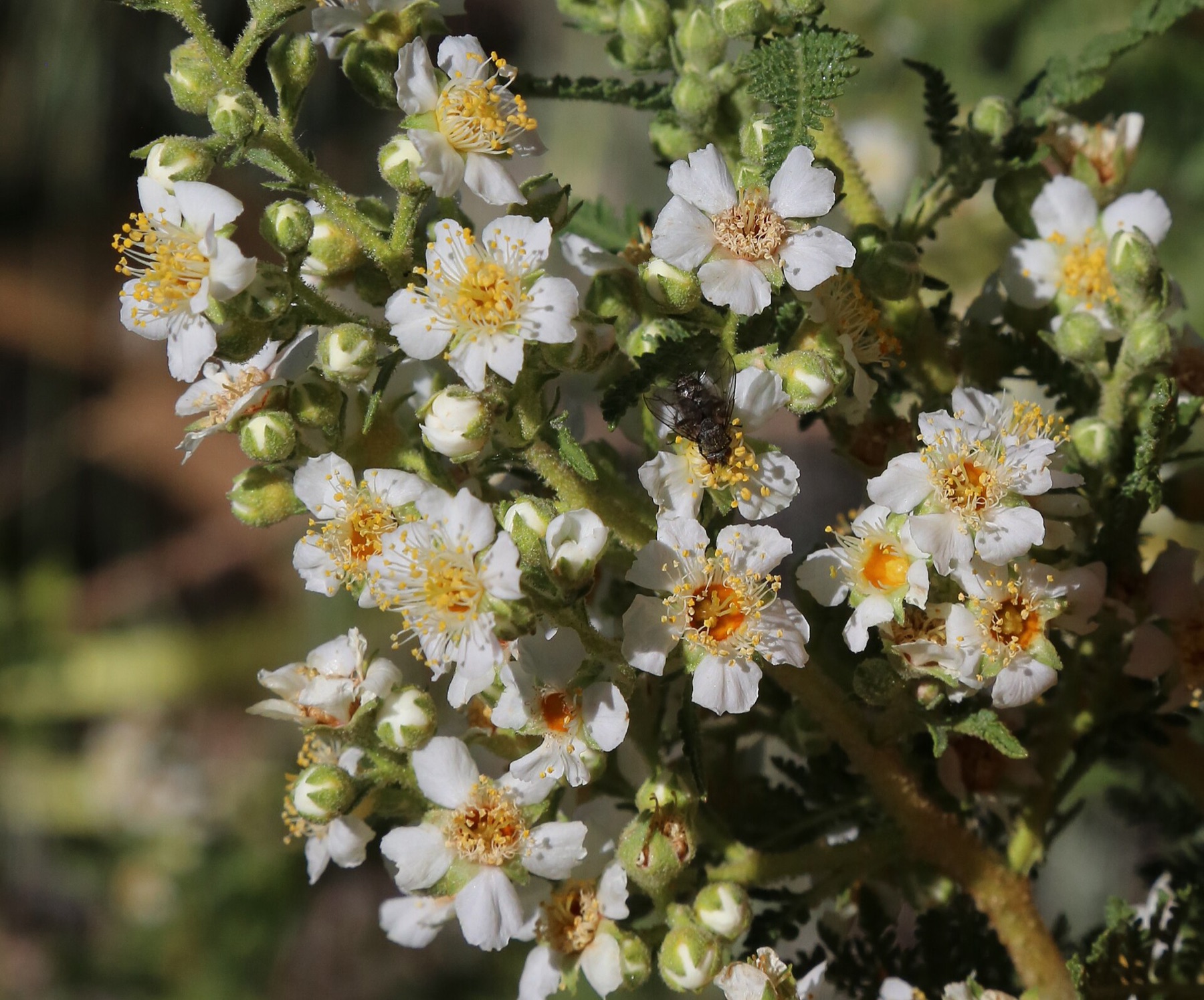
A spiny, twiggy desert shrub that surprises people by erupting in pale pink peach-like blossoms in spring. Later it carries small fuzzy fruits and narrow leaves that give it a tougher, drier look than orchard peach relatives.
Wildlife & pollinators
Spring flowers feed bees; fruits are used by wildlife; branch structure offers cover.
Habitat & range
High-desert scrub and pinyon-juniper transition country of the Great Basin and eastern Sierra slope, especially sandy or rocky sites.
In the garden
A strong habitat shrub for very dry inland gardens, but not a polite ornamental. Best where you want structure, bloom, and native shrub character rather than softness.
Propagation
From seed after cold treatment, or sometimes by division of suckering growth where present.
Where to see it near you
- iNaturalist — observed across California (map)
- Frequent in dry east-side shrublands of the Eastern Sierra and along the 395 corridor.