Fernbush
Chamaebatiaria millefolium · Rosaceae
- Form
- Shrub
- Height
- 3–8 ft
- Sun
- Full Sun
- Water
- Very Low
- Blooms
- Jun, Jul, Aug
- Habitat
- Sagebrush Scrub · Pinyon Juniper
🌿 California native
Quick facts
- Habitat: Sagebrush Scrub and Pinyon-Juniper Woodland on dry rocky slopes
- Form / size: Aromatic shrub, 3–8 ft
- Sun: Full sun · Water: Very low
- Blooms: Summer foamy white plumes · Pollinator value: High
Description
A finely textured, aromatic shrub with deeply cut, almost fern-like leaves and broad clusters of small white flowers that can make the whole plant look frothy in summer. It has a lighter, laceier look than most sagebrush shrubs and stands out once flowering starts.
Wildlife & pollinators
Excellent for summer pollinators, especially native bees and butterflies. Shrub structure also gives small birds cover.
Habitat & range
Dry rocky slopes, canyons, and high-desert mountain scrub across the eastern Sierra flank and Great Basin transition zone. Often mixed with pinyon, juniper, rabbitbrush, and other dry mountain shrubs.
In the garden
One of the best east-side shrubs for a dry mountain planting: tough, fragrant, and showy without looking coarse. Wants full sun and fast drainage.
Propagation
From seed or semi-hardwood cuttings. Usually easiest in lean, well-drained conditions.
Where to see it near you
- iNaturalist — observed across California (map)
- Frequent on the dry side of the Eastern Sierra, especially around Bishop-area slopes and canyon mouths.
Sources
Commonly confused with
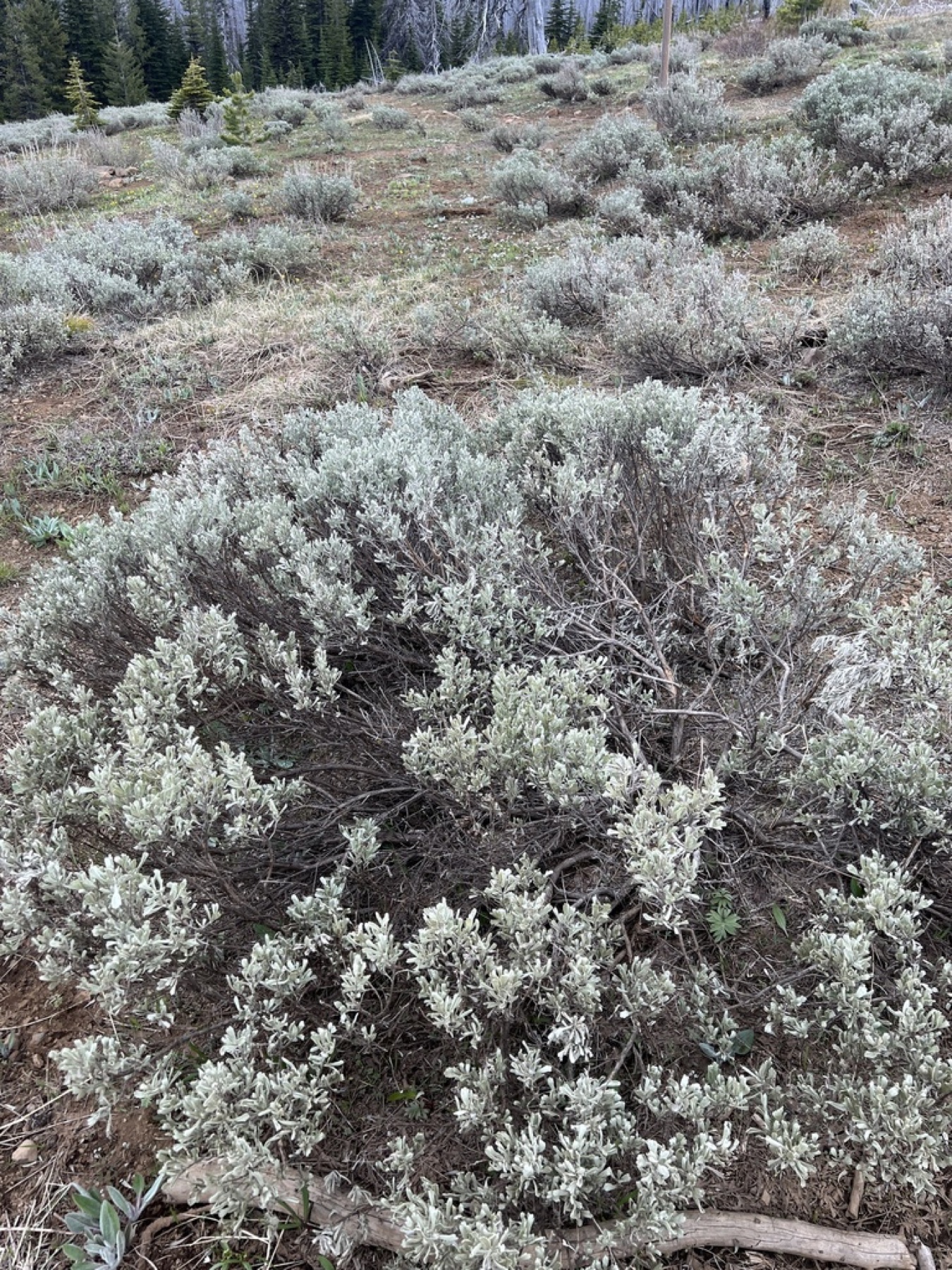 Big Sagebrush 🌿 Artemisia tridentata sagebrush is greyer, less lacey, and not covered in broad white flower plumes.