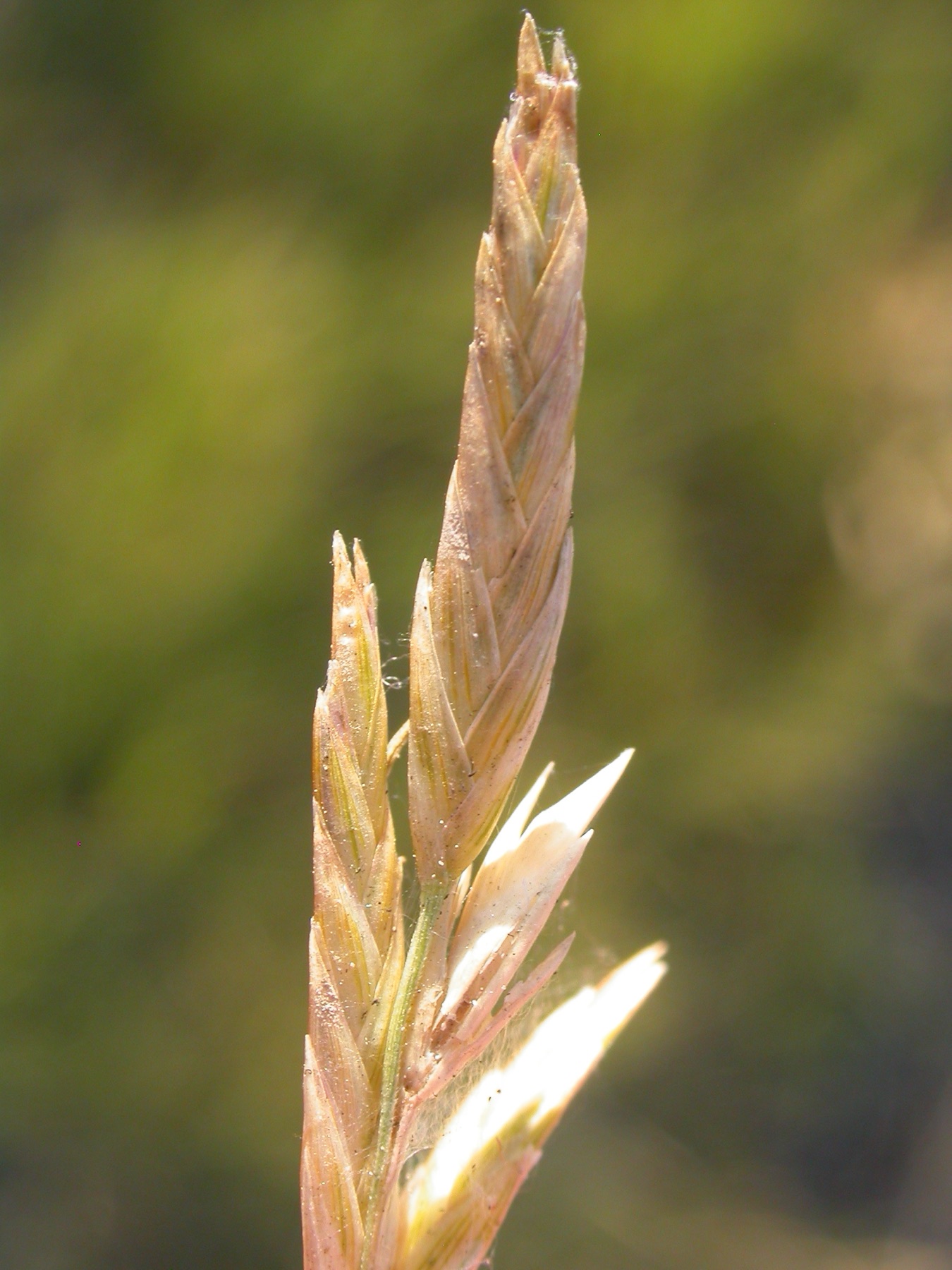
Alkali Heliotrope
Heliotropium curassavicum · Boraginaceae
- Form
- Perennial herb
- Height
- 4-18 in
- Sun
- Full Sun
- Water
- Moderate High
- Blooms
- Apr, May, Jun, Jul, Aug, Sep
- Pet toxicity
- Unknown
- Habitat
- Wetland · Coastal
🌿 California native
Quick facts
- Habitat: Wetland, salty flats, marsh edges
- Form / size: Low spreading perennial, 4-18 in
- Sun: Full sun · Water: Moderate to high, often saline
- Blooms: Spring through fall · Pollinator value: Moderate
Description
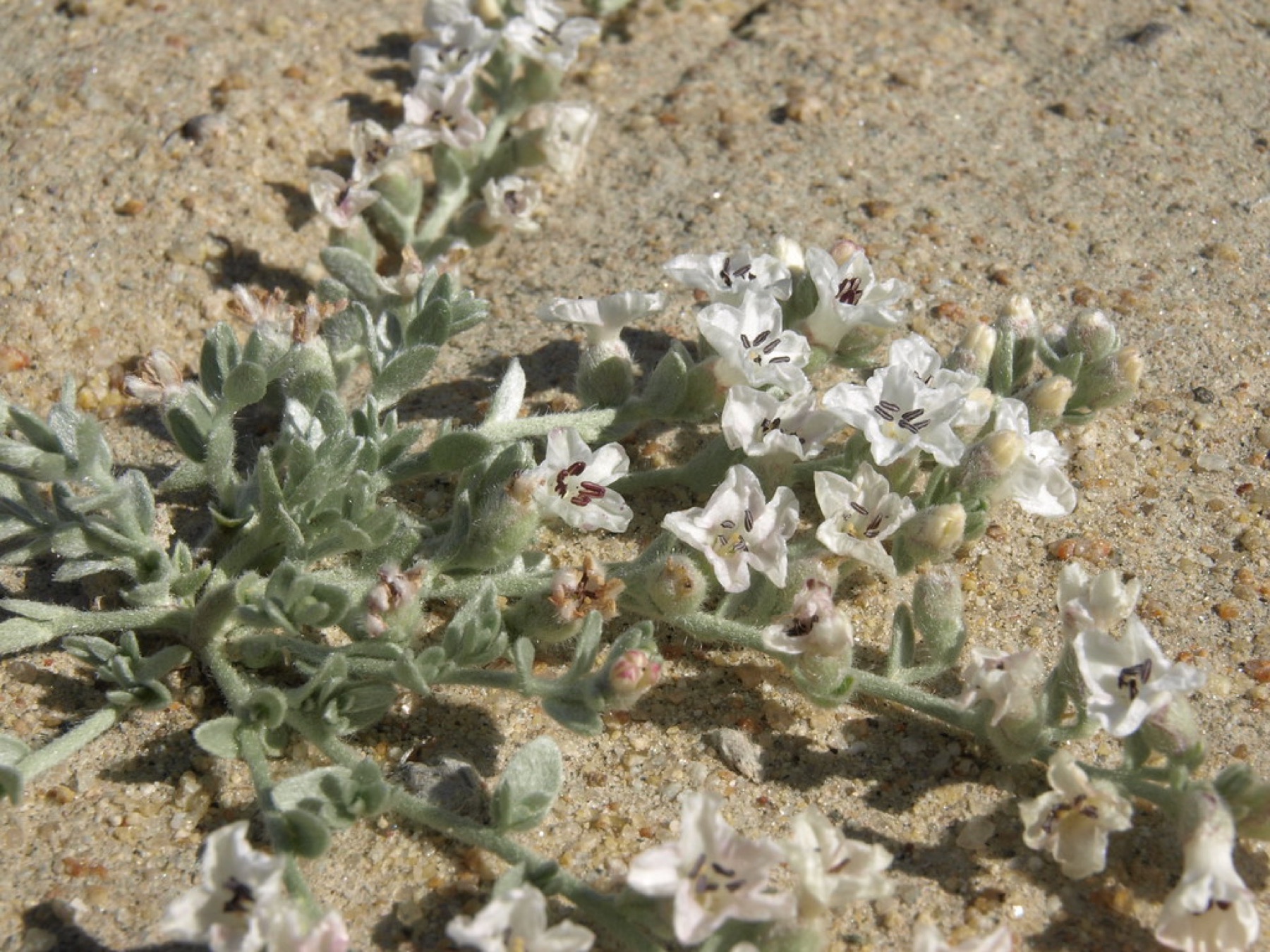
A low, pale, salt-tolerant herb with fleshy blue-green leaves and coiled clusters of tiny white flowers with yellow centers. It often sprawls in open, salty, seasonally wet ground where few softer plants can handle the soil chemistry.
Wildlife & pollinators
The small flowers attract native bees, flies, and small butterflies. In sparse wetland edges, it adds low cover and nectar where taller marsh plants are absent.
Habitat & range
Coastal marsh edges, alkaline flats, seeps, wet disturbed ground, and salty seasonal depressions across Southern California and the broader Southwest.
In the garden
Best for restoration, rain-garden edges with alkaline soil, or interpretive salt-marsh plantings. It is not a lush border plant; it wants sun, mineral soil, and periodic wetness.
Propagation
From seed or soft cuttings in warm weather. Keep young plants evenly moist, then transition to the wet/dry rhythm of the site.
Where to see it near you
- iNaturalist — observed in Southern California
- Bolsa Chica, Upper Newport Bay, Ballona Wetlands, San Elijo Lagoon, and alkaline wet edges.
Problems
Usually site-limited rather than pest-limited. It disappears if shaded out, over-mulched, or planted in ordinary rich garden soil.
Sources
Commonly confused with
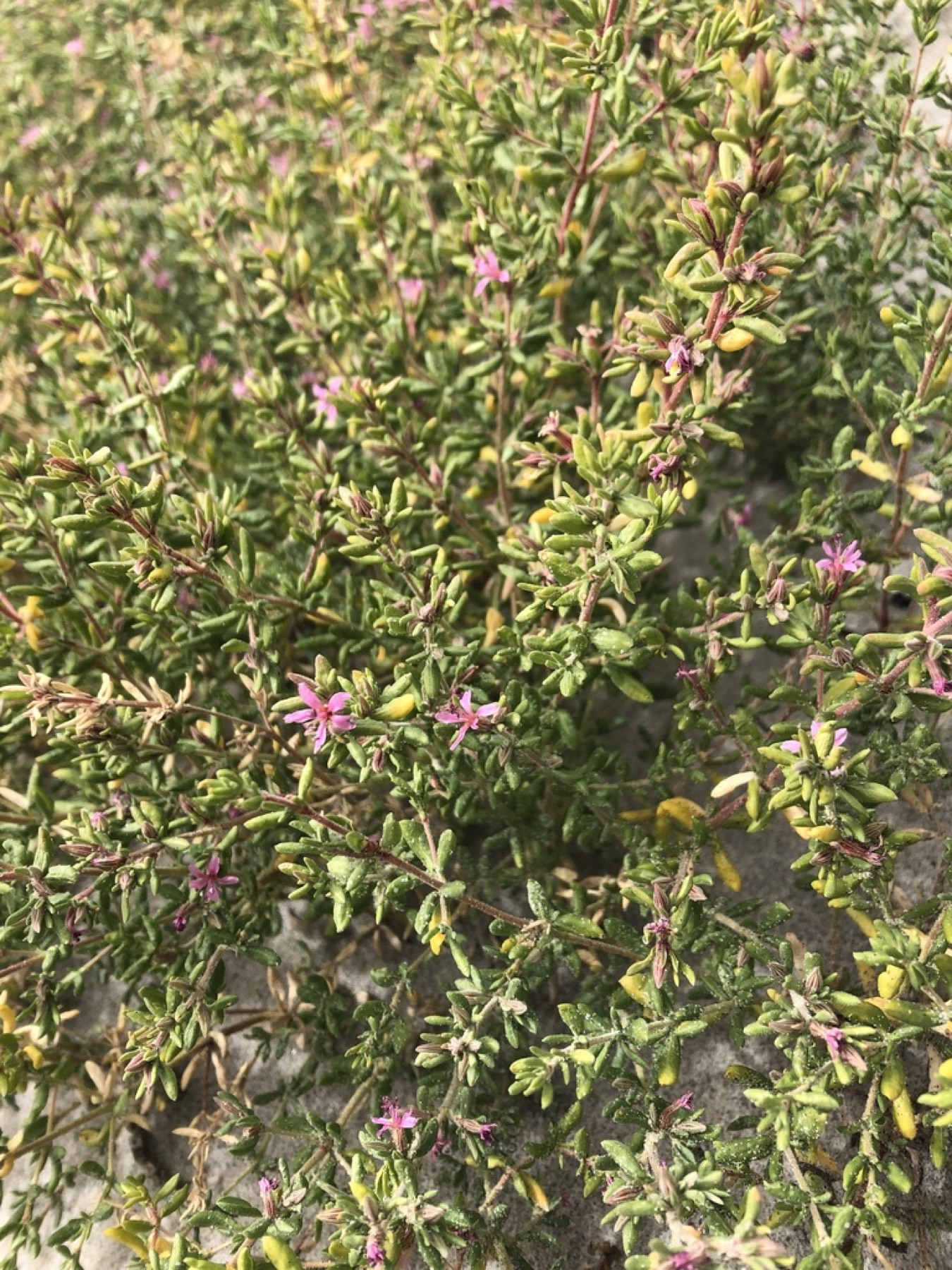 Alkali Heath 🌿 Frankenia salina pink-flowered, wirier, and more mat-forming; alkali heliotrope has coiled white flower clusters.