Alkali Heath
Frankenia salina · Frankeniaceae
- Form
- Subshrub
- Height
- 4–18 in
- Sun
- Full Sun
- Water
- Moderate
- Blooms
- Apr, May, Jun, Jul, Aug, Sep, Oct
- Habitat
- Wetland · Coastal
🌿 California native
Quick facts
- Habitat: Salt marsh edges, alkaline flats, coastal wetland margins
- Form / size: Low mat-forming subshrub, 4–18 in
- Sun: Full sun · Water: Moderate to high, often salty/alkaline
- Blooms: Spring–fall · Pollinator value: Moderate
Description
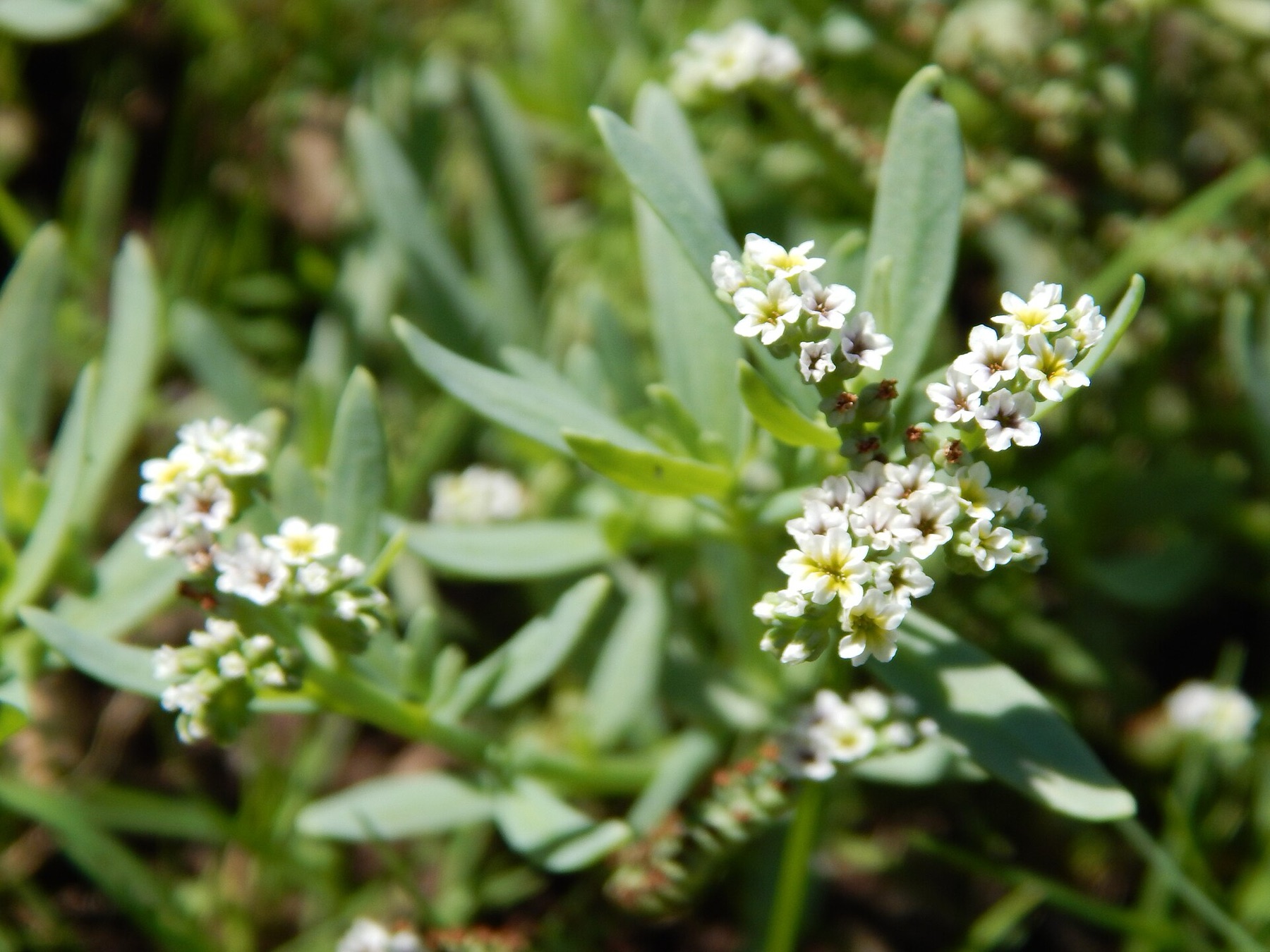
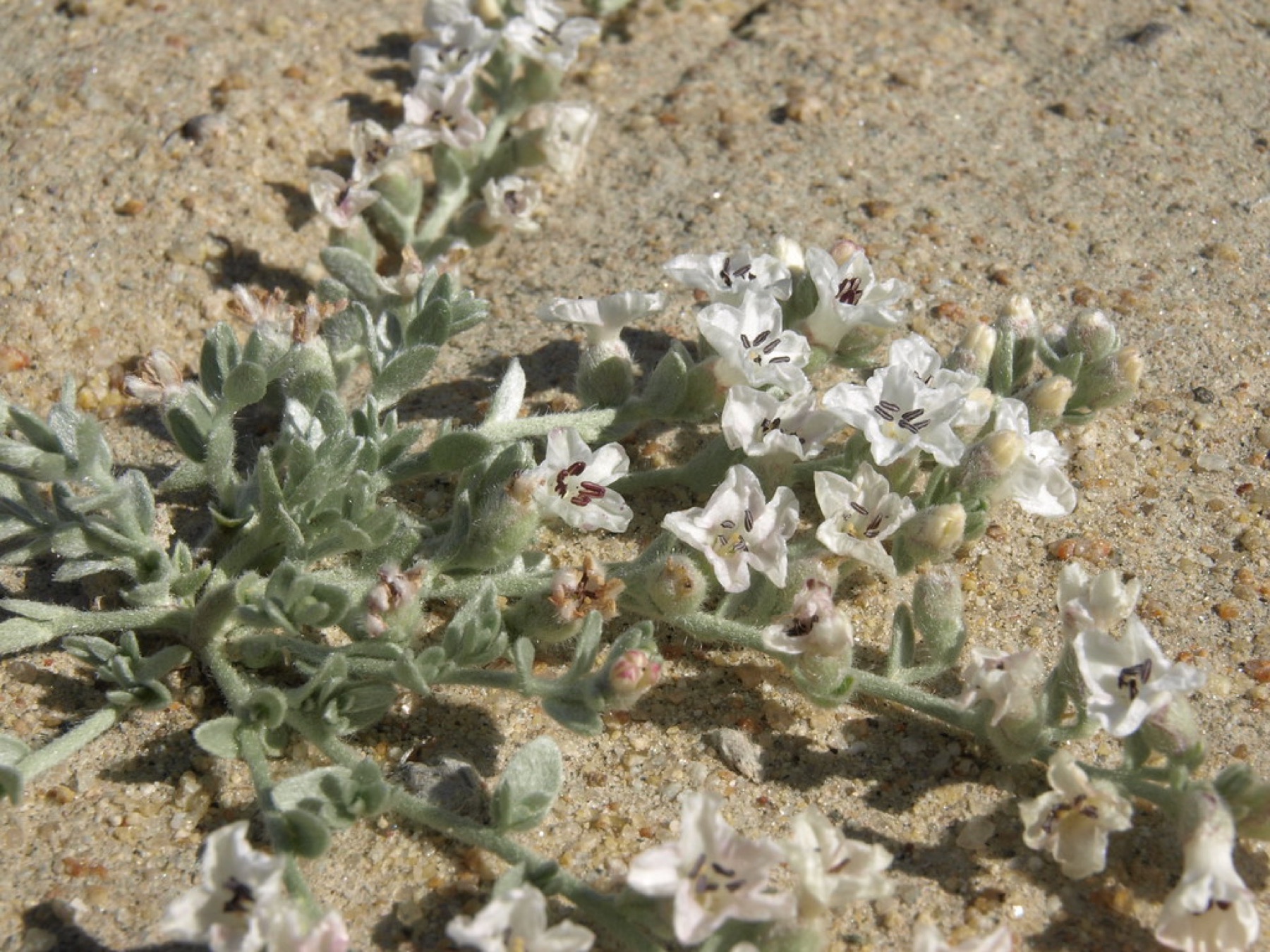
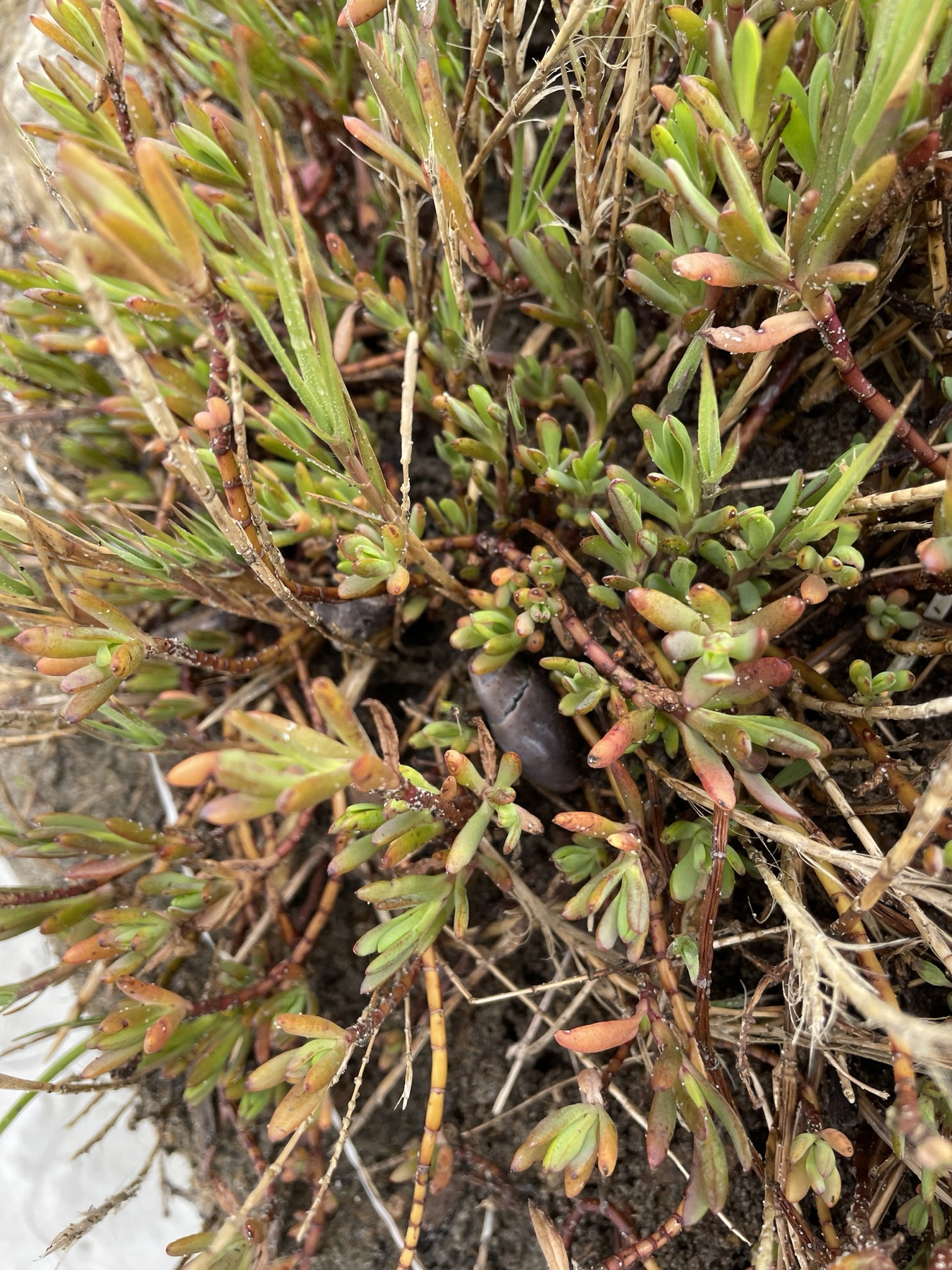
A low, wiry salt-marsh plant with tiny narrow leaves and small pink-lavender flowers. It often forms mats along slightly higher marsh edges where the soil is salty but not always underwater.
Wildlife & pollinators
Small flowers feed native bees and flies, and the mats provide habitat structure for marsh insects.
Habitat & range
Coastal salt marshes, alkaline flats, wetland edges, and salty seasonal depressions.
In the garden
Specialized. Useful for restoration or interpretive plantings in salty/alkaline wet soil, but not a typical residential native plant.
Propagation
From cuttings or seed in moist, saline/alkaline soil. Use local material for restoration.
Where to see it near you
- iNaturalist — observed in Orange County
- Coastal marsh edges and alkaline wetland flats.
Problems
Needs the right soil chemistry and moisture. Ordinary garden beds are usually too fresh and too dry.
Sources
Commonly confused with
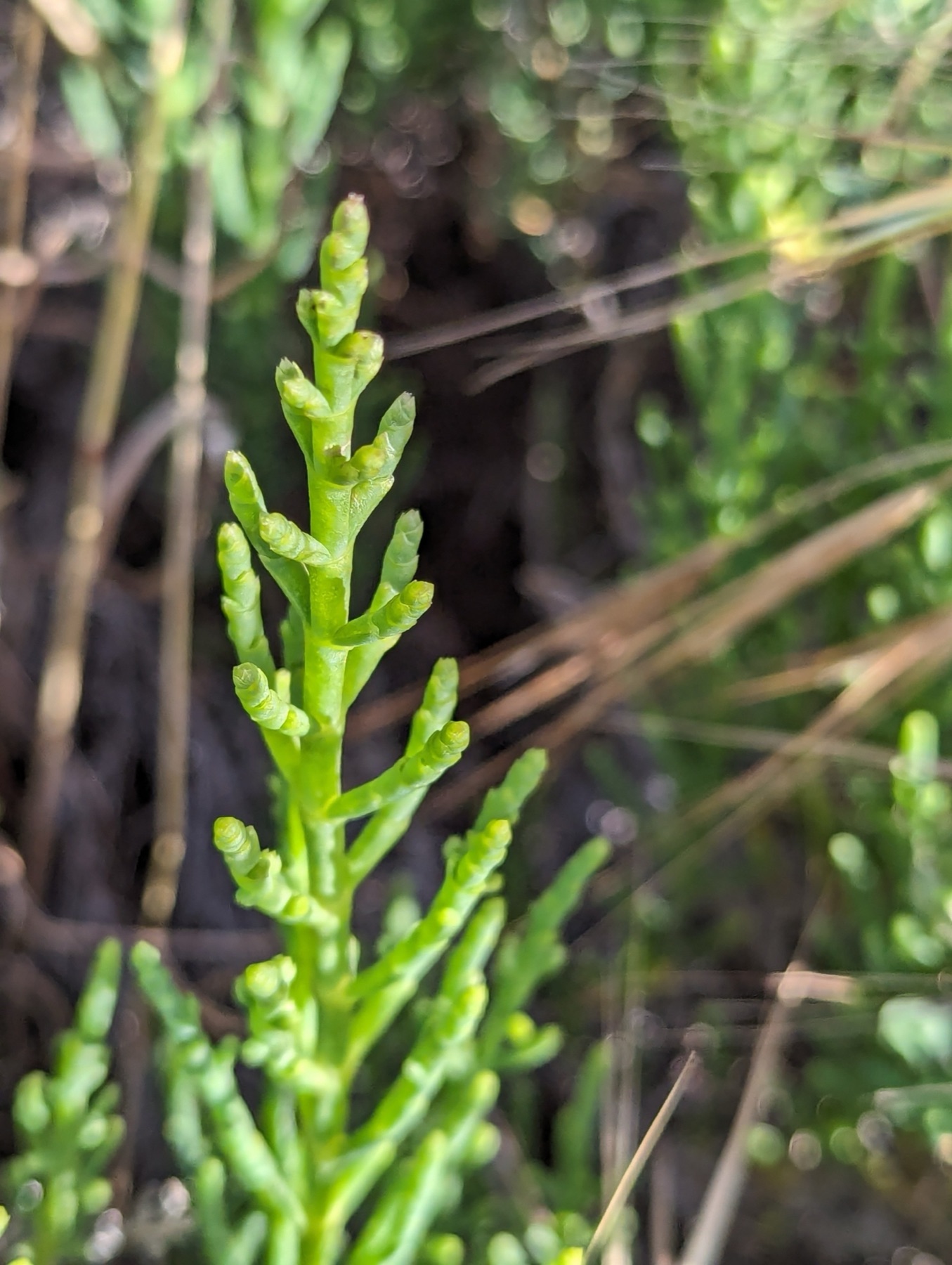
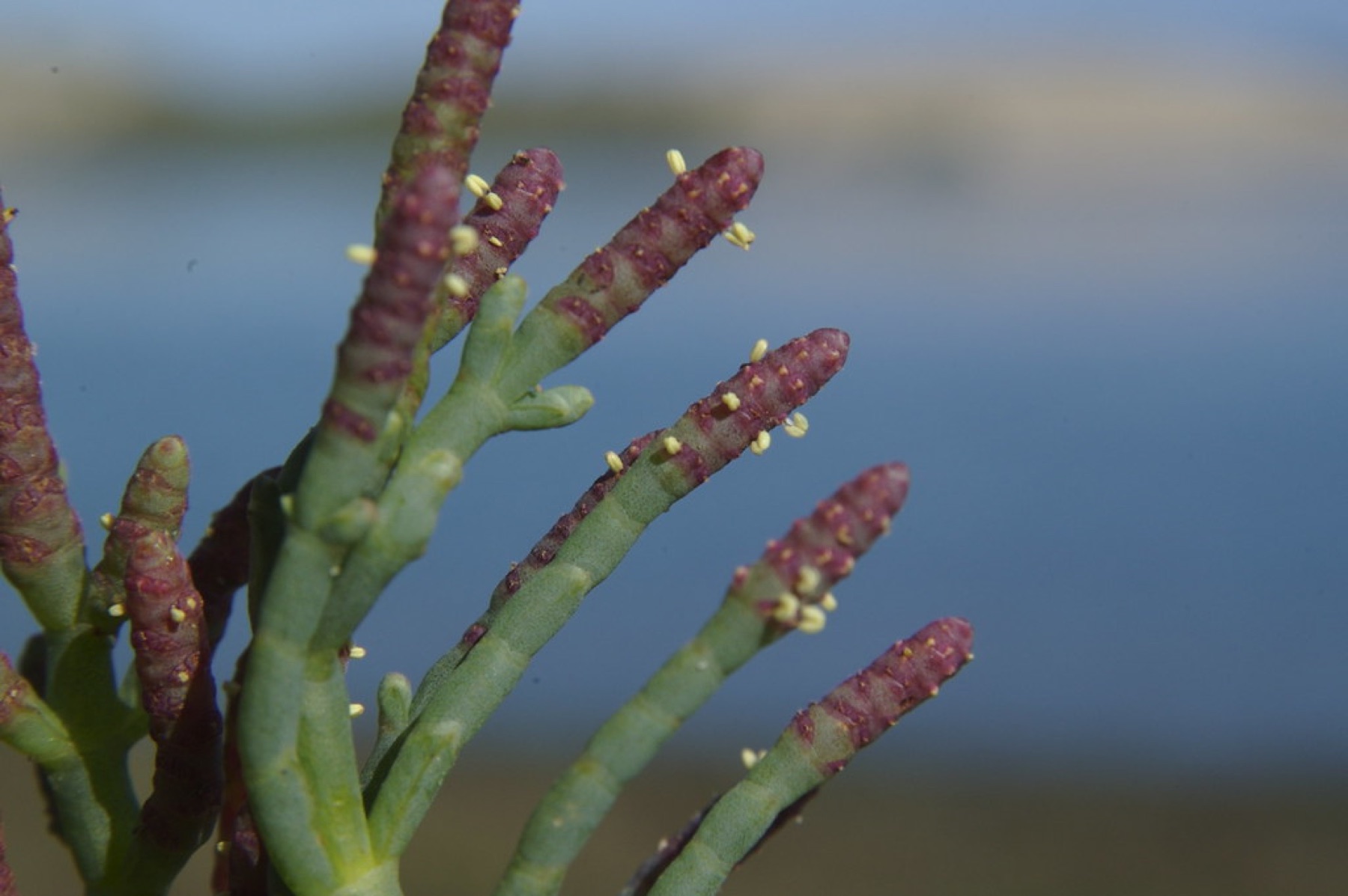 Pickleweed 🌿 Salicornia pacifica succulent jointed stems; alkali heath is leafier and has small pink flowers.