Pickleweed
Salicornia pacifica · Amaranthaceae
- Form
- Succulent
- Height
- 6–24 in
- Sun
- Full Sun
- Water
- High
- Blooms
- Jul, Aug, Sep, Oct
- Habitat
- Wetland · Coastal
🌿 California native
Quick facts
- Habitat: Coastal salt marsh, tidal flats, salty wet ground
- Form / size: Low succulent, 6–24 in
- Sun: Full sun · Water: Salty wet soil / tidal moisture
- Blooms: Summer–fall, inconspicuous · Pollinator value: Low
Description
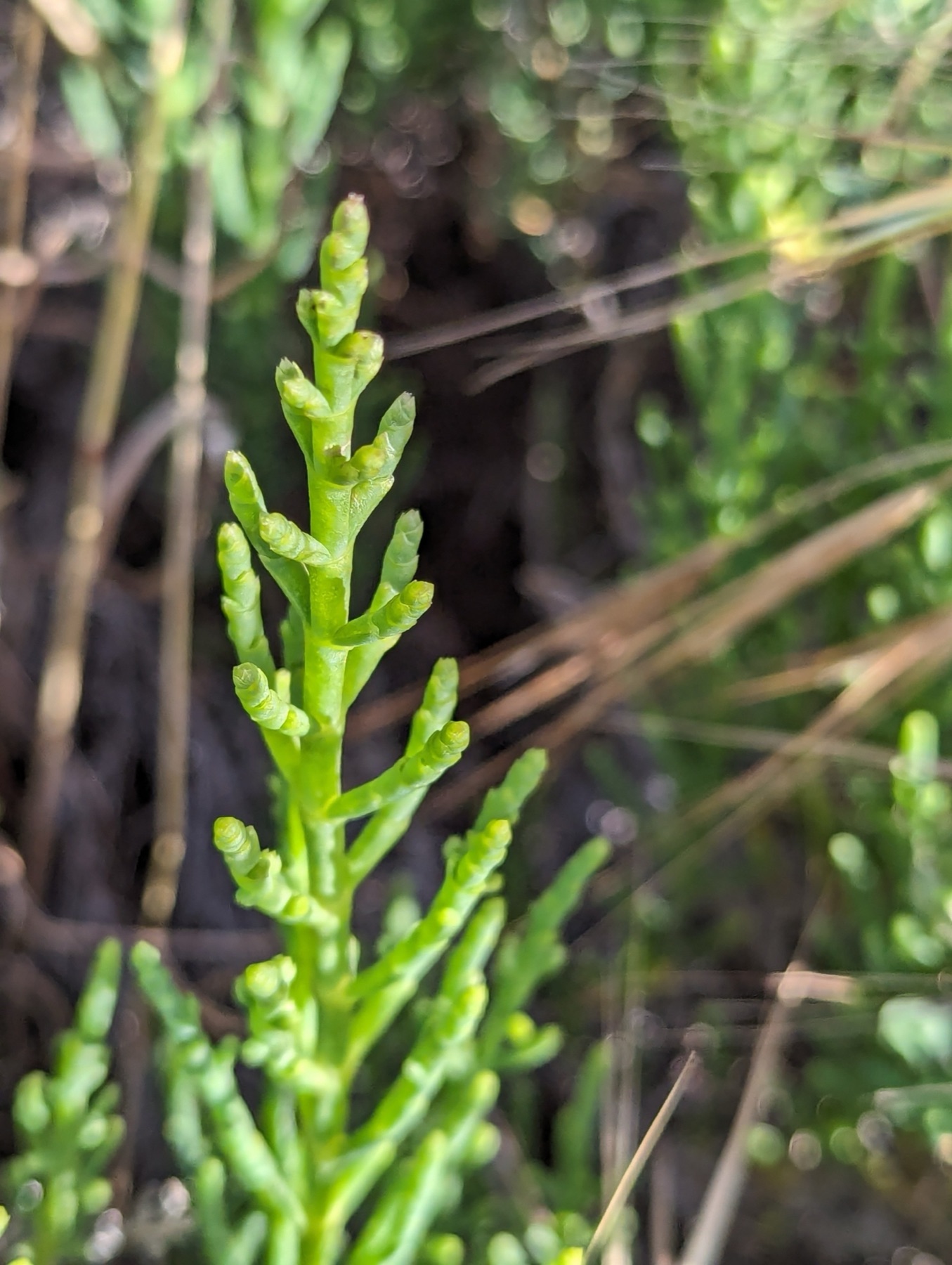
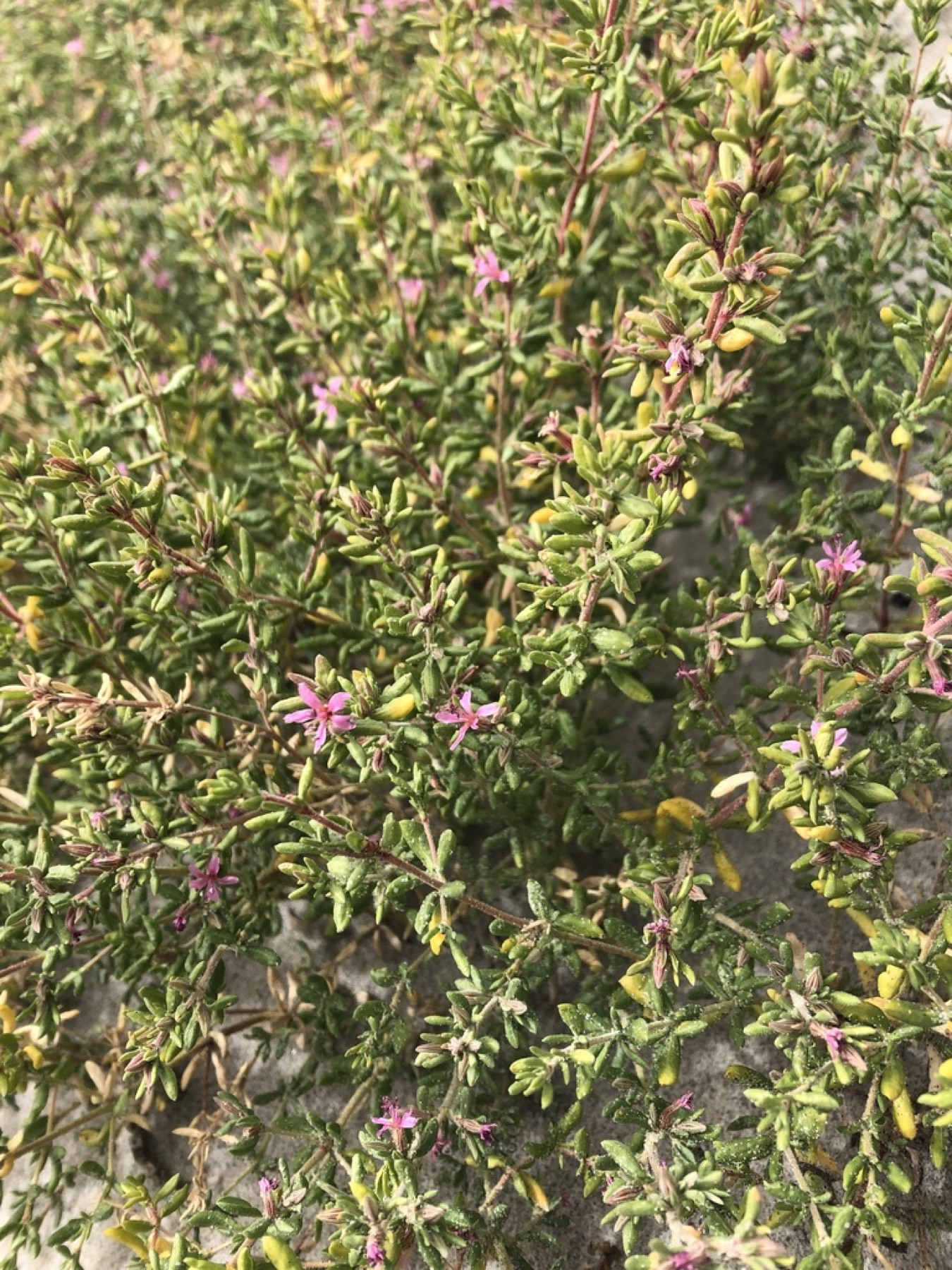
A low, jointed succulent of salt marshes, with green stems that often turn red, orange, or purple in stressful conditions. Leaves are reduced to tiny scales, so the plant looks like a mat of fleshy branching stems.
Wildlife & pollinators
Provides structure, food, and cover in salt marsh systems. Pickleweed habitat is crucial for many specialized marsh animals and shorebirds.
Habitat & range
Coastal salt marsh and tidal wetlands along the Pacific coast. In Southern California it is a core plant of remnant marshes and estuary edges.
In the garden
Mostly for restoration, salt-marsh interpretation, or very specialized wet/salty plantings. It is not a normal dry garden plant.
Propagation
From cuttings or seed in salty, consistently moist soil. Restoration work should use local material and site-specific guidance.
Where to see it near you
- iNaturalist — observed in Orange County
- Bolsa Chica, Upper Newport Bay, and other coastal marsh remnants.
Problems
Needs wet saline conditions. Protect habitat rather than trying to make it fit ordinary gardens.