Burrobush
Ambrosia dumosa · Asteraceae
- Form
- Shrub
- Height
- 1-3 ft
- Sun
- Full Sun
- Water
- Very Low
- Blooms
- Feb, Mar, Apr
- Pet toxicity
- Mild
- Habitat
- Desert
🌿 California native
Quick facts
- Habitat: Desert, creosote scrub, rocky flats
- Form / size: Small gray shrub, 1-3 ft
- Sun: Full sun · Water: Very low
- Blooms: Late winter-spring · Pollinator value: Low
Description
A small, pale gray desert shrub with many short, twiggy branches and tiny divided leaves. It is one of the classic companions of Creosote Bush in low desert scrub.
Wildlife & pollinators
Provides seeds, cover, and structure for desert wildlife. Wind-pollinated flowers are not a major nectar source.
Habitat & range
Desert flats, bajadas, rocky slopes, washes, and creosote-bursage scrub across the Mojave and Colorado deserts.
In the garden
Useful for authentic low-desert plantings and wildlife habitat. It is subtle, not showy, and needs very lean conditions.
Propagation
From seed. Use sharp drainage and avoid summer irrigation once established.
Where to see it near you
- iNaturalist — observed in Southern California
- Low desert flats and creosote scrub.
Problems
Can look dormant or twiggy during drought, which is normal. Do not overwater it into softness.
Sources
Commonly confused with
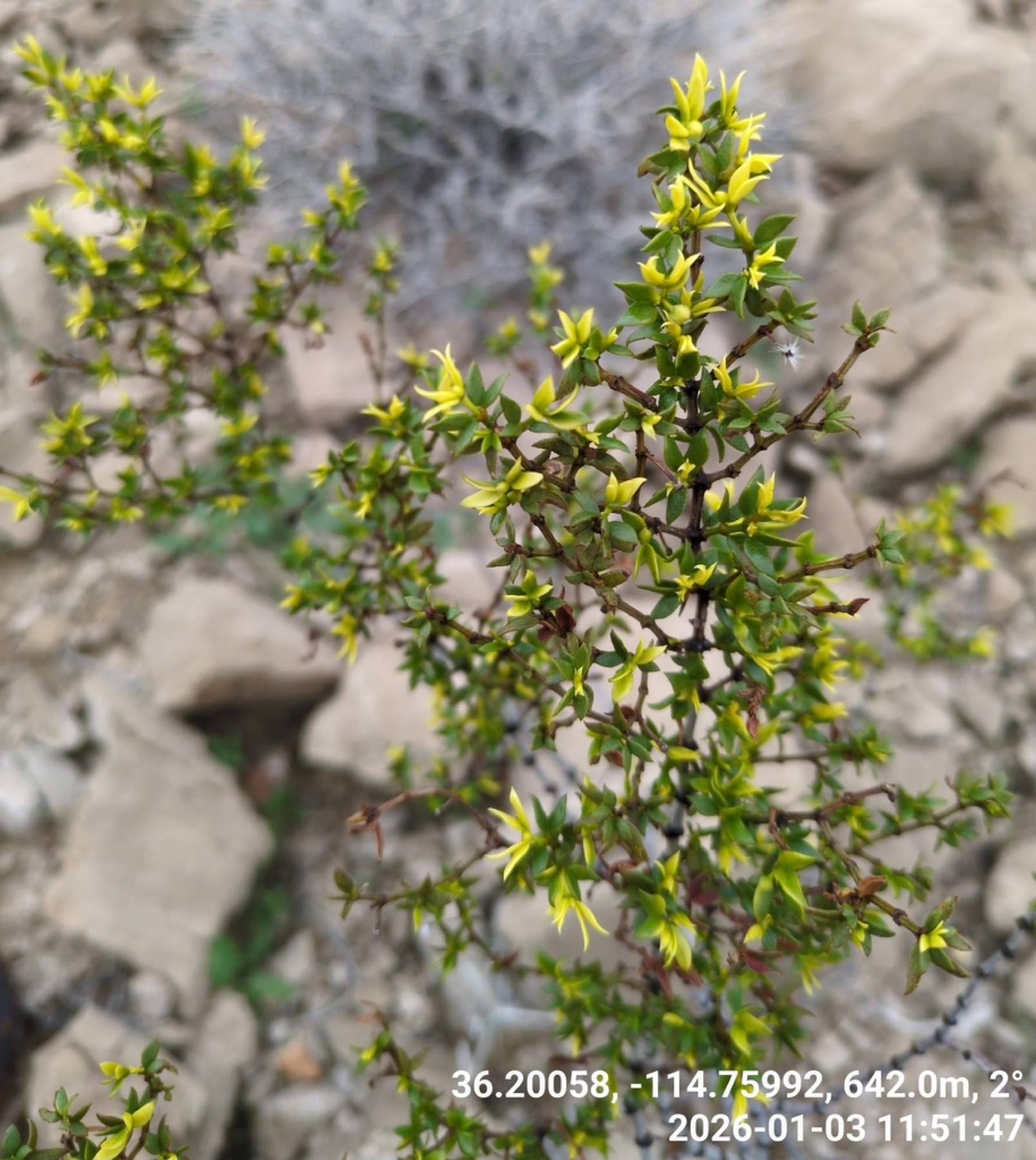 Creosote Bush 🌿 Larrea tridentata taller, darker green, resinous leaves; burrobush is lower and gray.
 🌿 Cheesebush Ambrosia salsola similar desert shrub; check leaf shape, habit, and habitat.