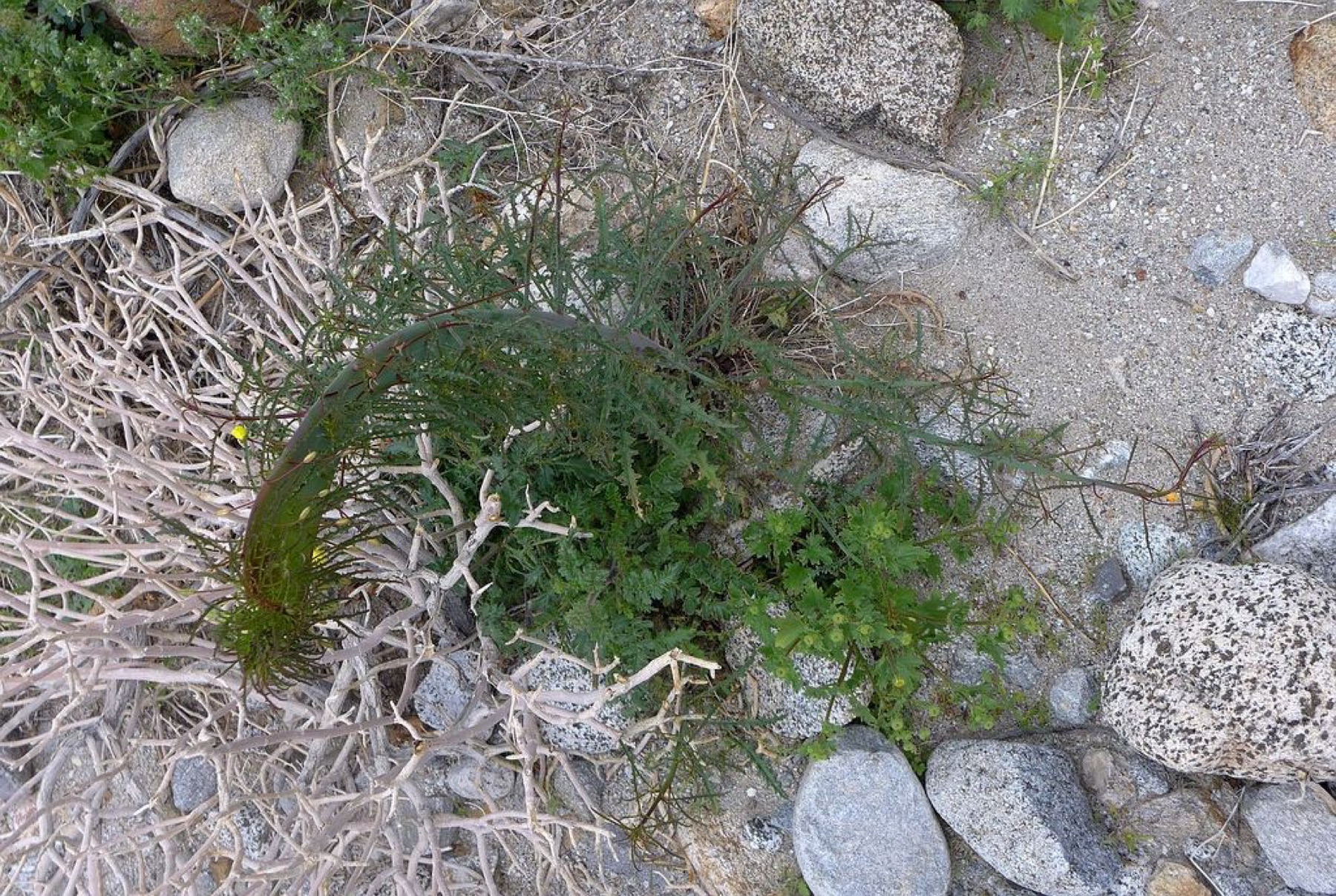
Desert Agave
Agave deserti · Asparagaceae
- Form
- Succulent
- Height
- 1-3 ft rosette; flower stalk 6-15 ft
- Sun
- Full Sun
- Water
- Very Low
- Blooms
- May, Jun, Jul
- Pet toxicity
- Mild
- Habitat
- Desert · Coastal Sage Scrub
🌿 California native
Quick facts
- Habitat: Desert slopes, rocky fans, and dry scrub edges
- Form / size: Spiny succulent rosette, usually 1-3 ft tall before flowering
- Sun: Full sun · Water: Very low
- Blooms: Late spring-summer · Pollinator value: High
Description
A compact desert agave with thick blue-green leaves arranged in a tight rosette. Leaf edges and tips are armed, and mature plants send up a tall branching flower stalk with yellow-green blooms before the rosette dies back and offsets continue the colony.
Wildlife & pollinators
Flower stalks feed bats, hummingbirds, moths, and bees. Dense rosettes provide structure in sparse desert habitat.
Habitat & range
Rocky desert slopes, alluvial fans, dry washes, and desert-transition scrub across Southern California deserts and Baja California.
In the garden
Excellent for hot, dry, sharply drained gardens. Give it space away from paths because the leaf tips are stiff and sharp.
Propagation
From offsets or seed. Keep young plants in very fast-draining soil and avoid frequent irrigation.
Where to see it near you
- iNaturalist — observed in Southern California
- Rocky desert slopes and dry scrub margins.
Problems
Sharp tips and marginal teeth can injure people or pets. Avoid overhead irrigation and heavy soil.
Sources
Commonly confused with
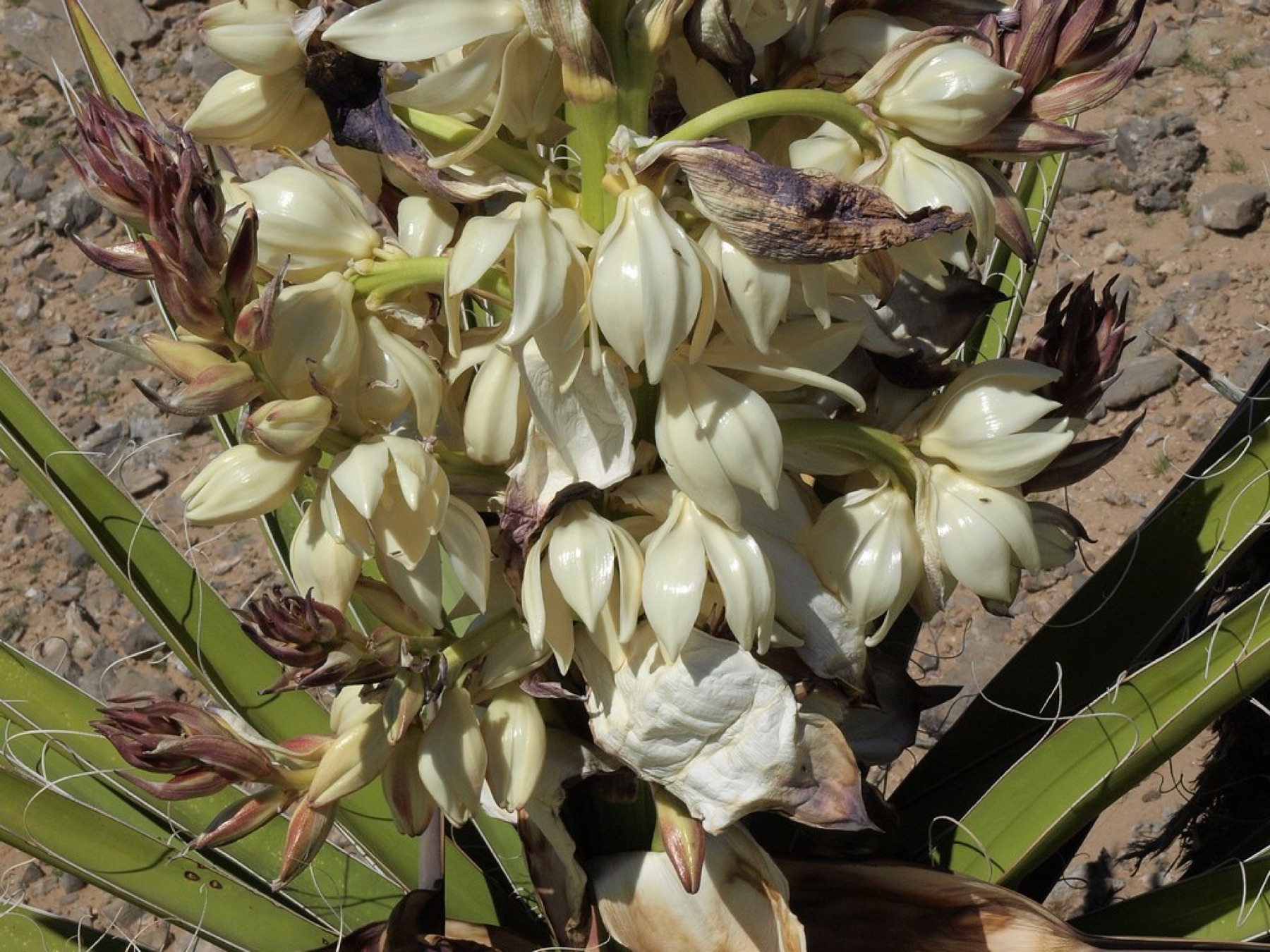 Mojave Yucca 🌿 Yucca schidigera has narrower, swordlike leaves and a different flower stalk structure; desert agave forms a heavier, tighter rosette.
 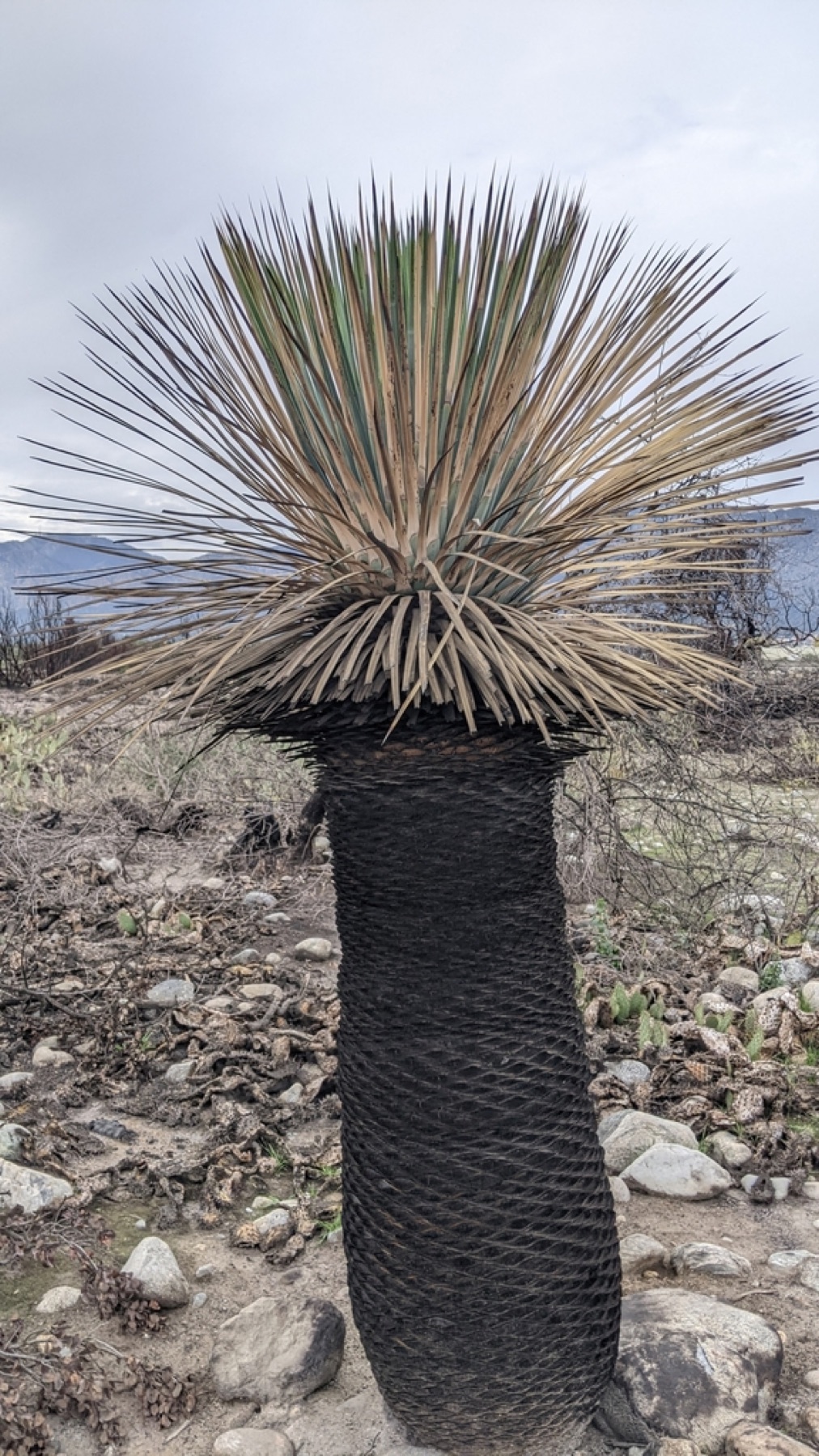 Chaparral Yucca 🌿 Hesperoyucca whipplei usually taller, with many narrow leaves and white flower bells; desert agave is shorter, broader-leaved, and more succulent.