Mojave Yucca
Yucca schidigera · Asparagaceae
- Form
- Succulent
- Height
- 3–15 ft
- Sun
- Full Sun
- Water
- Very Low
- Blooms
- Mar, Apr, May, Jun
- Pet toxicity
- Mild
🌿 California native
Quick facts
- Habitat: Desert slopes, Joshua tree woodland, dry chaparral edges
- Form / size: Stiff-leaved yucca, 3–15 ft
- Sun: Full sun · Water (established): Very low
- Blooms: Spring–early summer · Pollinator value: Specialized
Description
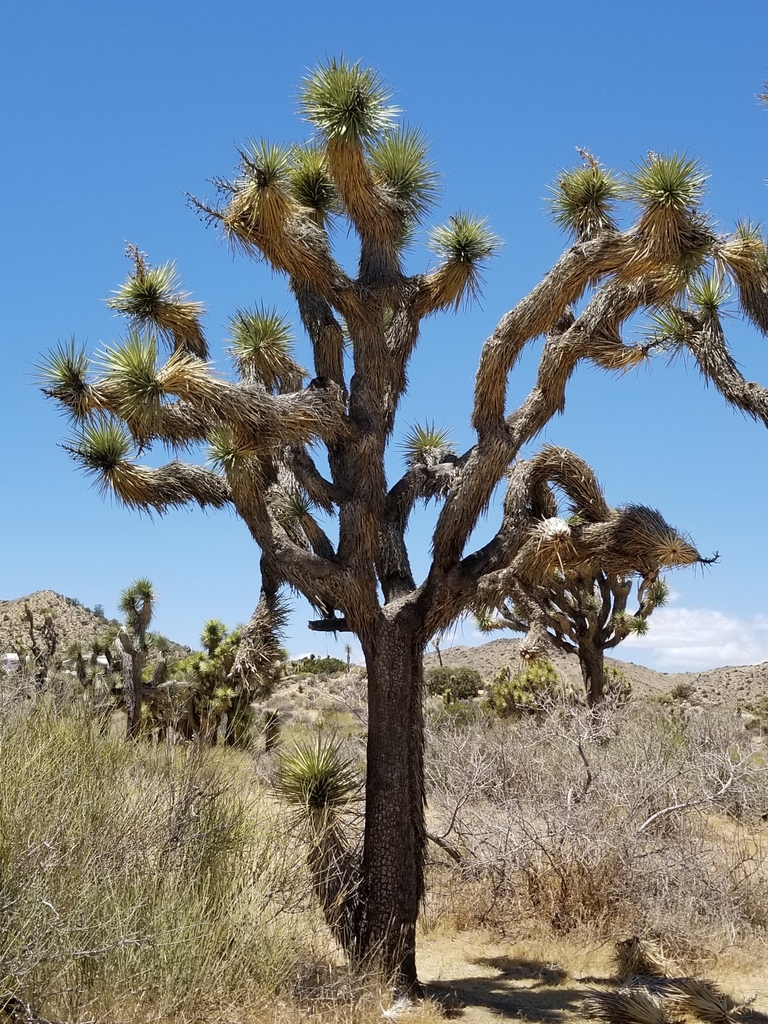
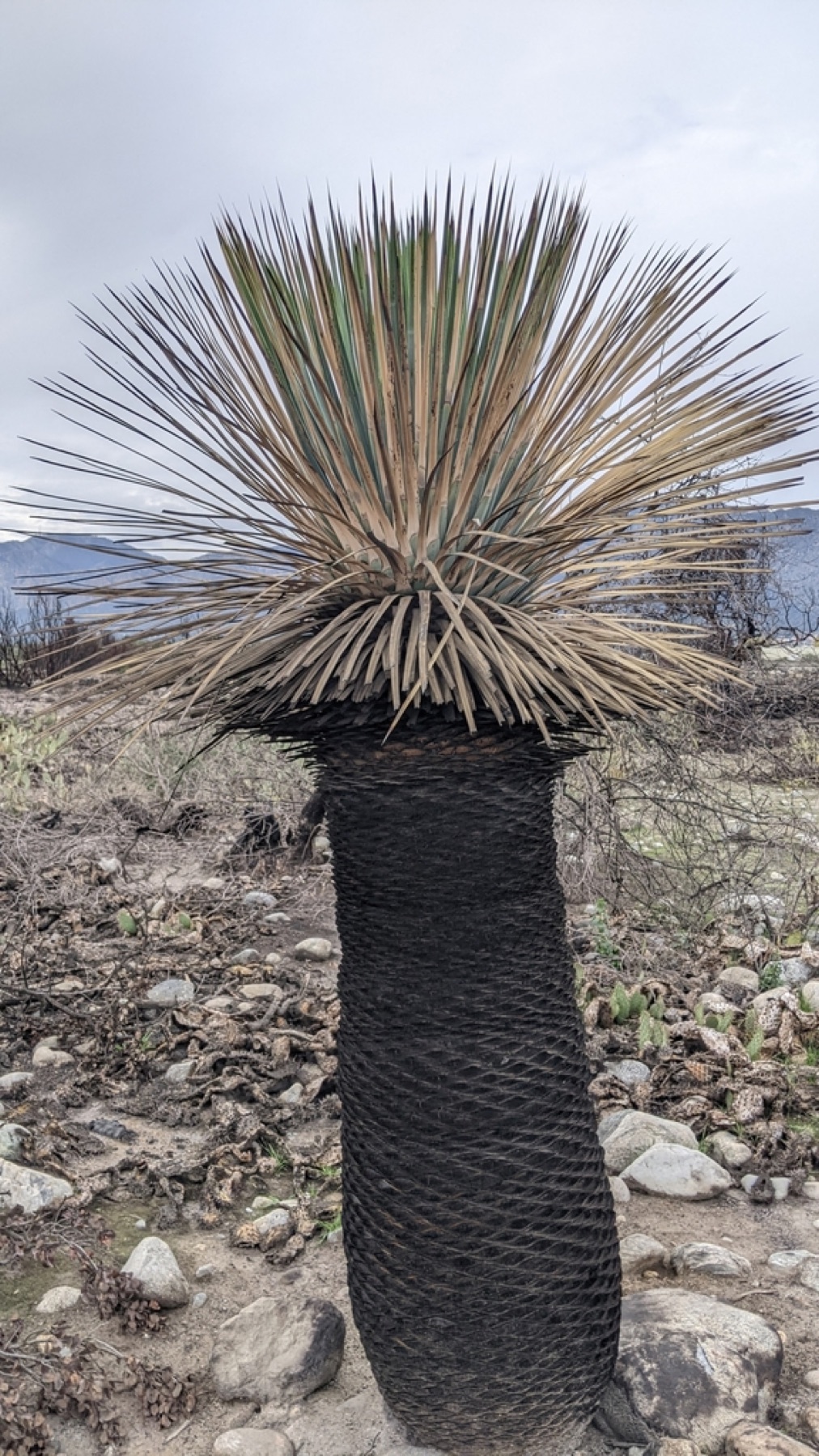
A rugged yucca with dense rosettes of stiff dagger-like leaves, fibrous leaf edges, and tall clusters of creamy white flowers. Older plants may develop short trunks and multiple heads.
Wildlife & pollinators
Yucca moths are key pollinators. Flowers, fruits, and structure support desert wildlife.
Habitat & range
Mojave and Sonoran desert slopes, Joshua tree woodland, dry washes, and some inland chaparral/desert-edge habitats.
In the garden
Good for desert and dry inland gardens with space and excellent drainage. Place away from paths — the leaf tips are sharp.
Propagation
From seed or offsets. Slow, but easier than it looks if drainage is right.
Where to see it near you
- iNaturalist — observed in Southern California
- Mojave Desert slopes, high desert washes, and dry inland chaparral edges.
Problems
Sharp leaves and slow growth. Avoid overwatering.