Western Joshua Tree
Yucca brevifolia · Asparagaceae
- Form
- Tree
- Height
- 15–40 ft
- Sun
- Full Sun
- Water
- Very Low
- Blooms
- Mar, Apr, May
- Pet toxicity
- Mild
- Habitat
- Desert
🌿 California native
Quick facts
- Habitat: Mojave Desert flats, slopes, and Joshua tree woodland
- Form / size: Branching yucca tree, 15–40 ft
- Sun: Full sun · Water (established): Very low
- Blooms: Spring, not every year · Pollinator value: Specialized
Description
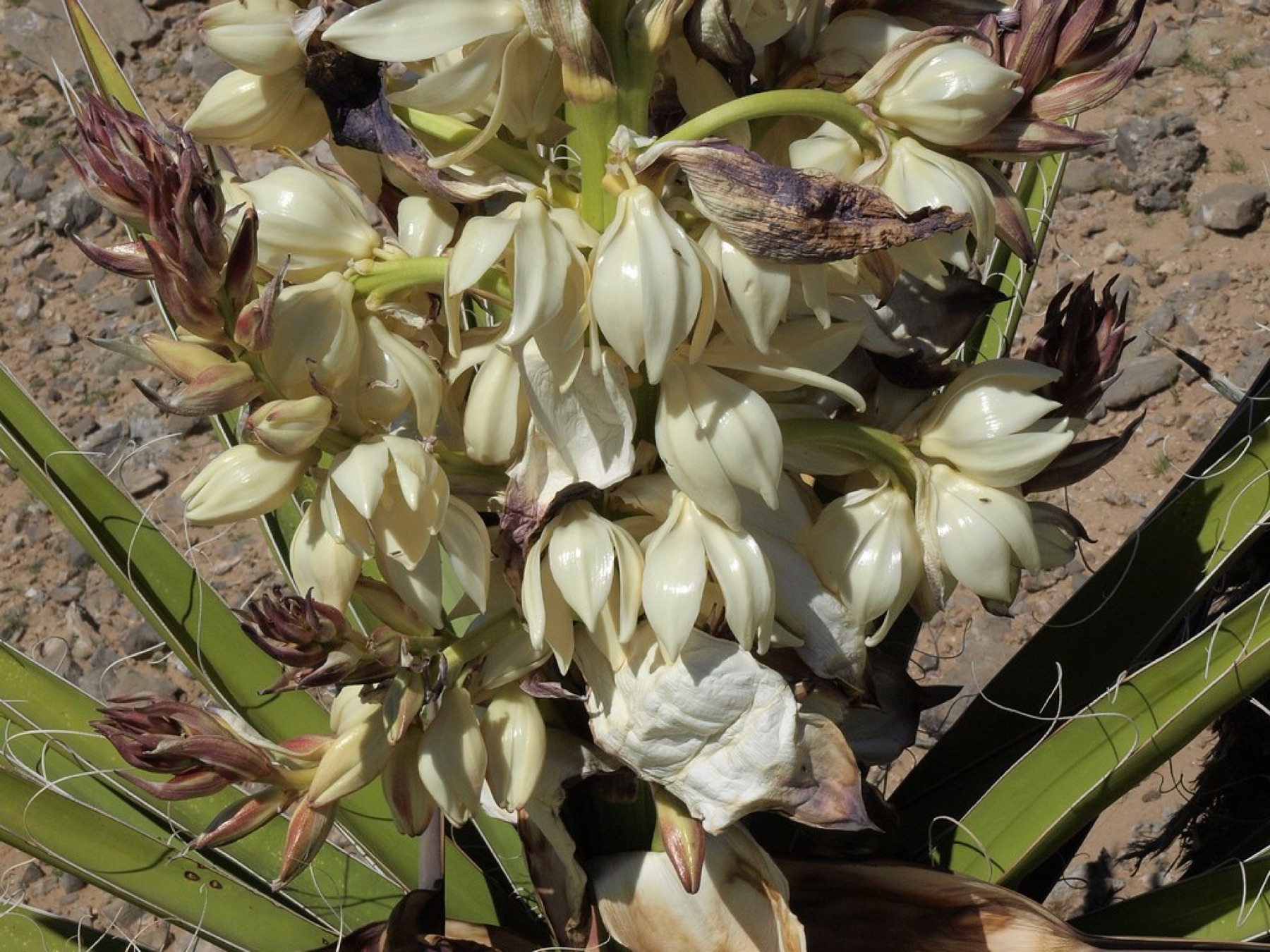
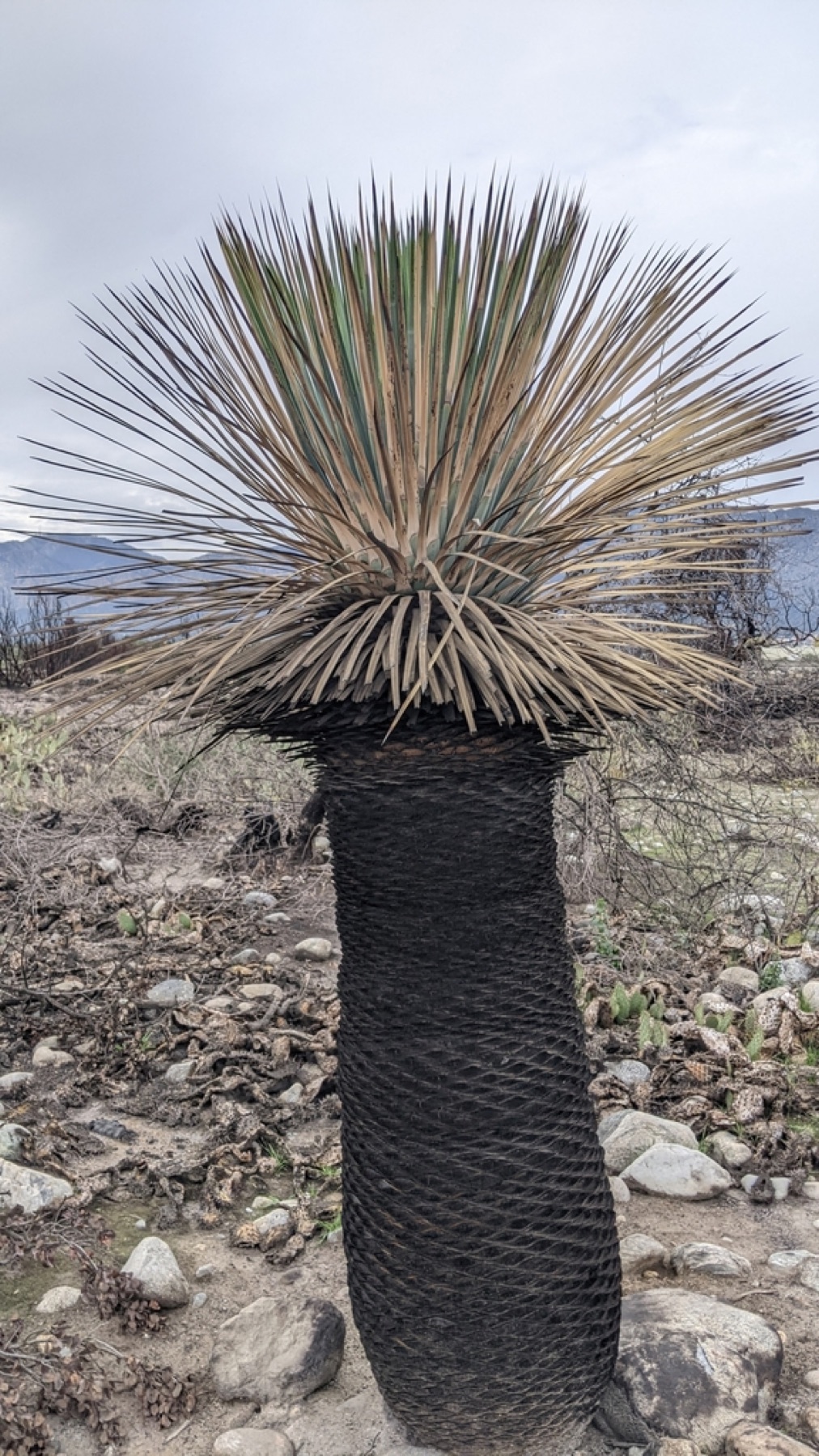
The iconic branching yucca of the Mojave Desert, with shaggy trunks, dagger-like leaf clusters, and large cream flower clusters in good bloom years. Its silhouette is unmistakable once mature.
Wildlife & pollinators
Famously tied to yucca moth pollination. Mature trees provide nesting and perching structure for birds and habitat for desert animals.
Habitat & range
Mojave Desert woodlands, flats, slopes, and alluvial fans, especially at middle elevations where winter cold and desert dryness overlap.
In the garden
Only for the right climate and space. Joshua trees are slow, protected in many contexts, and not suited to small coastal gardens. Use nursery-propagated plants only.
Propagation
From seed, very slowly. Never collect wild plants.
Where to see it near you
- iNaturalist — observed in Southern California
- Joshua Tree National Park, Mojave Desert preserves, and high desert woodlands.
Problems
Sensitive to climate, drainage, and transplant abuse. Wild collection is not appropriate and may be illegal.