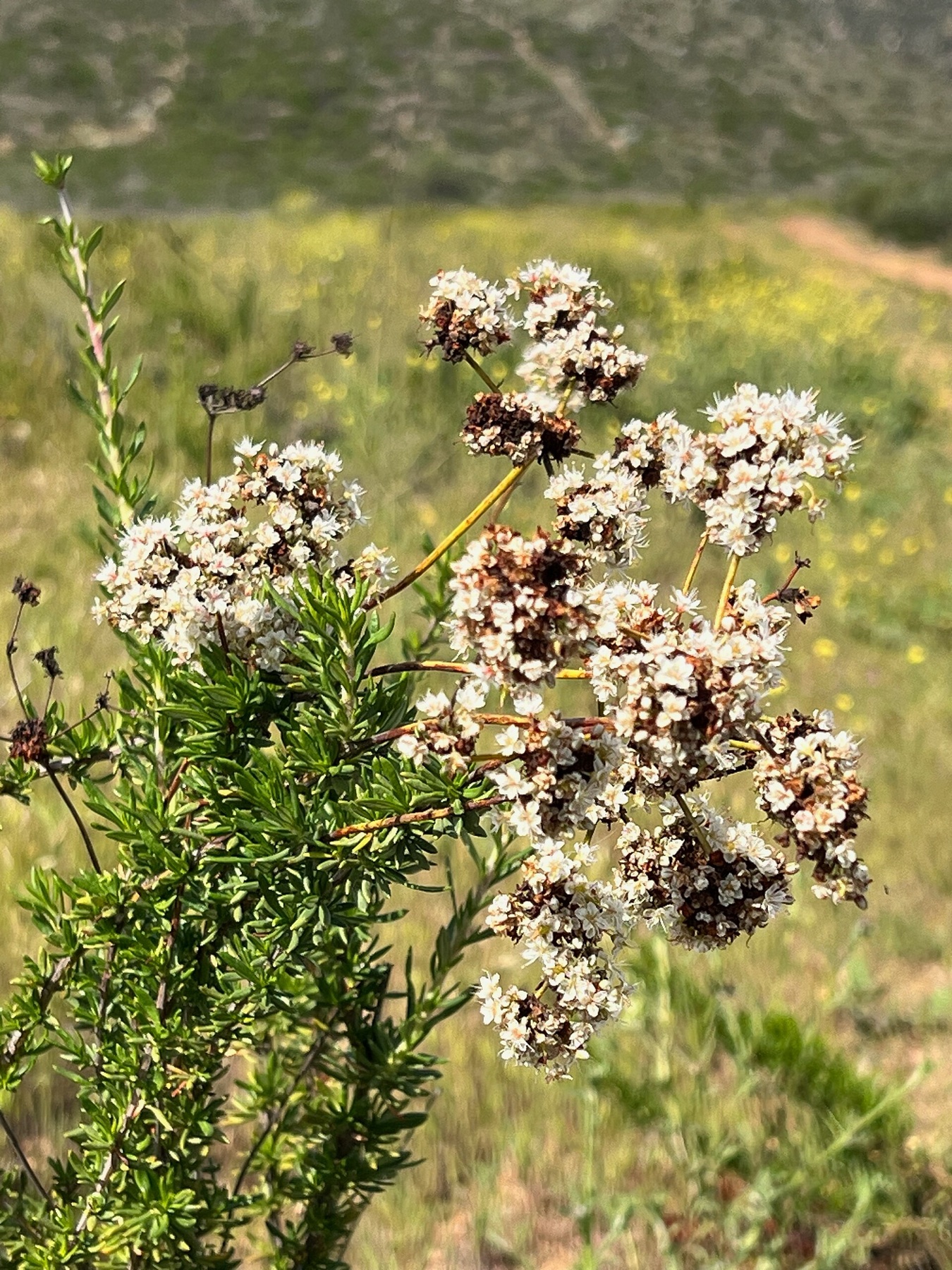
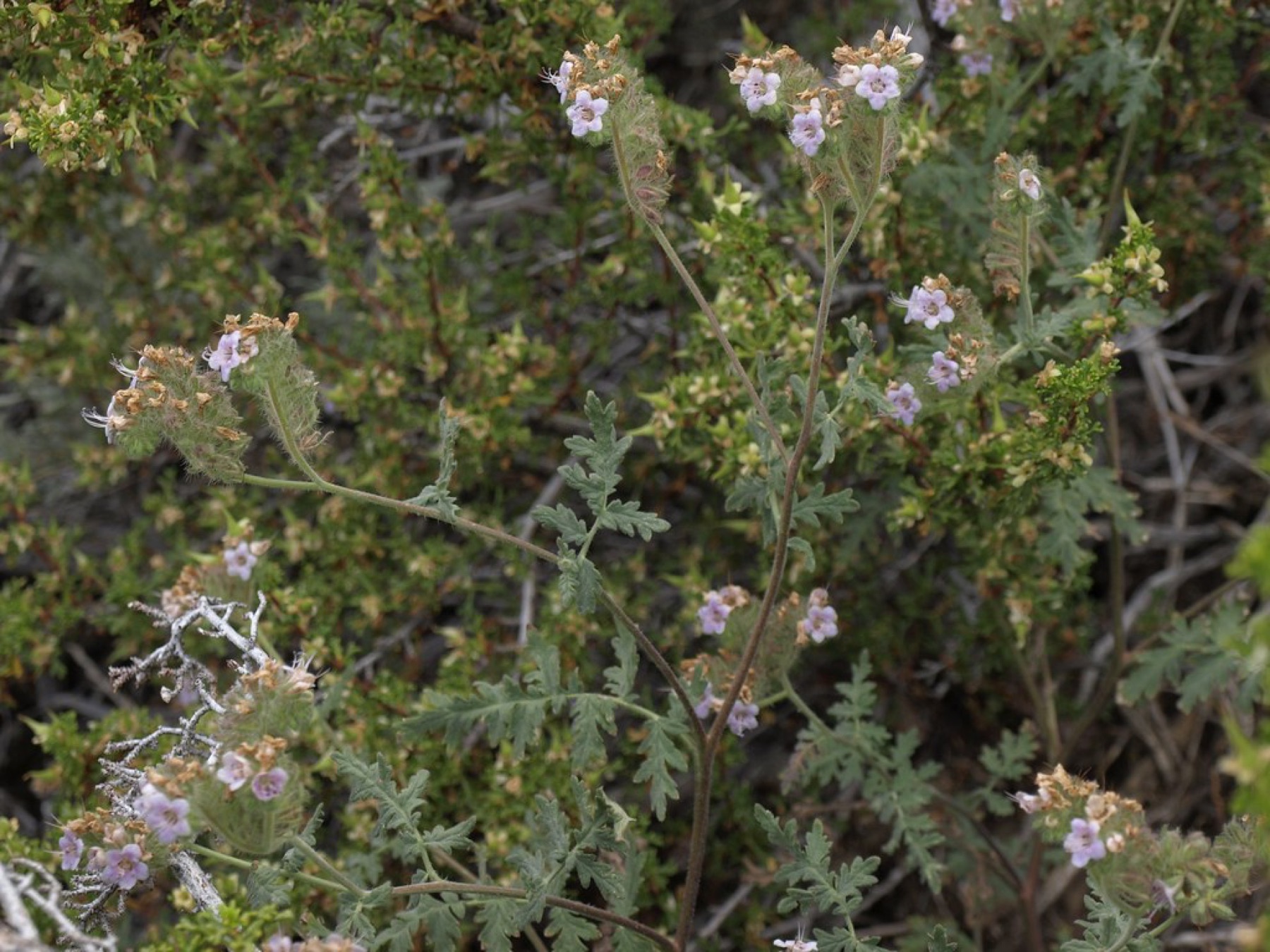
Wishbone Bush
Mirabilis laevis · Nyctaginaceae
- Form
- Perennial
- Height
- 1–3 ft
- Sun
- Full Sun
- Water
- Very Low
- Blooms
- Feb, Mar, Apr, May
- Habitat
- Coastal Sage Scrub · Chaparral · Desert
🌿 California native
Quick facts
- Habitat: Dry slopes, rocky scrub, desert edges
- Form / size: Low perennial/subshrub, 1–3 ft
- Sun: Full sun · Water (established): Very low
- Blooms: Late winter–spring · Pollinator value: Moderate
Description
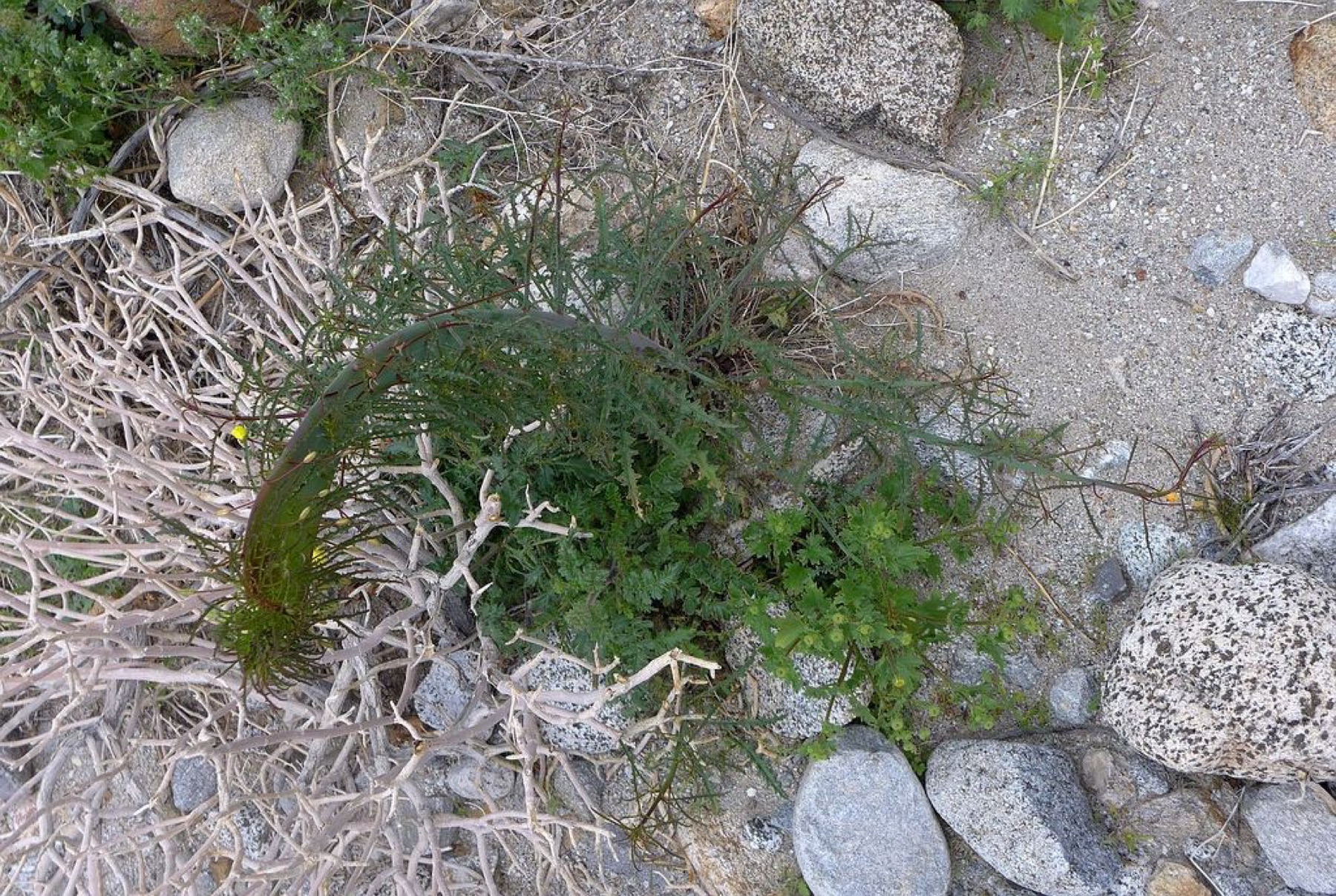
A low, spreading native with paired, forked stems and bright pink-purple funnel-shaped flowers. It often blooms early with winter moisture, then retreats into dry-season dormancy.
Wildlife & pollinators
Flowers are used by bees, butterflies, and moths. Evening and morning activity can be especially good.
Habitat & range
Dry slopes, rocky coastal sage scrub, chaparral openings, and desert margins across Southern California and the Southwest.
In the garden
Good for dry rock gardens, slopes, and wildflower-like edges where seasonal dormancy is acceptable. Plant with other dry-season sleepers so the cycle looks intentional.
Propagation
Grow from seed. Scarification can help the hard seed coat take up water.
Where to see it near you
- iNaturalist — observed in Orange County
- Rocky dry slopes, desert-edge scrub, and spring wildflower walks.
Problems
Summer dormancy can look like failure. Mark its spot and avoid overwatering.