Giant Sequoia
Sequoiadendron giganteum · Cupressaceae
- Form
- Tree
- Height
- 160–280 ft
- Sun
- Full Sun
- Water
- Moderate
- Habitat
- Montane
🌿 California native
Quick facts
- Habitat: Scattered Montane groves, western Sierra Nevada
- Form / size: The most massive tree on Earth, 160–280 ft
- Sun: Full sun · Water: Moderate (deep, steady soil moisture)
- The tell: enormous buttressed trunk of soft, cinnamon-red fibrous bark up to 3 ft thick
Description
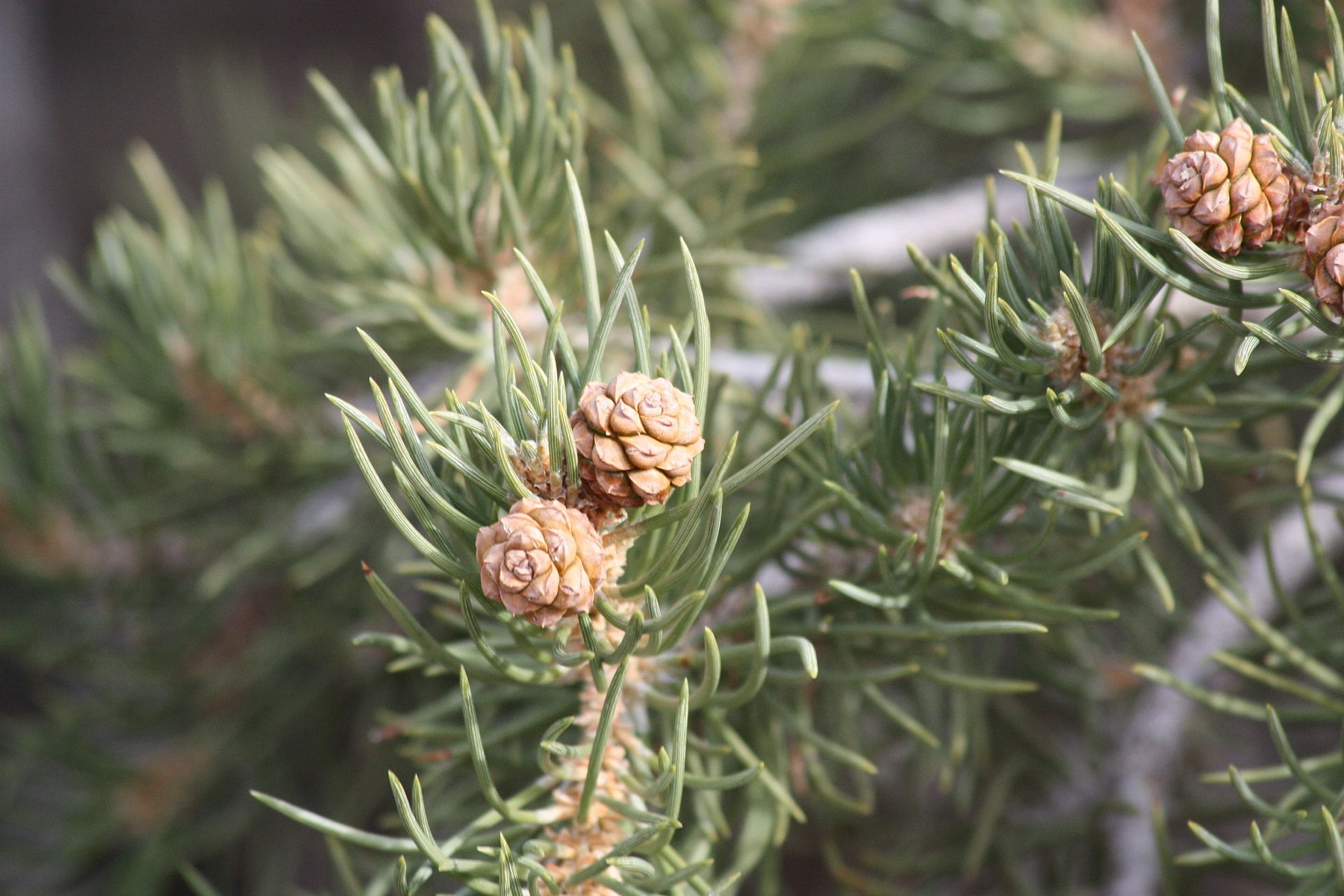
The most massive living thing on Earth by volume, a single reddish column that can rise past 250 feet above a hugely buttressed base. The bark is cinnamon-red, deeply furrowed, spongy, and up to three feet thick, so tannin-rich and fire-resistant that a mature tree shrugs off ground fires that kill its neighbors. The foliage is awl-shaped and clasps the blue-green shoots in spirals rather than lying in flat sprays, and the woody, egg-shaped cones (2 to 3 inches) can hang closed on the tree for years, each holding around 230 tiny seeds. Some giant sequoias have been aging for more than 3,200 years.
Ecological role
Giant sequoia is fire-dependent. The heat of a passing fire opens the sealed cones, clears the competing litter and undergrowth, and bares the mineral soil that seedlings need to take hold in full sun. Two small animals do most of the work of freeing the seed: the Douglas squirrel, which gnaws the green cone scales, and a longhorn beetle (Phymatodes nitidus) whose larvae bore through the cones. The species survives today in only about 75 to 80 disjunct groves totaling roughly 144 square kilometers on the wetter western slope of the Sierra, and the IUCN lists it as Endangered.
Habitat & range
Endemic to the moist western slope of the Sierra Nevada, in scattered groves from the American River in the north (Placer County) south to the Deer Creek Grove in Tulare County, mostly between about 4,600 and 7,000 ft. It does not grow naturally around Lake Tahoe or in the Mammoth country; it is strictly a western-slope tree, and the nearest northern groves sit well west of the Tahoe Basin.
In the garden
A landmark specimen for a very large site with full sun and deep, consistently moist but well-drained soil. Unlike most Sierra conifers it is not a drought tree, and it resents hot, dry, low-elevation heat. It tolerates cold, is deer-resistant, and grows fast when young, but needs decades of open room for its spreading base.
Propagation
From seed, which germinates readily and does better with about 30 to 60 days of cold-moist stratification and bright light on the surface of a mineral-rich mix. Semi-hardwood cuttings can be rooted under mist but strike slowly and unevenly. Seedlings grow quickly but must be protected from drought and crowding.
Where to see it near you
- iNaturalist — observed across California (map)
- The named groves of the southern and central western Sierra (Calaveras Big Trees, the Sequoia and Kings Canyon groves).
Sources
Commonly confused with
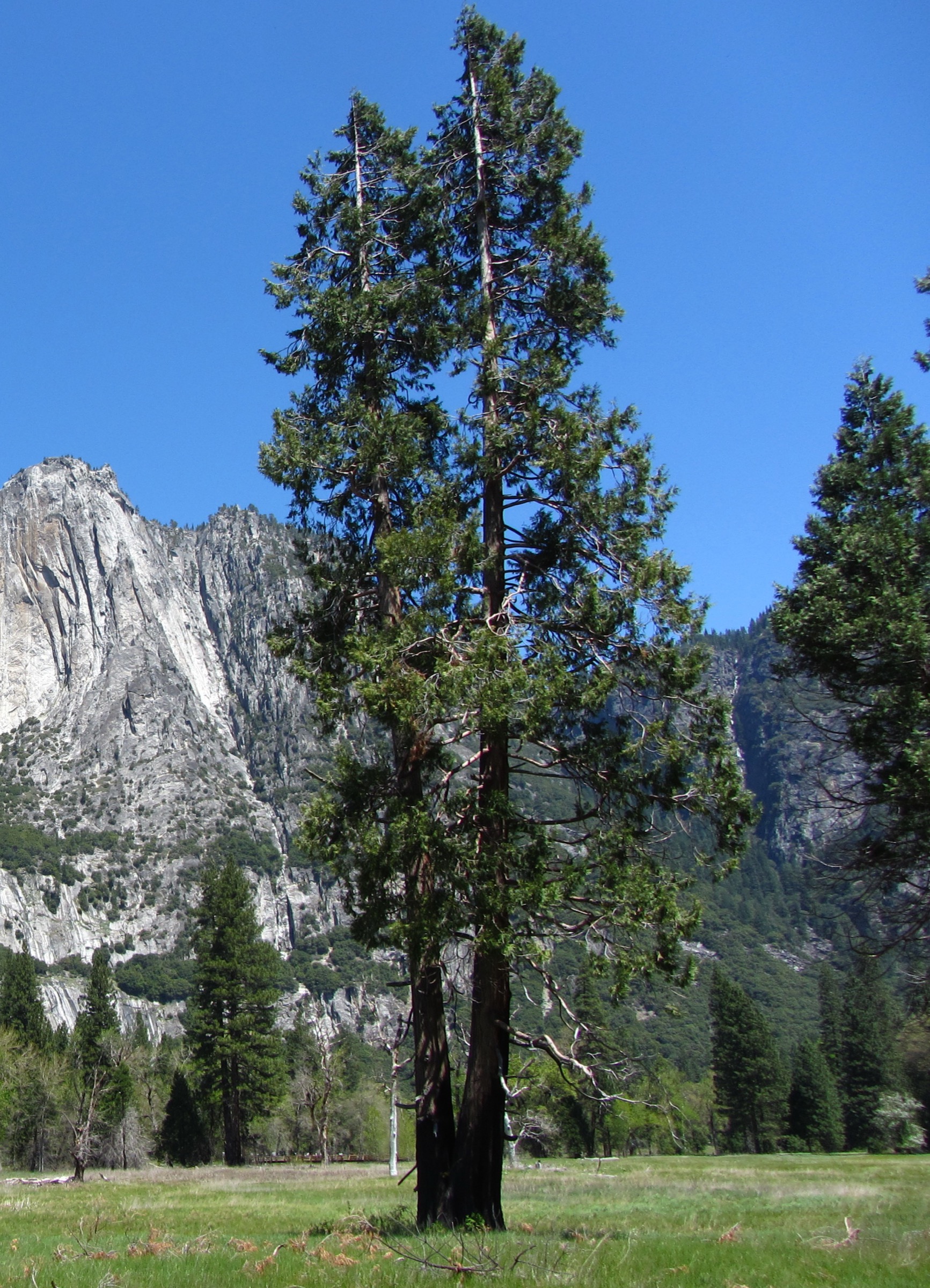 Incense Cedar 🌿 Calocedrus decurrens also cinnamon-barked, but its foliage is flat scale sprays with small wine-glass cones, and the bark is thinner and more shredded than the sequoia's deep, spongy furrows.