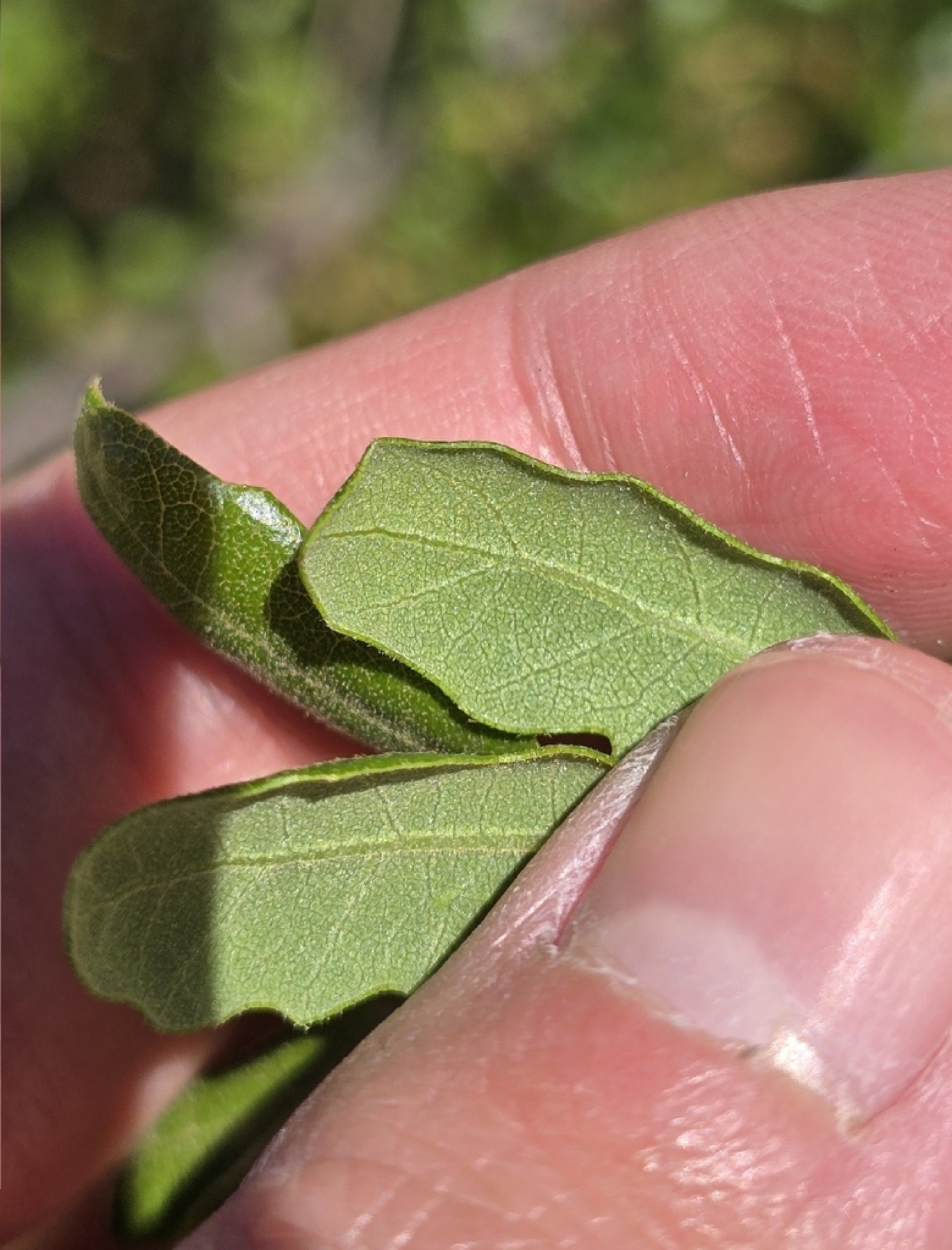
Lanceleaf Liveforever
Dudleya lanceolata · Crassulaceae
- Form
- Succulent
- Height
- 6–18 in
- Sun
- Part Shade
- Water
- Very Low
- Blooms
- Apr, May, Jun, Jul
- Habitat
- Chaparral · Coastal Sage Scrub
🌿 California native
Quick facts
- Habitat: Rocky slopes, roadcuts, chaparral and scrub openings
- Form / size: Native succulent rosette, 6–18 in
- Sun: Part shade to sun · Water (established): Very low
- Blooms: Spring–summer · Pollinator value: Moderate
Description
A native dudleya with narrow, lance-shaped succulent leaves forming a basal rosette. Flower stalks rise above the rosette with yellow-orange to reddish tubular flowers.
Wildlife & pollinators
Flowers attract hummingbirds and native bees.
Habitat & range
Rocky slopes, cliffs, roadcuts, and open scrub/chaparral habitats in Southern California.
In the garden
Good for rock gardens, containers, and dry slopes with excellent drainage. Give it winter moisture, summer dryness, and protection from being buried by mulch or leaf litter.
Propagation
From seed or offsets where produced. Dudleyas are slow; use nursery-propagated plants only.
Where to see it near you
- iNaturalist — observed in Southern California
- Rocky slopes, canyon walls, and native rock gardens.
Problems
Never collect wild dudleyas. Many populations are vulnerable to poaching and trampling.
Sources
Commonly confused with
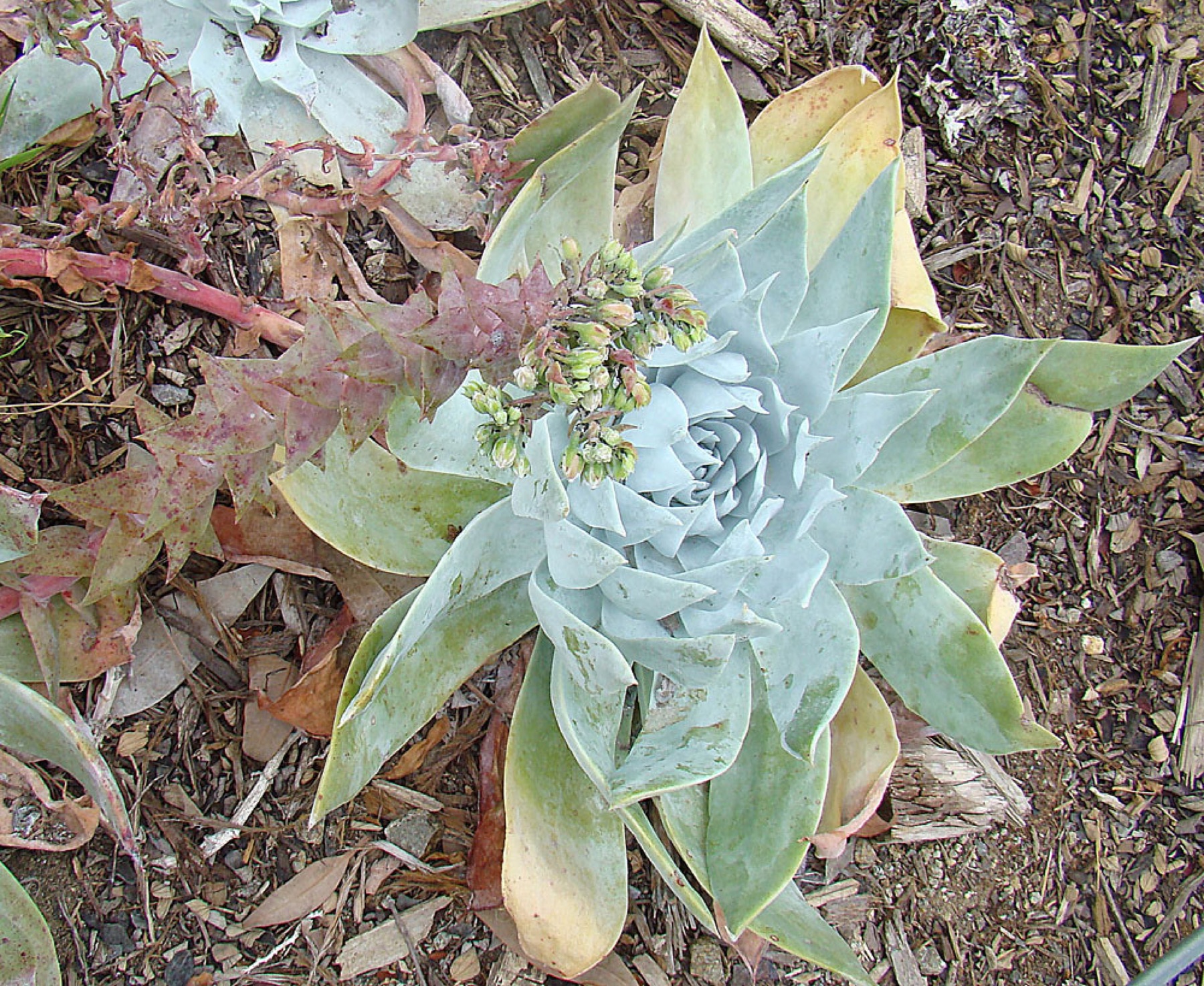 Chalk Dudleya 🌿 Dudleya pulverulenta broader, powdery white rosettes and dramatic red flower stalks.
 🌿 Non-native echeverias garden succulents with similar rosettes but different wild habitat and flower details.