Mountain Whitethorn
Ceanothus cordulatus · Rhamnaceae
- Form
- Shrub
- Height
- 2–5 ft
- Sun
- Full Sun
- Water
- Very Low
- Blooms
- May, Jun, Jul
- Habitat
- Montane
🌿 California native
Quick facts
- Habitat: Montane conifer forest openings and burns
- Form / size: Low, dense, spiny shrub, 2–5 ft
- Sun: Full sun · Water: Very low
- Blooms: Early summer — frothy white · Pollinator value: High
Description
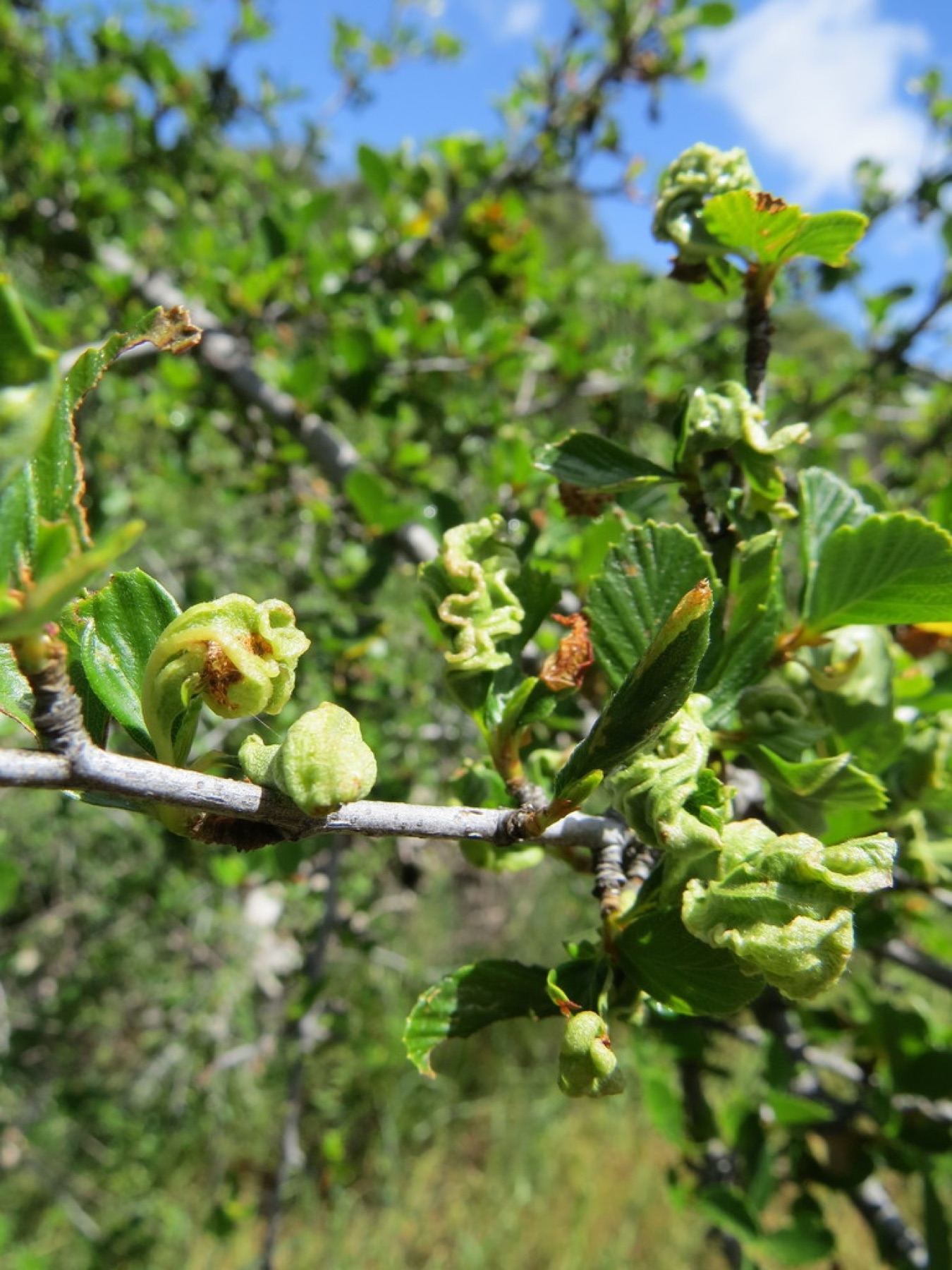
A low, dense, intricately branched mountain ceanothus armed with stiff, pale, rigid spines (the “whitethorn”), with small grey-green leaves and a flush of frothy white flowers in early summer. Forms wide, snow-flattened thickets in conifer-forest openings — important cover and a nitrogen-fixer that helps forests recover after fire.
Wildlife & pollinators
White flowers swarm with native bees and butterflies; foliage is deer browse; thickets shelter quail and small wildlife; fixes nitrogen.
Ecological role
Mountain whitethorn is one of the plants that rebuilds a burned forest. Like other Ceanothus, it carries nitrogen-fixing Frankia bacteria in root nodules, pulling nitrogen out of the air and into soil that fire has just stripped, which is a significant part of how San Bernardino and Sierra conifer stands recover their fertility without anyone adding anything.
Its seed strategy matches. The seeds are hard-coated and sit dormant in the soil for decades, waiting on the heat of a fire to crack them, so a slope that showed no whitethorn at all can come up thick with it the spring after a burn. The thickets that result are not a weed problem. They shelter pine and fir seedlings from sun and frost while those trees get established, feed deer through their most vulnerable season, and give quail and small mammals cover on ground that would otherwise be open. Snow flattens the shrubs each winter and they push back up, which is why old stands look sprawling and layered rather than upright.
Habitat & range
Montane conifer forest, openings, and burns of the Sierra and higher SoCal mountains (around Big Bear).
In the garden
A tough, fragrant, pollinator-rich shrub for cold, sunny mountain gardens; the spines make it a good barrier. Full sun, very low water.
Propagation
From seed (hot-water + smoke/heat fire-cue) or semi-hardwood cuttings — typical of Ceanothus. See Propagation Basics.
Where to see it near you
- iNaturalist — observed across California (map)
- Forest openings around Big Bear and the Eastern Sierra.
Sources
Commonly confused with
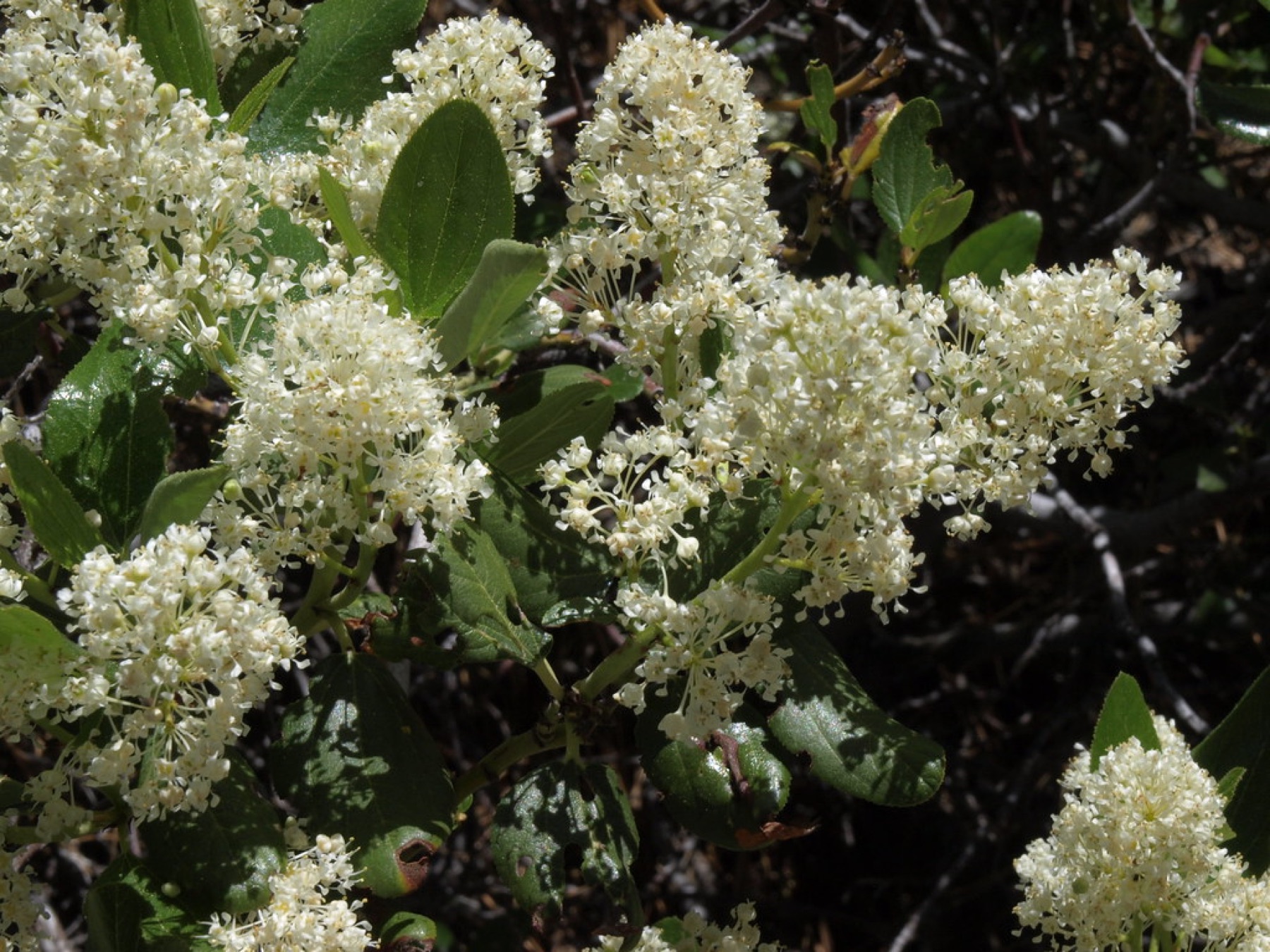 Snowbrush Ceanothus 🌿 Ceanothus velutinus the same white-flowered mountain ceanothus, often on the same slope. Two checks and you're done. Reach in: whitethorn is armed with stiff pale spines, snowbrush has none, so one draws blood and the other doesn't. Look at a leaf: snowbrush leaves are large, glossy, and slightly sticky, and they smell resinous and balsam-sweet when the sun warms them; whitethorn leaves are small, dull grey-green, and barely scented.
 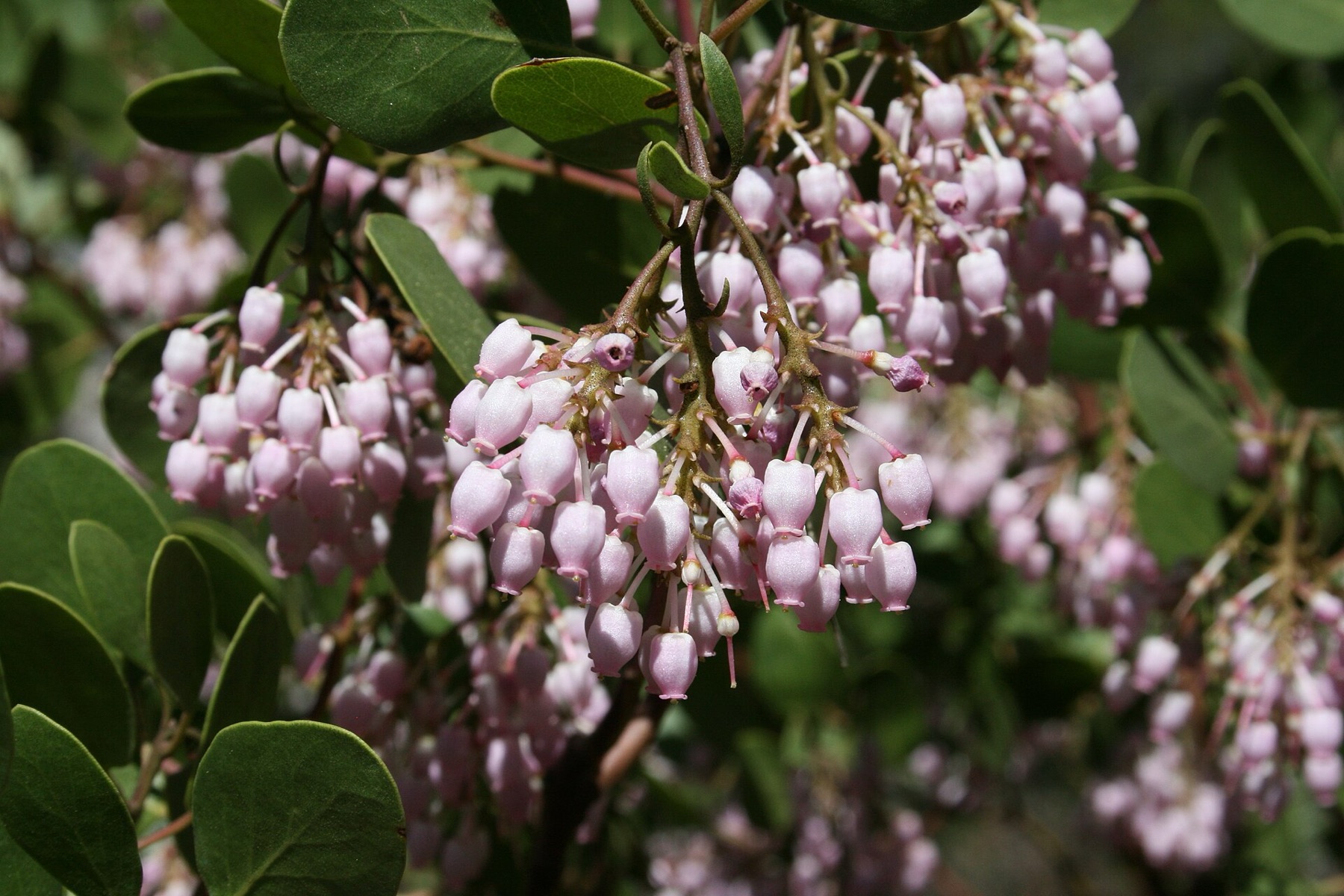 Greenleaf Manzanita 🌿 Arctostaphylos patula the other low shrub that fills these forest openings, also with small whitish urn-shaped spring flowers. The bark settles it instantly: manzanita is smooth, peeling, deep mahogany-red, whitethorn is gray and thorny. Manzanita leaves are thick, leathery, and often held edge-on to the sun, with a single midvein; whitethorn leaves are thin and three-veined from the base, the standard Ceanothus cue.
 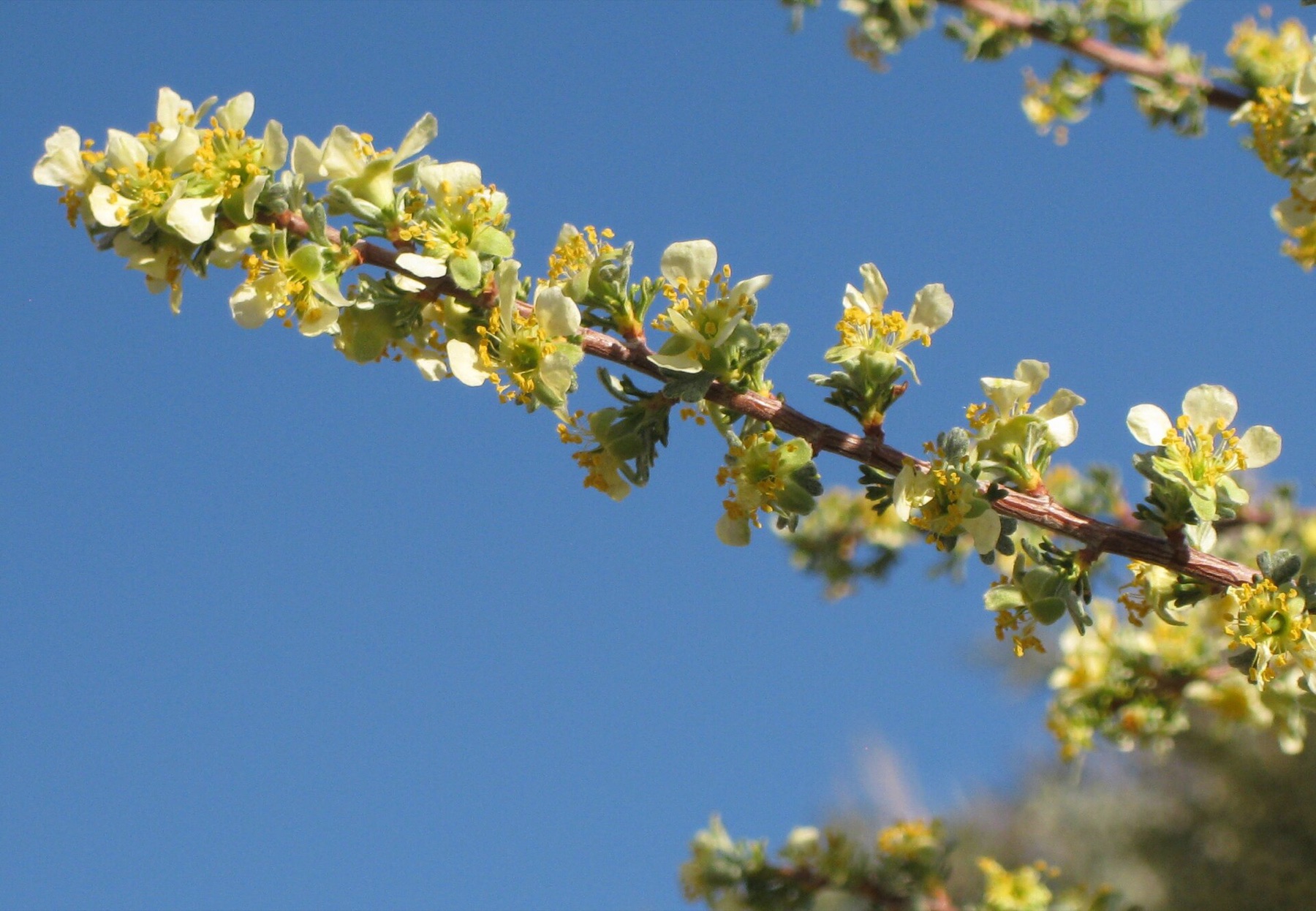 Antelope Bitterbrush 🌿 Purshia tridentata similar low grey-green mountain shrub, and easy to confuse at a glance in a burn. Bitterbrush leaves are small wedges with three teeth at the blunt tip, its flowers are yellow, and it is completely unarmed.