Sierra Gooseberry
Ribes roezlii · Grossulariaceae
- Form
- Shrub
- Height
- 2–5 ft
- Sun
- Full Sun
- Water
- Low
- Blooms
- Apr, May, Jun
- Habitat
- Montane · Sagebrush Scrub
🌿 California native
Quick facts
- Habitat: Dry Montane slopes and shrub openings, sometimes upper Sagebrush Scrub
- Form / size: Spiny deciduous shrub, 2–5 ft
- Sun: Full sun · Water: Low
- Blooms: Spring nodding flowers, followed by gooseberries
Description
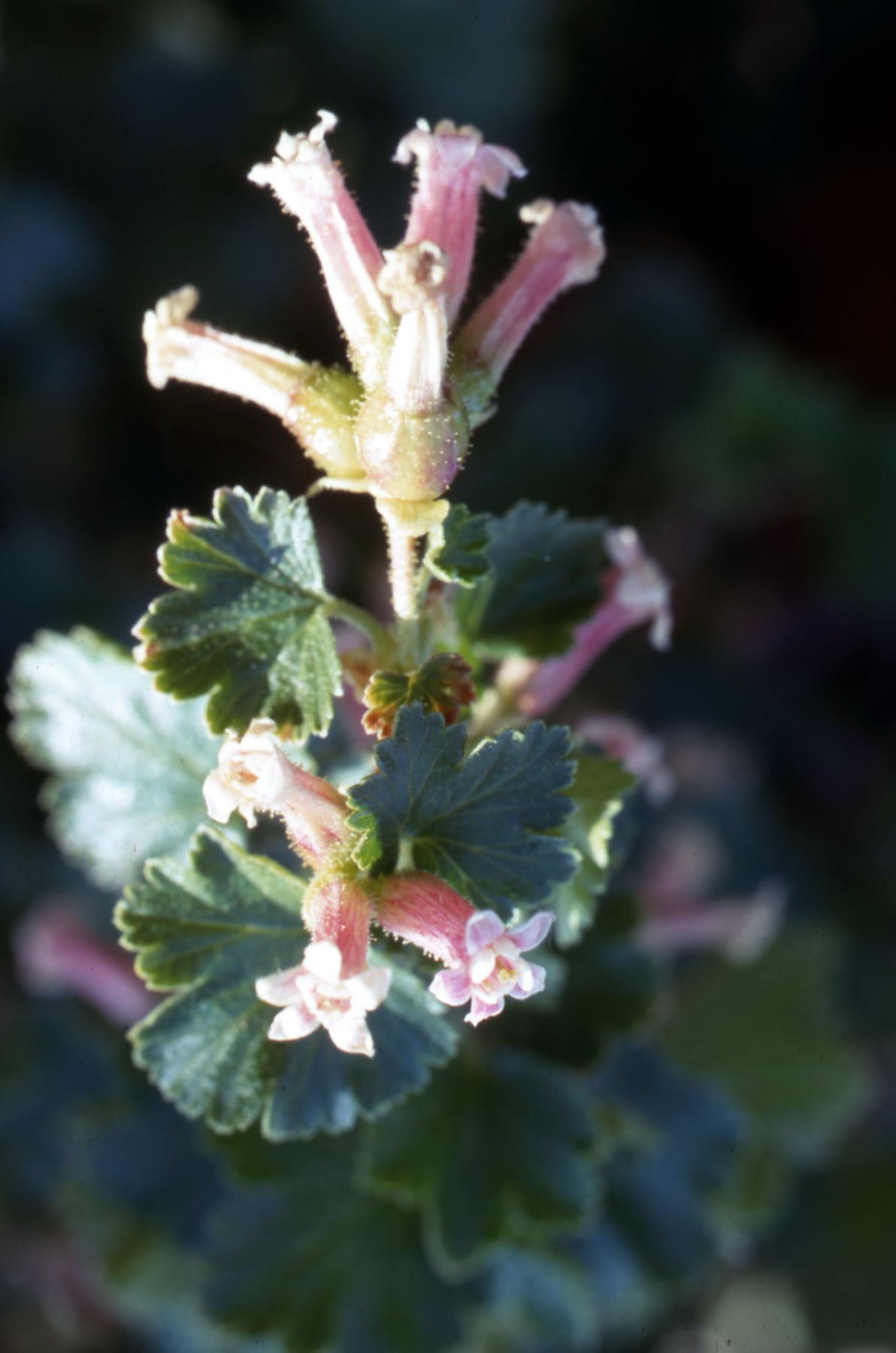
A prickly deciduous shrub with small lobed leaves, nodding flowers, and bristly gooseberries. It belongs to the “don’t casually shove your hand into it” class of shrub, but it is valuable and distinctive once you learn the gooseberry look.
Wildlife & pollinators
Flowers feed insects; fruits are used by birds and mammals; spiny structure provides cover.
Habitat & range
Dry mountain slopes, forest edges, and shrub zones of the Sierra and east-side transition country.
In the garden
Useful as a habitat shrub or barrier plant in mountain native gardens. Best with drainage and some space.
Propagation
From seed or cuttings. Deciduous and winter-dormant.
Where to see it near you
- iNaturalist — observed across California (map)
- Common in the broader Eastern Sierra region on dry mountain slopes and shrub edges.