Southern California Walnut
Juglans californica · Juglandaceae
- Form
- Tree
- Height
- 20-50 ft
- Sun
- Full Sun
- Water
- Low
- Blooms
- Mar, Apr, May
- Pet toxicity
- Caution
- Habitat
- Oak Woodland · Riparian · Chaparral
🌿 California native
Quick facts · Habitat: Oak Woodland, canyon slopes, riparian margins · Form / size: Deciduous tree or multi-trunk shrub-tree, 20-50 ft · Sun: Full sun · Water: Low to moderate while young · Blooms: Spring catkins · Wildlife value: High for seed-eating wildlife
Description
A deciduous native walnut with compound leaves and small hard-shelled nuts. Old trees often have multiple trunks and a broad, irregular crown, especially on dry slopes.
Wildlife & pollinators
Nuts feed squirrels and birds, and the canopy adds structure for woodland wildlife. Wind-pollinated flowers are not a major nectar source, but the tree is still habitat-rich.
Habitat & range
Native to Southern California foothills, canyon slopes, alluvial fans, woodland edges, and some riparian margins. Natural stands can indicate old, regionally important woodland habitat.
In the garden
Best for large spaces, restoration sites, and habitat plantings rather than small yards. Give it room for roots and leaf litter, and avoid planting directly over tight patios or pipes.
Propagation
From fresh seed. Plant walnuts in fall or winter and protect seedlings from rodents and browsing.
Where to see it near you
- iNaturalist — observed in Southern California
- Foothill canyons, old alluvial terraces, and oak/walnut woodland patches.
Problems
Needs space, and walnut leaf litter/juglone effects can suppress some understory plants. Natural stands are worth protecting.
Sources
Commonly confused with
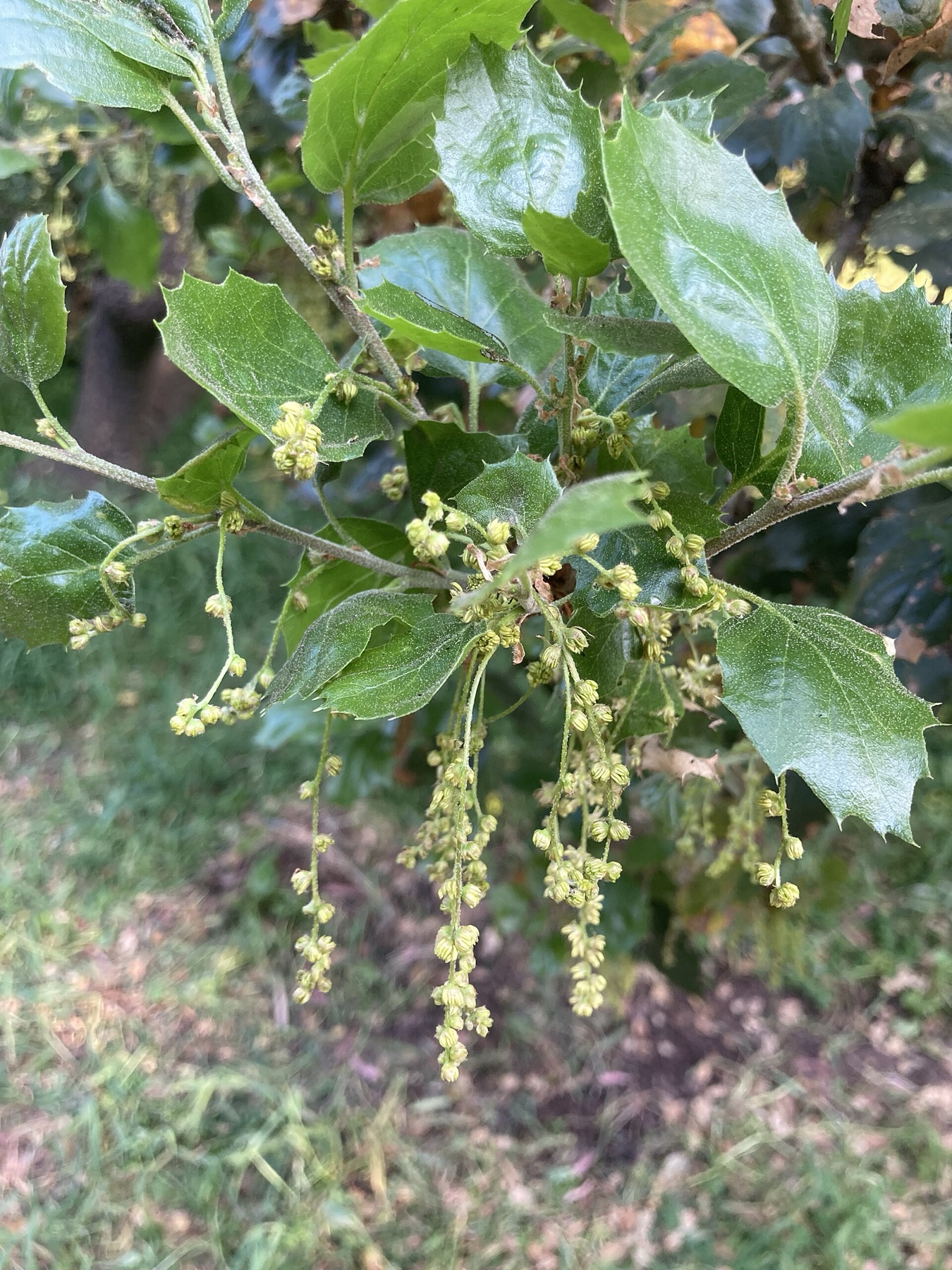 Coast Live Oak 🌿 Quercus agrifolia evergreen with simple leathery leaves and acorns; walnut is deciduous with compound leaves and round nuts.