Bladderpod
Peritoma arborea · Cleomaceae
- Form
- Shrub
- Height
- 3–6 ft
- Sun
- Full Sun
- Water
- Very Low
- Blooms
- Jan, Feb, Mar, Apr, May, Jun, Jul, Aug, Sep, Oct, Nov, Dec
- Pet toxicity
- Mild
- Habitat
- Coastal Sage Scrub · Desert
🌿 California native
Quick facts
- Habitat: Coastal sage scrub, dry washes, desert edges
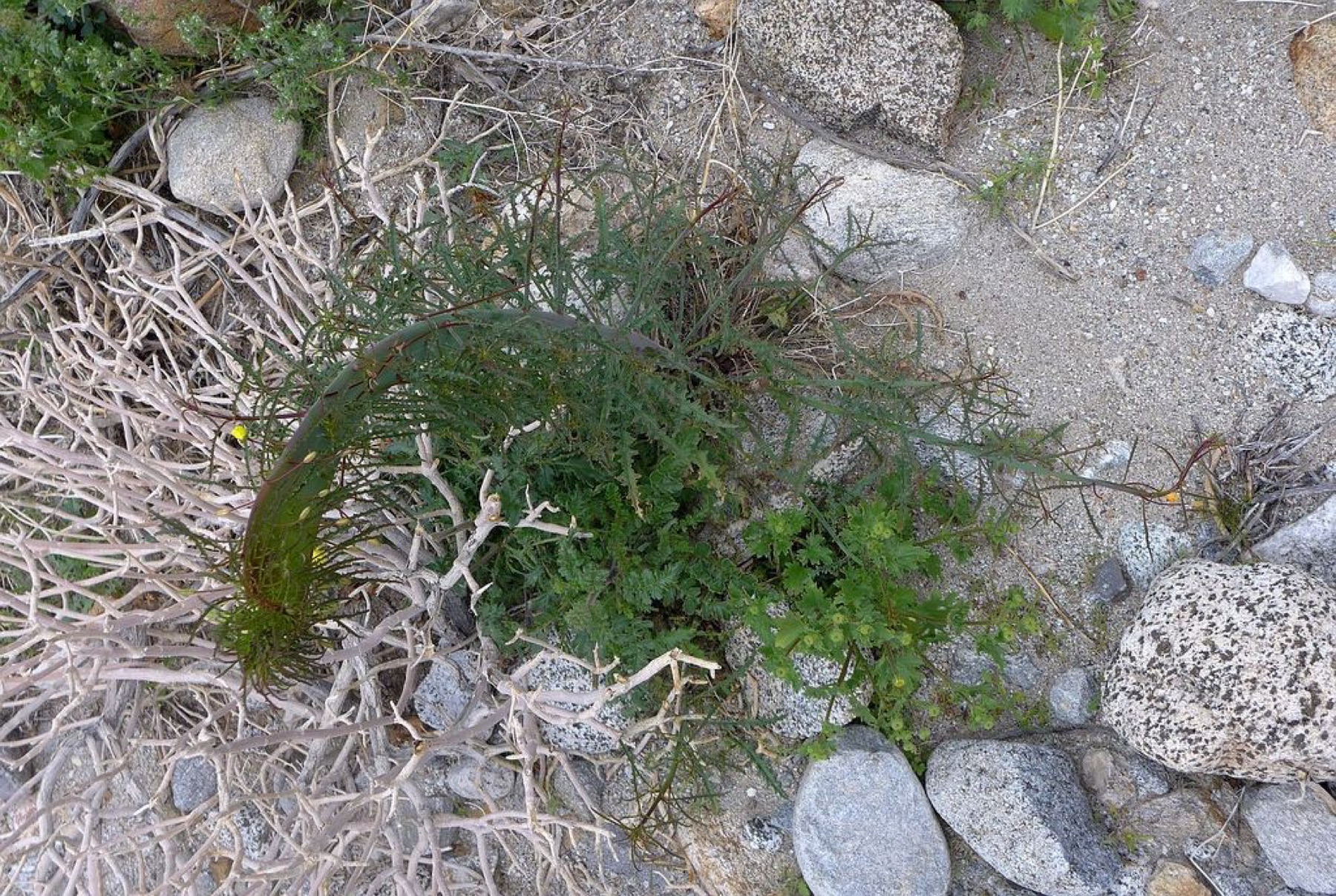
- Form / size: Rounded shrub, 3–6 ft
- Sun: Full sun · Water (established): Very low
- Blooms: Nearly year-round · Pollinator value: High
Description
A tough, rounded shrub with blue-green leaflets, bright yellow four-petaled flowers, and inflated seed pods that look like little green bladders. The foliage has a strong cabbagey smell when crushed — memorable, if not exactly perfume.
Ecological role
Bladderpod blooms nearly year-round in dry coastal sage scrub and desert, providing an unusually long season of nectar and pollen for native bees, butterflies, and hummingbirds. The plant’s seeds are eaten by birds, and its dense, woody structure offers shelter in open, exposed terrain where little else grows as tall. On dry slopes and washes where temperature swings are extreme and water is rare, bladderpod anchors a small community of insects and birds that would have far fewer resources without it.
For native bees building colonies during spring and late summer, and for hummingbirds passing through on migration, this extended bloom period provides critical food availability throughout seasons when most other shrubs in the ecosystem have ceased flowering. The plant’s tolerance for extreme drought and heat stress allows it to maintain reproduction even during dry years, a trait that makes it particularly valuable in years when rainfall is below average.
Habitat & range
Common in dry coastal sage scrub, washes, desert margins, and rocky slopes in Southern California and Baja California.
In the garden
A rugged, wildlife-heavy shrub for hot dry slopes and low-water gardens. It blooms for an absurdly long season and handles reflected heat well.
Propagation
Easy from seed. Scarifying or nicking the seed coat can speed germination.
Where to see it near you
- iNaturalist — observed in Orange County
- Dry coastal slopes, washes, and native plant gardens.
Problems
Very low trouble. The strong smell and rangy seed pods are a matter of taste.
Sources
Commonly confused with
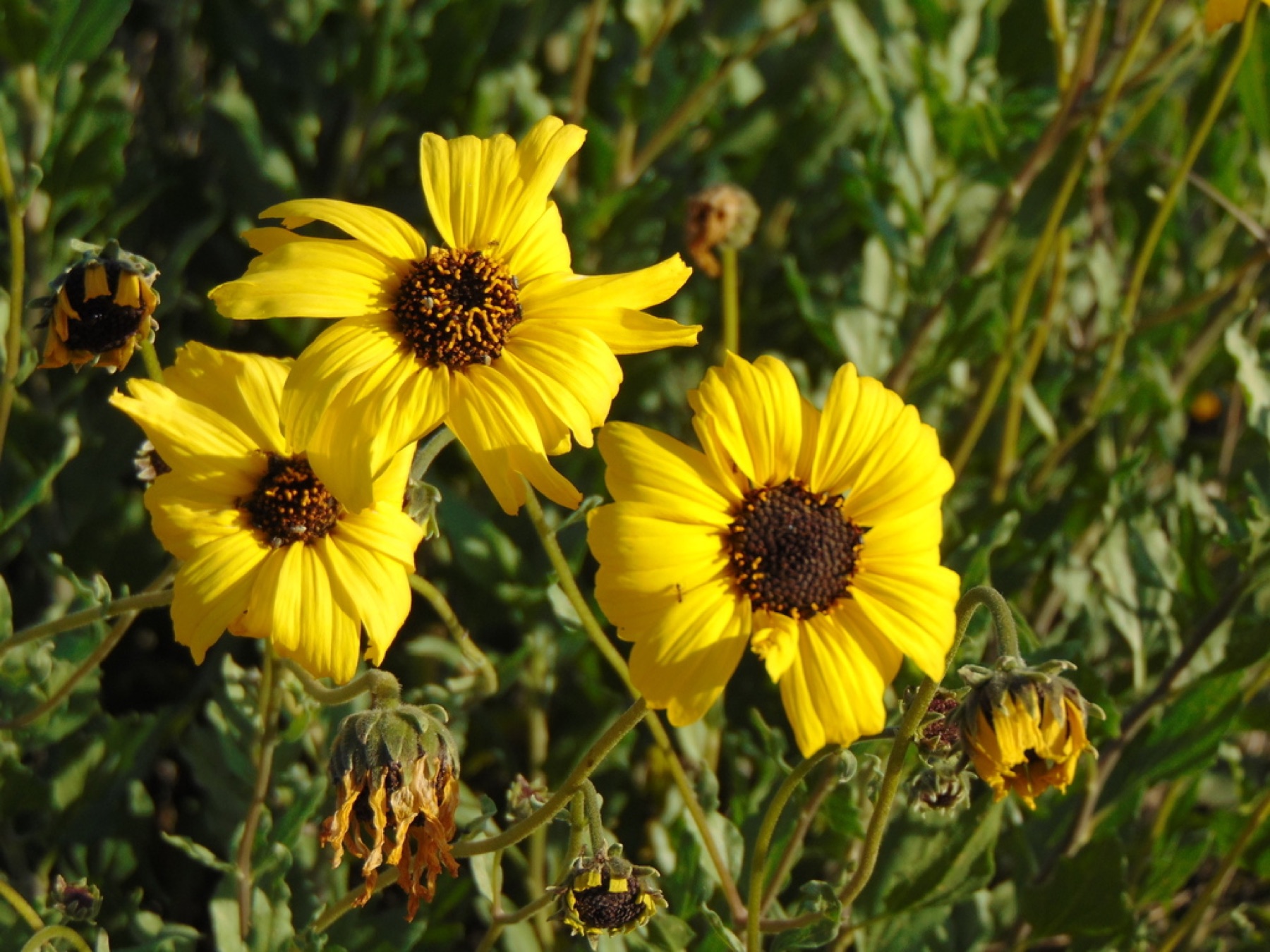 Bush Sunflower 🌿 Encelia californica yellow daisy heads rather than four-petaled flowers and bladderlike fruits.