Chuparosa
Justicia californica · Acanthaceae
- Form
- Shrub
- Height
- 3-6 ft
- Sun
- Full Sun
- Water
- Very Low
- Blooms
- Jan, Feb, Mar, Apr, May
- Pet toxicity
- Unknown
🌿 California native
Quick facts
- Habitat: Desert washes, rocky slopes, and warm canyon bottoms
- Form / size: Open twiggy shrub, 3-6 ft
- Sun: Full sun · Water: Very low once established
- Blooms: Winter-spring · Pollinator value: High
Description
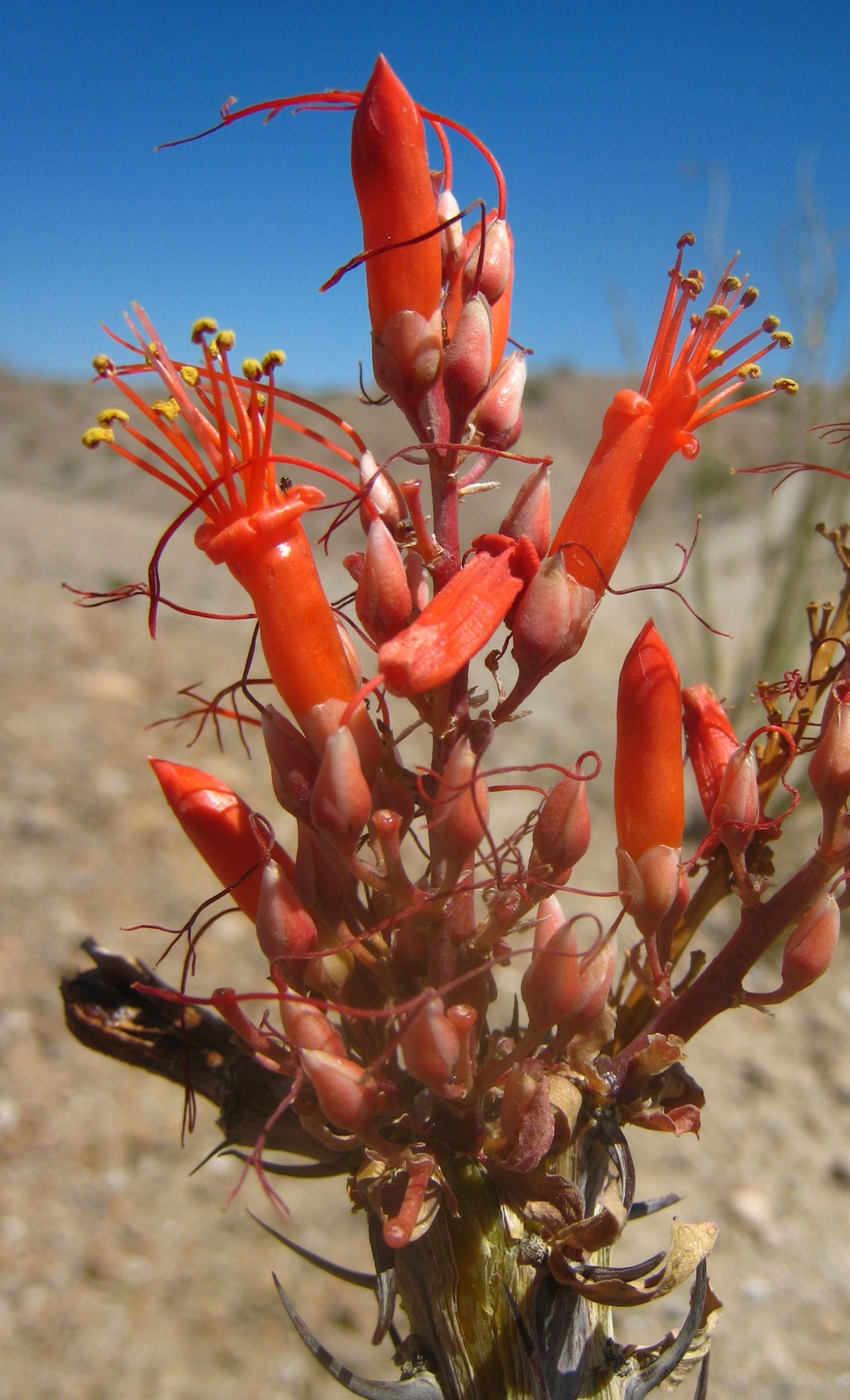
A green-stemmed desert shrub that may look nearly leafless when dry, then covers itself in red tubular flowers after winter rain. The name means “hummingbird sucker,” and the plant earns it: hummingbirds work the flowers heavily.
Wildlife & pollinators
One of the better desert hummingbird shrubs. Bees also visit flowers, especially during heavy bloom.
Habitat & range
Desert washes, rocky slopes, and warm dry canyons in Southern California deserts and Baja California.
In the garden
Excellent in hot, dry pollinator gardens with fast drainage. It can look sparse between bloom cycles, so place it where its seasonal rhythm makes sense.
Propagation
From seed or semi-hardwood cuttings. Keep cuttings warm and avoid overly rich soil.
Where to see it near you
- iNaturalist — observed in Southern California
- Desert washes and warm canyon mouths.
Problems
Cold, shade, and regular irrigation are the usual problems. It wants heat and drainage.