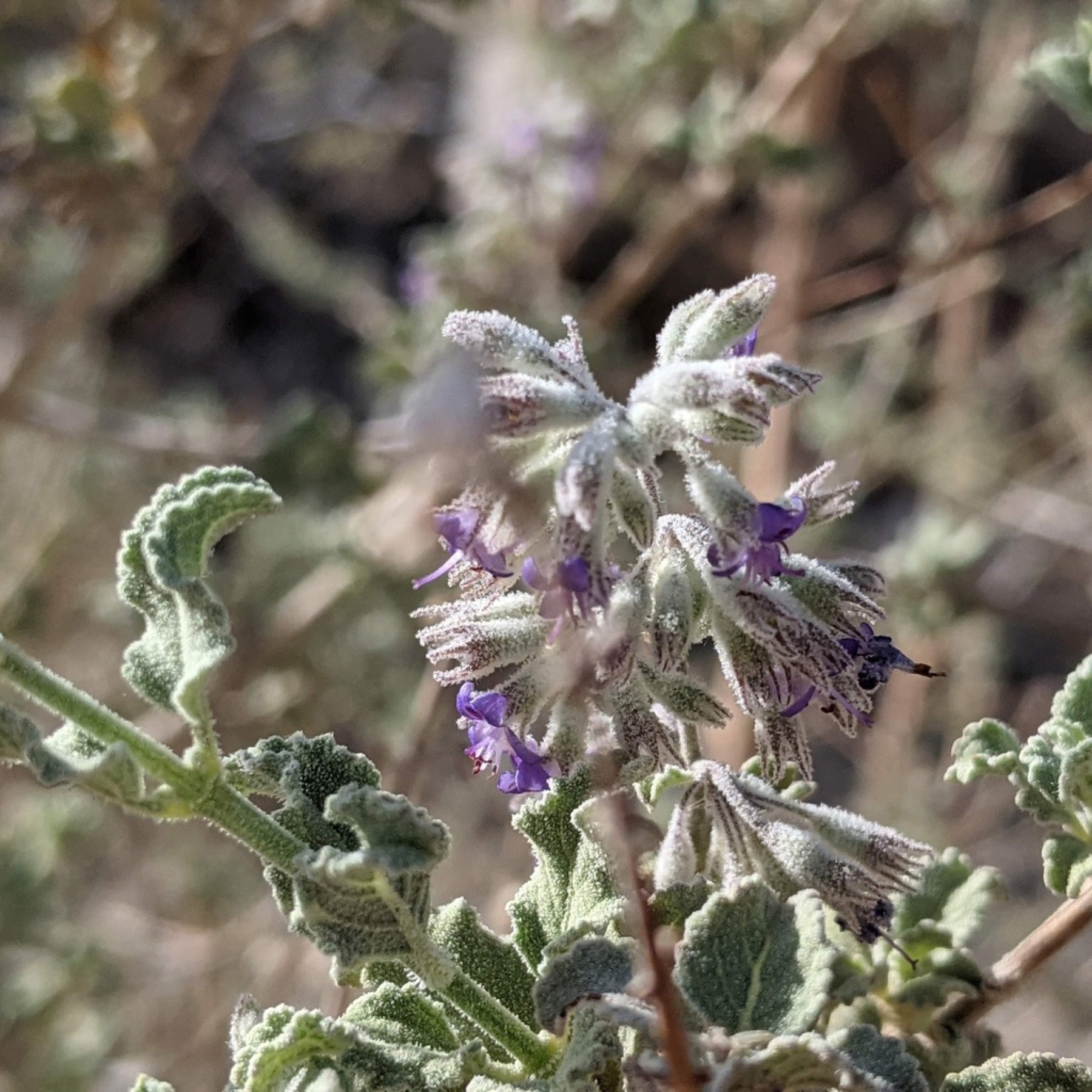
Mesquite Mistletoe
Phoradendron californicum · Santalaceae
- Form
- Parasitic shrub
- Height
- 1-4 ft clump on host
- Sun
- Full Sun
- Water
- Very Low
- Blooms
- Jan, Feb, Mar
- Pet toxicity
- Unknown
🌿 California native
Quick facts
- Habitat: Desert washes and dryland tree lines, especially on mesquite and palo verde
- Form / size: Leafless parasitic shrub forming dense clumps on host branches
- Sun: Full sun · Water: Draws from host
- Blooms: Winter-early spring · Pollinator value: Moderate
Description
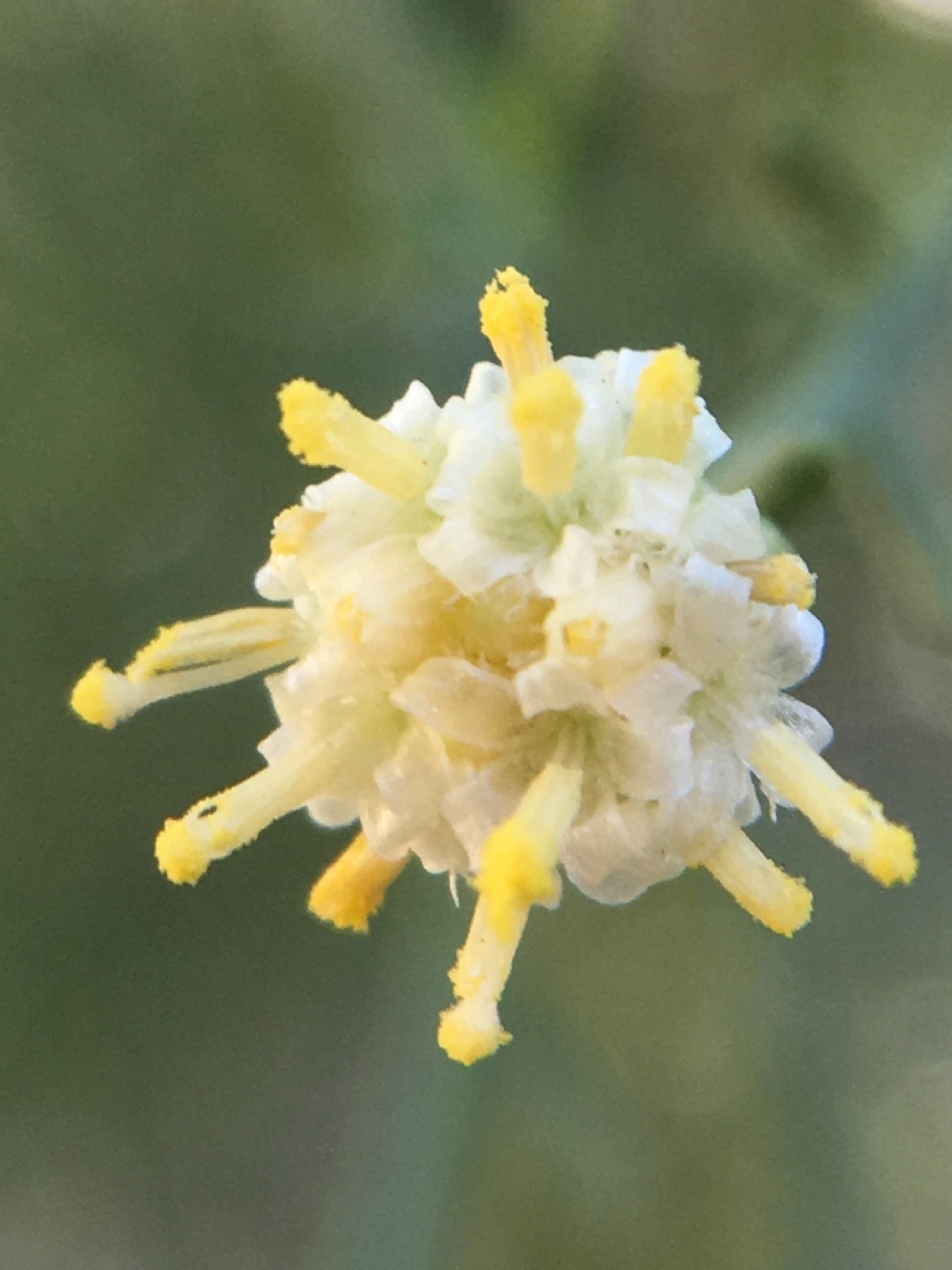
A native desert mistletoe that appears as green to reddish, mostly leafless branching clumps attached to the limbs of host trees. In fruit it can be especially conspicuous, hanging as bright beadlike masses in otherwise open desert canopies.
Wildlife & pollinators
Birds use the berries and also disperse the seeds. The plant contributes to desert structural diversity and supports insects and wildlife tied to native host trees.
Habitat & range
Mojave and Sonoran desert washes and dry riparian corridors where host trees such as mesquite and palo verde occur.
In the garden
Usually not something you deliberately plant in a conventional garden. In habitat terms, though, it is part of the native desert food web rather than simply a defect on the host.
Propagation
By seed, usually spread by birds that wipe sticky seeds onto host branches.
Where to see it near you
- iNaturalist — observed in Southern California
- Desert washes, mesquite groves, and palo verde-lined drainages.
Problems
Heavy infestations can stress host branches, but this is also a native component of desert ecosystems. Context matters before treating it as damage.